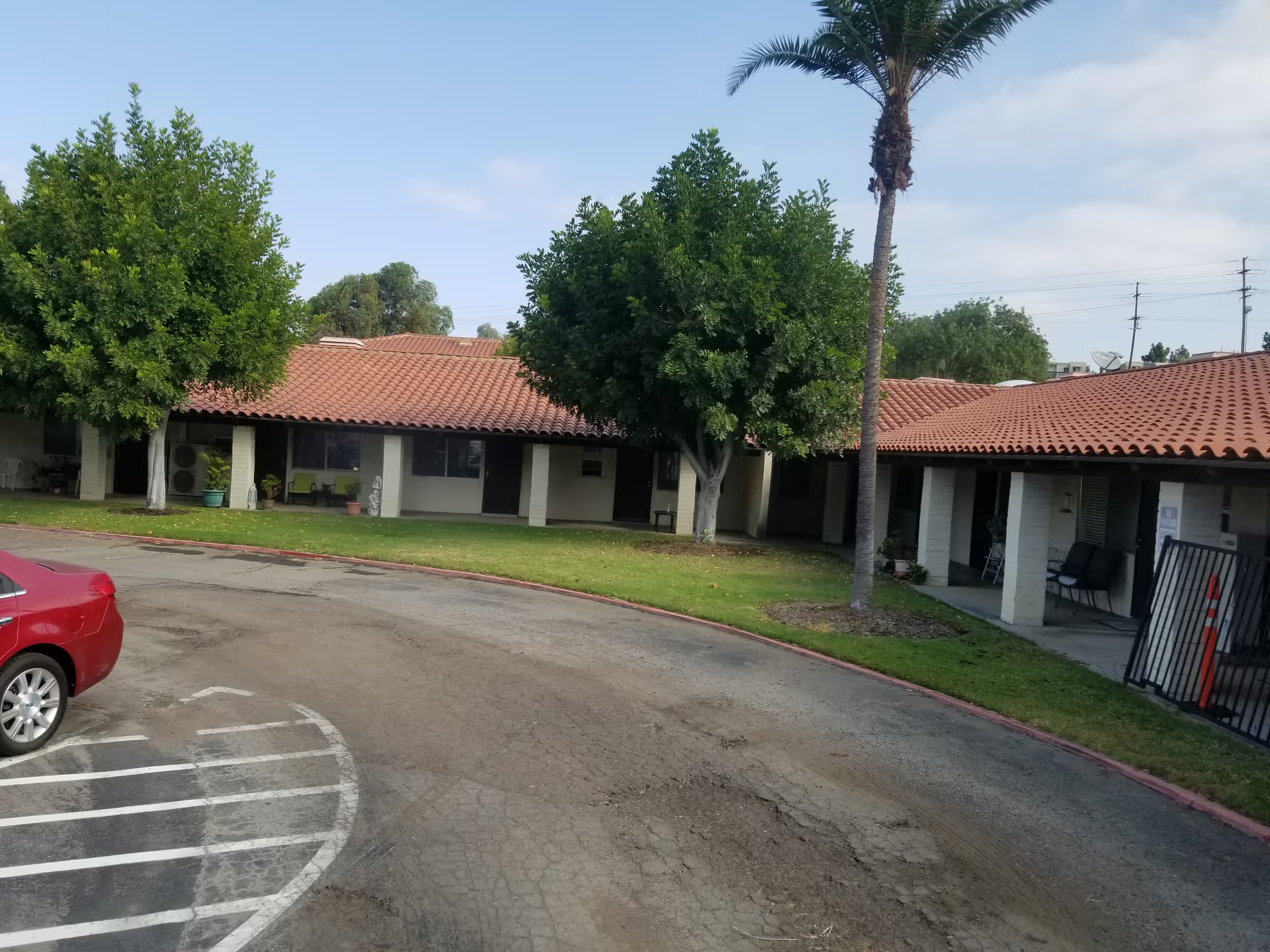
Jacob Healthcare Center elicits strongly mixed evaluations across several domains of care. Many families and residents describe compassionate, attentive nursing and caregiving teams, strong rehabilitation services (PT/OT), and coordinated interdisciplinary care that produced meaningful short-term recovery and discharge outcomes. Reviewers frequently praised individual caregivers, social services and concierge support, bilingual staff, and a generally clean, well-appointed facility with pleasant outdoor spaces and engaging activities. Several accounts emphasize available private rooms, secure entry, and rehabilitation responsiveness—attributes that contribute to family reassurance and positive recovery experiences.
At the same time, a set of operational concerns recurs across reviews and appears to drive the negative impressions. Staffing inconsistencies—especially during night shifts—are commonly cited and are linked to delays in responding to call lights, reduced supervision of higher-dependency residents, and slower completion of routine personal-care tasks. Related process weaknesses include gaps in medication administration and tracking, variable incontinence and hygiene practices, and occasional limitations in wound-care and therapy equipment availability. Some families described temperature-control problems in patient rooms (limited or no air conditioning) and intermittent sanitation or odor concerns in portions of the facility.
Dining, laundry, and administrative operations show variability. Many reviewers complimented nutritious meals and accommodating alternatives, but others reported declines in portioning and quality that coincided with organizational changes. Laundry handling and accountability for personal belongings emerged as a recurrent operational weakness. Communication gaps were noted between families and the business office or front-desk phone system, including slow or unhelpful responses to billing and access queries. A few reviews also raised privacy concerns related to visitor sign-in procedures.
Management and leadership received mixed marks: some reviewers praised accessible directors and proactive problem-solving that improved individual residents’ experiences, while others described limited follow-through on escalated concerns after changes in ownership or staffing reductions. There are occasional serious individual incidents described in reviews, including concerns following a resident’s death and episodes of poor clinical follow-up; these accounts amplify family apprehension and point to the need for clearer incident-response protocols and family communication.
For prospective residents and families, the pattern suggests that quality of experience at Jacob Healthcare Center may be highly dependent on staffing levels, the particular unit, and the effectiveness of current leadership on duty. Those prioritizing strong rehabilitation, engaged social services, and personalized caregiver relationships report positive outcomes. Families for whom consistent overnight coverage, reliable medication handling, robust wound care, and strict climate control are essential should seek direct, current assurances from facility administration about staffing ratios, medication protocols, infection-control practices, and environmental systems before admission.