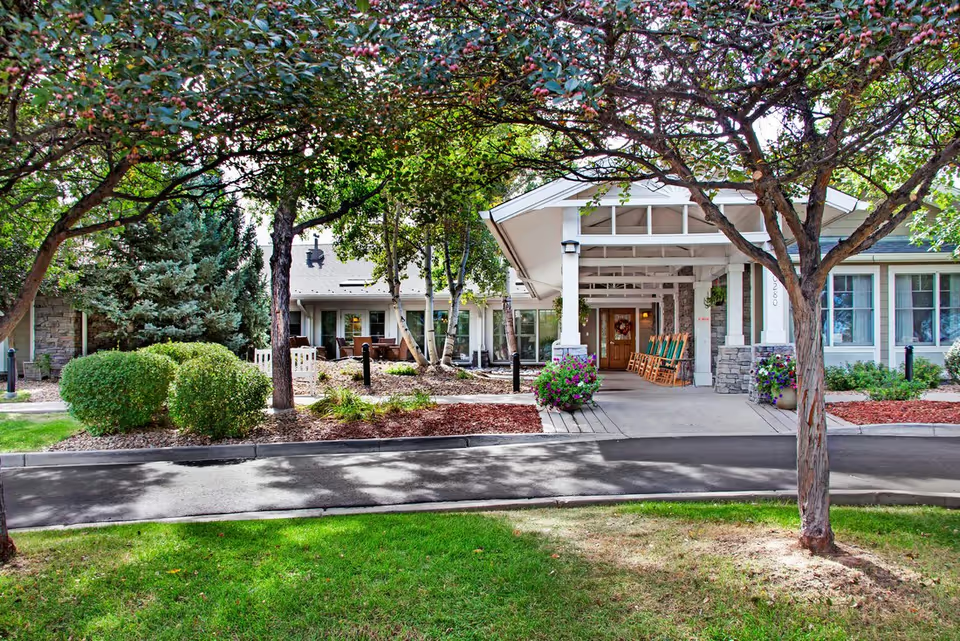
Reviews of Coal Creek Post Acute and Assisted Living are markedly mixed, producing a polarized picture of the facility. Many families and residents praise individual caregivers, rehabilitation teams, and the facility’s amenities — citing strong therapy programs, on-site wound care and physicians, a broad activities calendar, and a well-maintained, attractive central atrium with country-club–style amenities. At the same time, a substantial set of operational concerns recurs across accounts, creating significant variability in resident experiences.
Care quality and clinical services: Several accounts describe high-quality rehab, wound care, and attentive nursing when staffed by regular, experienced personnel. Skilled therapists are cited as a strength and some families credit the facility with strong clinical outcomes. Conversely, other reports describe lapses in clinical oversight: medication and oxygen administration errors, missed treatments, inconsistent vital-sign monitoring, and delayed assistance. These latter issues have been associated with hospital transfers and regulatory complaints in isolated instances; reviewers portray these as indicative of fluctuating clinical control rather than uniform practice.
Staffing and staff conduct: The staffing picture is uneven. Reviewers repeatedly note friendly, compassionate long-term staff members and CNAs who provide meaningful personal care. However, frequent staff turnover and a reliance on agency or travel nurses were highlighted as contributors to inconsistency in competence, familiarity with residents, and continuity of care. Weekend and overnight coverage are called out as particularly thin in some reports. Communication tone and responsiveness from some staff members are described as variable, with several families pointing to missed callbacks or delays answering call systems.
Dining and nutrition: Dining receives split assessments. Some reviews praise an attentive nutritionist, varied menus, and pleasant dining services. Others describe inconsistent meal quality and specific poorly prepared items. Overall, meal service appears capable but variable—dependent on kitchen staffing and execution.
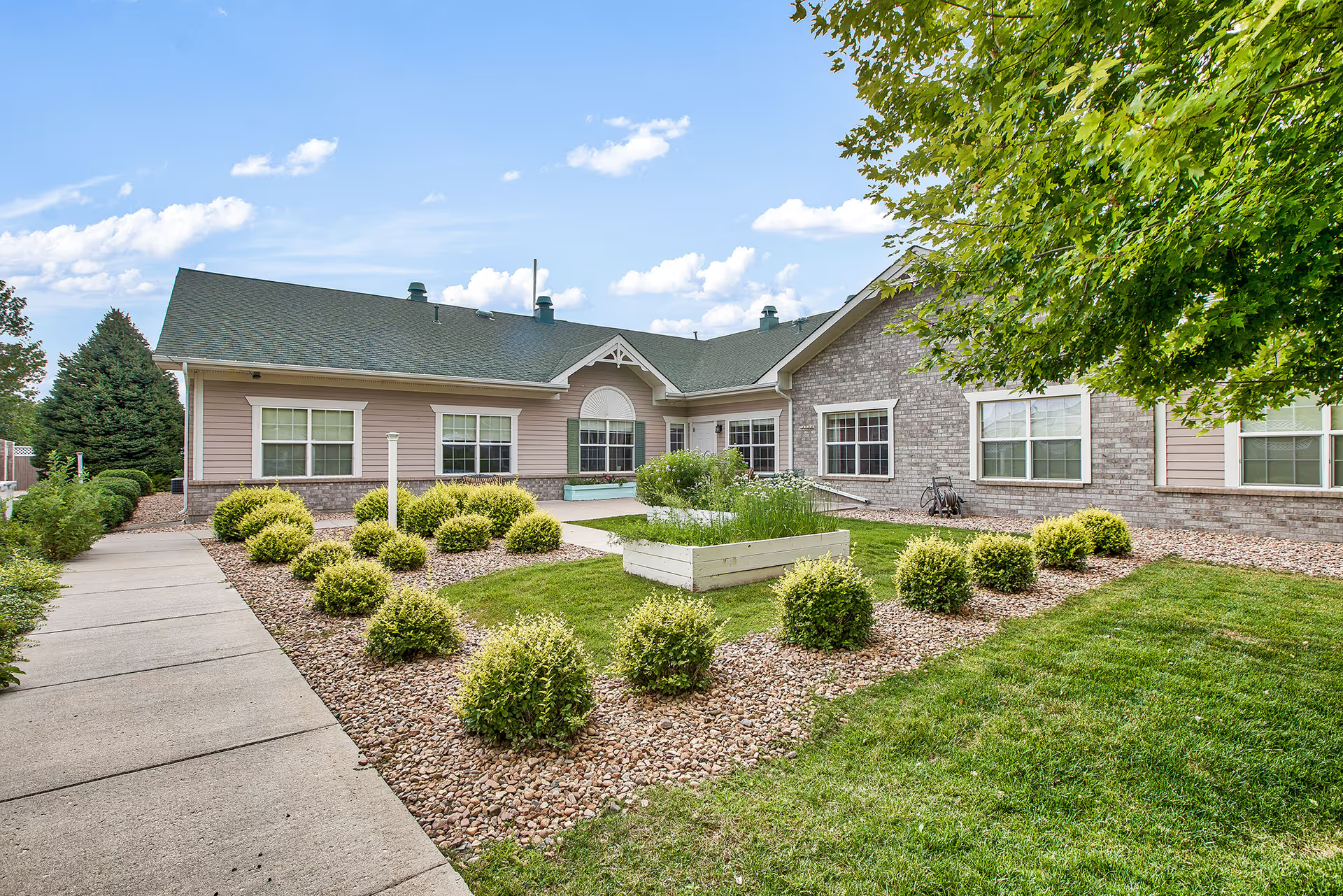
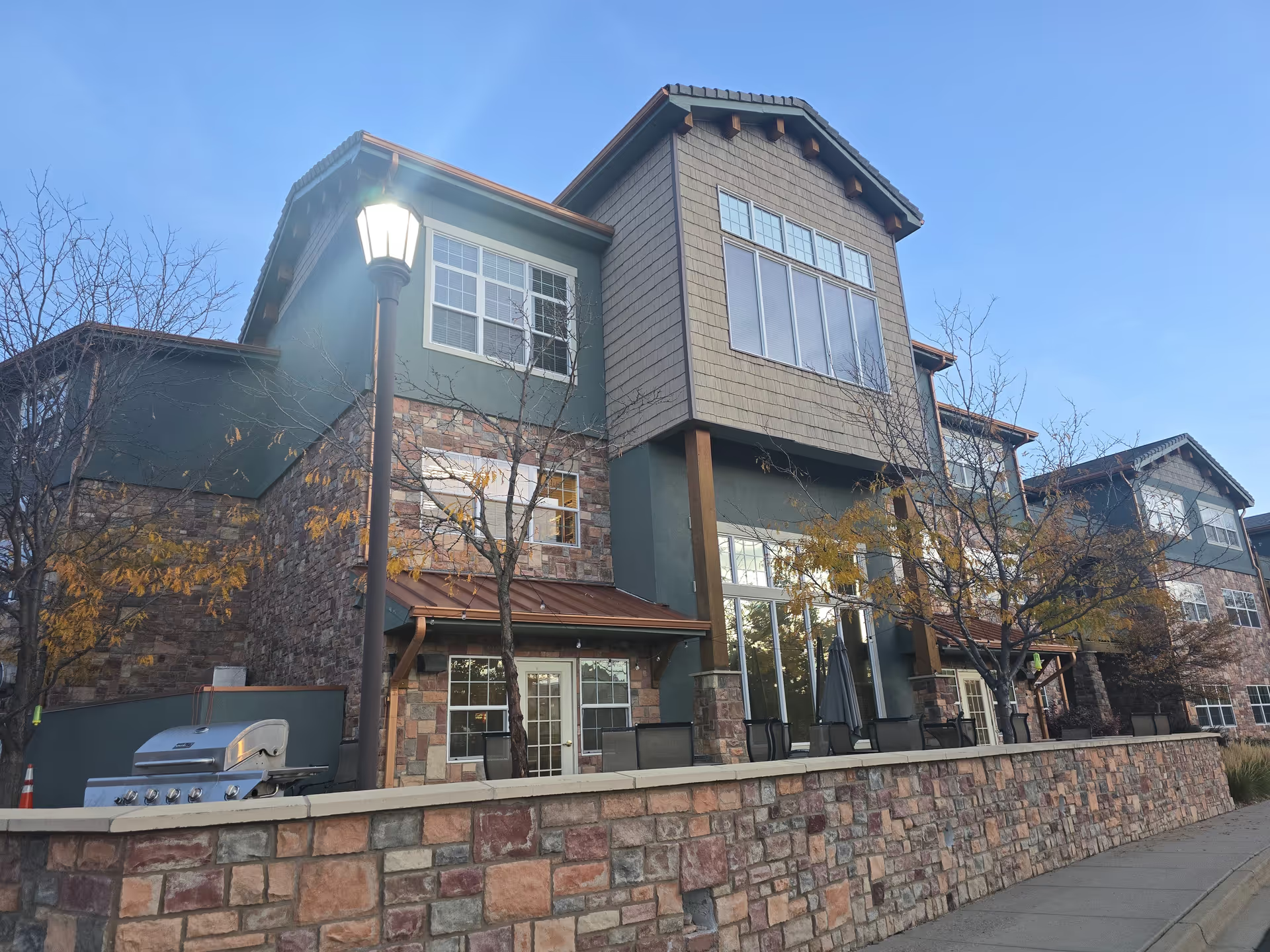
Activities and facilities: The facility’s physical environment and programming are among its stronger features according to many reviewers. Positive notes include an engaging activities program, accessible design, salon services, communal amenities (Bistro Bar, piano, putting green), and large therapy/exercise spaces. At the same time, several families reported that resident rooms can be sparsely furnished or minimally decorated, suggesting resources are more visible in common areas than in private rooms.
Management, communication, and operations: Management responsiveness is reported inconsistently — some families praise prompt issue resolution and clear care meetings, while others describe poor phone communication, delayed family notifications, and unclear accountability during ownership or administrative transitions. Equipment and supply maintenance problems (broken oxygen or blood-pressure equipment referenced) and documentation gaps (care plans, posted care-team names) are recurrent operational themes.
Notable patterns and considerations: The dominant pattern across reviews is a bifurcated experience: when established staff and therapy teams are present, the facility functions strongly as a rehab-friendly, amenity-rich center; when staffing is inconsistent, systemic weaknesses (medication/oxygen controls, responsiveness, cleaning routines, and documentation) become evident. There are isolated allegations of regulatory complaints and care decisions that prompted external reporting; such serious claims coexist with many positive accounts. Prospective residents and families should therefore evaluate current staffing levels, therapy hours, medication and oxygen administration protocols, room furnishing policies, and recent inspection or complaint histories as part of any tour or placement discussion.