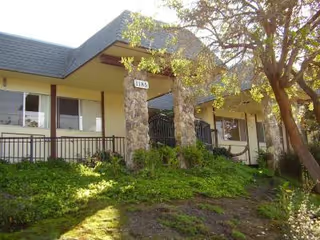
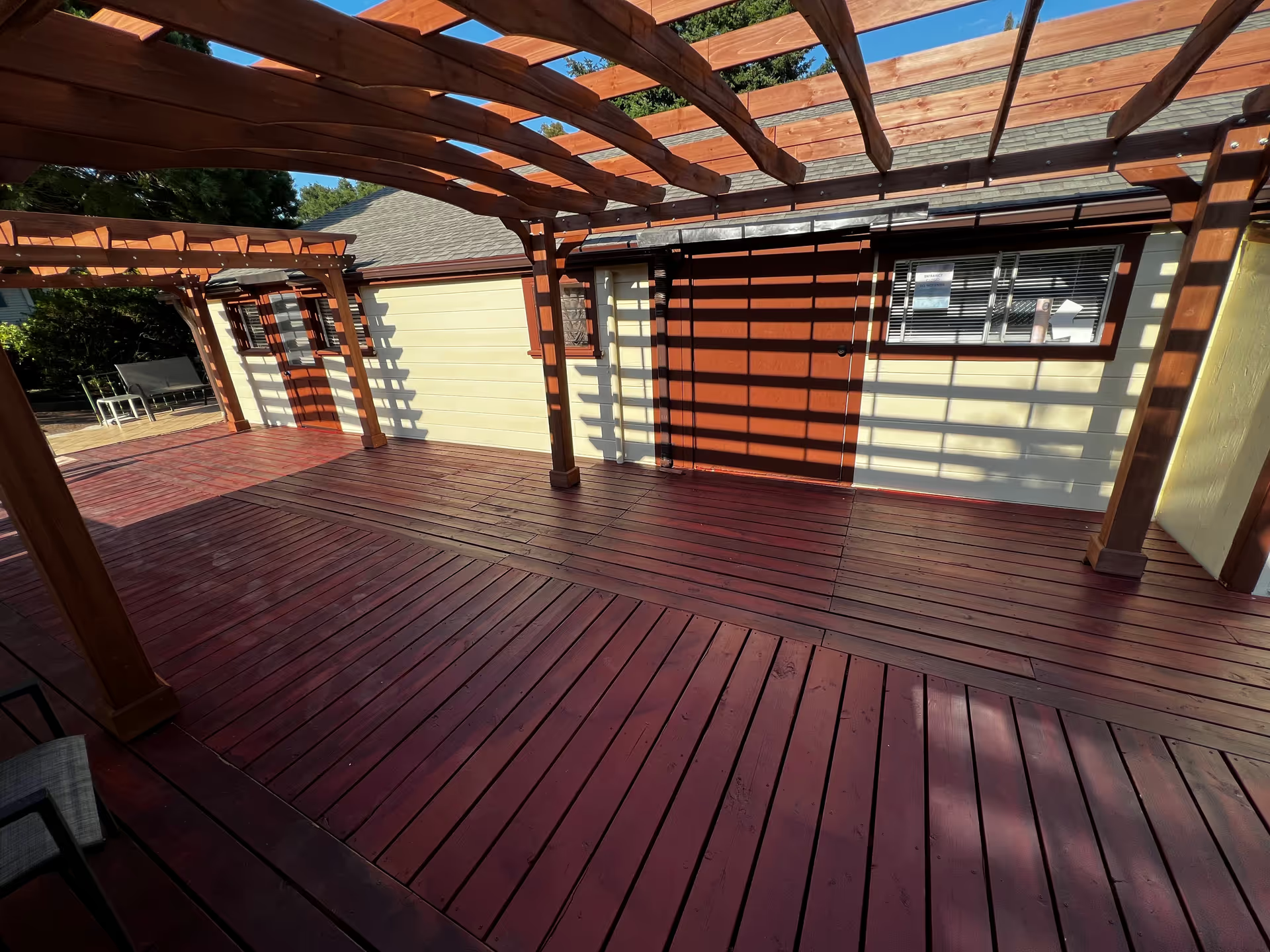
Overview: The Plaza at Mililani presents as a well-maintained, organized senior living campus with a clear focus on memory care and communal programming. Physical spaces are described as clean, airy and pleasant, with patios, a small courtyard, bistro and large dining rooms that contribute to a campus-style environment. The property includes a separate, secure floor for memory care and activity rooms on every level, which supports both safety and program availability.
Care and staff: Reviewers consistently describe staff as friendly, competent and accessible; families report ease of contact with staff and positive interactions with the director and tour staff. Clinical support is a noted strength for some families, including the presence of an on-site emergency nurse. At the same time, there are operational concerns around care scope and acuity: the community appears to restrict certain higher-acuity needs (including wheelchair restrictions in some units) and memory care operates on a private-pay basis with pricing that increases as care needs rise. Families should clarify admission criteria, wheelchair accessibility, and how care-level transitions are handled.
Dining and nutrition: The facility offers in-house cooking, a generally pleasant dining setting and a bistro area. Desserts and certain menu items receive positive mention. However, several comments point to inconsistent meal appeal and regular occurrences of residents not finishing dinners. Bistro hours have been shortened in some reports, which families described as reducing evening social opportunities. Prospective residents should tour during mealtimes and ask about menu rotation, portioning, and extended dining/social hours.
Activities and engagement: Programming appears extensive, with daily options such as bingo, puzzles, yoga, crafts, trivia and organized games; activity rooms on each floor support easy access. Many families found the schedule robust and appreciated the variety. That said, engagement is uneven: some residents spend substantial time in their rooms, and in-room television policies vary, which can reduce participation for certain individuals. Families should inquire about individualized engagement plans, exercise programming frequency, and how staff encourage participation for less-inclined residents.
Facilities and accommodations: Unit options include shared rooms and studios; the availability of an economy shared option provides a lower-cost entry point but is accompanied by smaller room sizes and shared bathroom arrangements (one shower for two occupants). Some units include in-unit kitchens and safety call buttons. The building reflects an older “Plaza” design that is consistent across locations—efficient but sometimes compact. Visitors appreciated easy transitions from shared units to studios when available.
Management and patterns to verify: Communication is generally described as good and staff reachable, yet multiple accounts indicate management sometimes requires prompting from families to address issues or follow up. Cost and payer acceptance are important operational considerations: the community has private-pay requirements for some services and memory care, does not accept Medicaid for those units, and pricing increases with higher care levels. Prospective families should confirm current rates, financial policies, payer acceptance, and how the community notifies and involves families when care needs change.
Bottom line: The Plaza at Mililani shows strengths in cleanliness, a full activity program, an on-site nursing presence, and a welcoming staff. Potential buyers should weigh those strengths against constraints around room size and shared-bathroom configurations, variable meal appeal and hours, accommodation limits for higher-acuity or wheelchair-dependent residents, and the private-pay/cost structure. Recommended pre-move questions include specifics on bathroom arrangements for shared rooms, meal samples and bistro hours, wheelchair/access policies, transition protocols as care needs increase, and documentation of family-communication practices.