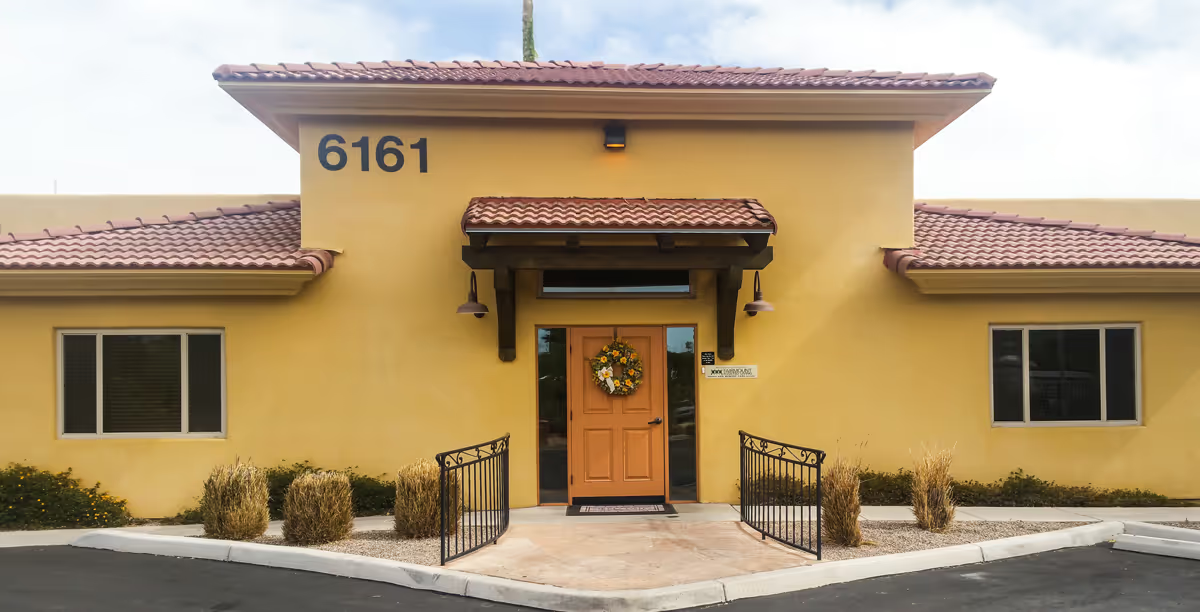
Overall impression: Reviews present a mixed but consistent pattern: many families describe a warm, clean, and well-appointed community with compassionate caregivers and engaging programming, while others describe operational inconsistencies that can affect safety and family confidence. The facility's strengths are tangible — a modern building with a large central courtyard, restaurant-style dining, single-floor accessibility, and staff who in many cases are described as caring, attentive, and responsive. At the same time, a set of recurring operational weaknesses appears across reviews and warrants careful inquiry by prospective residents and families.
Care and clinical coordination: Numerous families praised direct-care staff for compassion, attentive assistance with activities of daily living, and good post-surgical coordination. Several reviewers credited med‑techs and nurses with being familiar with residents' needs and timely medication delivery. However, conflicting accounts raise concerns about medication-management controls and clinical response reliability. Specific operational themes include medication-administration gaps, delayed response to falls or acute events, and inconsistent nursing coverage. These patterns point to variability in clinical processes and staffing levels rather than uniformly poor or uniformly excellent clinical care.
Staff and leadership: Staff are frequently described as warm, personable, and family-oriented; specific employees in admissions, nursing, and lifestyle roles received repeated praise for responsiveness and advocacy. Conversely, reviewers also describe frequent staff turnover, uneven professionalism among certain office or business staff, and inconsistent leadership presence. Leadership impressions vary markedly — some families highlight an engaged executive director and strong leadership, while others cite absentee or unprofessional management and an overburdened administrative team. This variability suggests leadership stability and staff retention are key drivers of the differing family experiences.
Dining and nutrition: Dining is another mixed domain. Many reviewers report attractive, well-presented meals and strong dining service, with accommodations made for special diets on some occasions. Other reviewers describe limited menu variety (especially for vegetarian and diabetic options), inconsistent food quality, and instances where meal offerings did not meet expectations. The pattern indicates that dining quality and menu adaptability may depend on active kitchen leadership and follow-through on feedback.
Activities and social programming: Lifestyle and activities programming receives generally positive marks: an engaged Lifestyles Director, lively events, and opportunities for socialization are mentioned frequently. That said, a number of reviewers requested greater variety or more off-site outings, and limited driver availability was noted. The community appears to provide a solid baseline of on-site programming with room to expand transportation and external activities.
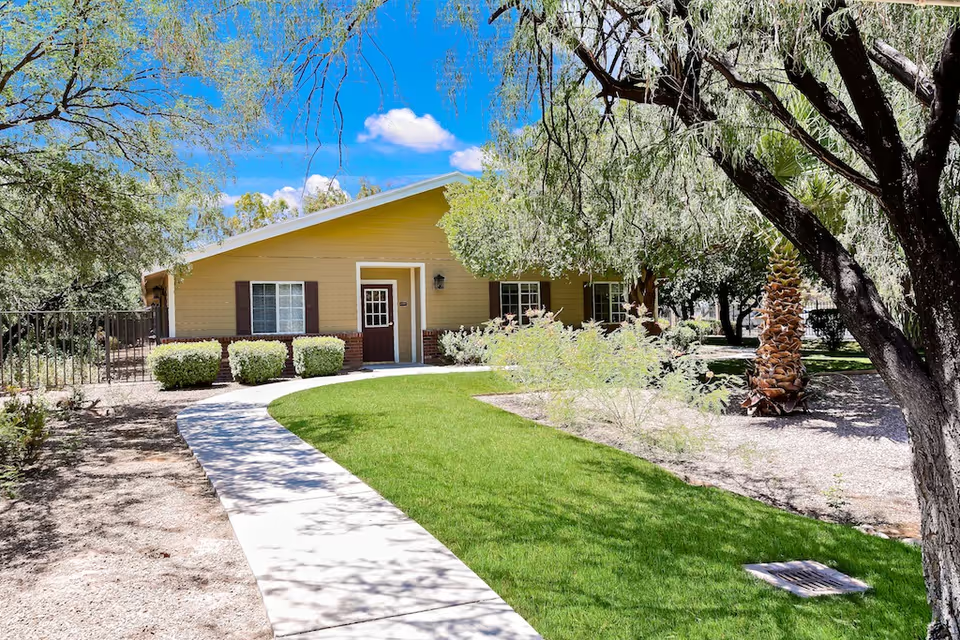
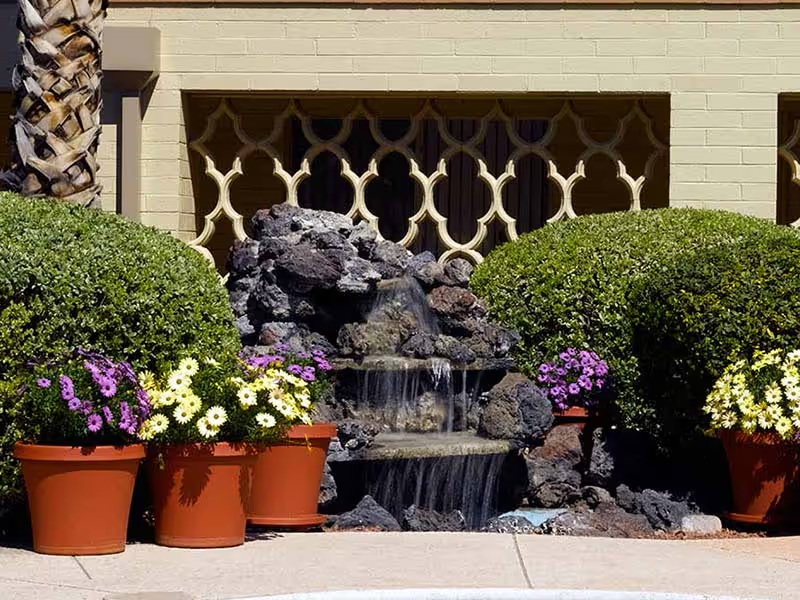
Facilities, housekeeping, and maintenance: Physical plant and aesthetics are clear strengths: modern units, clean public spaces, attractive landscaping, and a pleasant courtyard are consistently praised. At the same time, some reviews document inconsistent maintenance follow-through and spotty housekeeping or sanitation concerns in certain areas. Prospective families should ask about the facility’s maintenance-ticket turnaround, housekeeping schedules, and quality checks.
Management, communication, and transparency: A recurring pattern involves family communication and transparency during health events and infection-control situations. Several reviewers criticized delayed or incomplete family notification during outbreaks and during changes in resident condition. These concerns intersect with reported staffing instability and leadership variability. In addition, some families indicated dissatisfaction with business-office interactions and perceived shortcomings in hiring practices. Together, these items suggest organizational-process weaknesses in communication protocols, emergency notification, and human-resources practices.
Notable patterns and takeaways: The community shows many features that families seek — a modern, pleasant environment; caring direct-care staff; and active programming — but also exhibits variability in operational reliability. Key areas to evaluate on a tour or during decision-making include: current staffing ratios and turnover metrics, medication administration policies and error-tracking procedures, fall‑response protocols and average response times, family-notification policies for clinical changes and outbreaks, menu samples and special-diet accommodations, transportation schedules, and maintenance/housekeeping quality controls. Asking for references or speaking with current families about recent leadership stability may also help assess whether the facility's strengths are consistently delivered.
In summary, Inspirations of River Centre offers many positive attributes that families value, but prospective residents should verify operational safeguards and communication practices to ensure those positives are consistently realized in daily care and crisis situations.