Victory Centre of Galewood presents as a community with many features families commonly seek for longer-term senior living. Reviewers frequently point to supportive leadership at admission, a helpful front desk, and nursing staff who provide hands-on assistance with daily needs such as bathing, dressing, and laundry. The community houses on-site skilled rehabilitation capacity and long-term care options; several families described positive rehab and clinical support after health declines. There is a notable presence of long-term residents, which suggests stability for those looking for continuity.
Staff quality is a central theme: many reviewers praised individual caregivers as attentive, caring, and professional, and some cited prompt and communicative upper management. At the same time, there are repeated references to inconsistent staff conduct and communication tone, and to occasions when clinical or wellness staff were difficult to reach. These patterns indicate an overall caring culture that nevertheless experiences variability in responsiveness and interpersonal professionalism across shifts or teams.
Dining and nutrition opinions are mixed. Some families described improved appetite and nourishment, variety in choices, and personalized attention; others described dissatisfaction with certain main courses and uneven meal quality. The net impression is that the dining program can be nourishing and adequate for many residents but may produce variable satisfaction depending on menu items and individual taste.
Activity programming and amenities are strengths, with an open, spacious layout, second-floor garden, escorted dinners, movies, on-site salon, library, exercise areas, and regular social programming including religious services and off-campus outings. Reviewers noted that activity levels were reduced during infection-control periods but that off-campus and on-campus activities are planned or available as restrictions ease. The fitness offering includes a weight room and exercise area, but reviewers noted the absence of a full gym which may matter to more active residents.
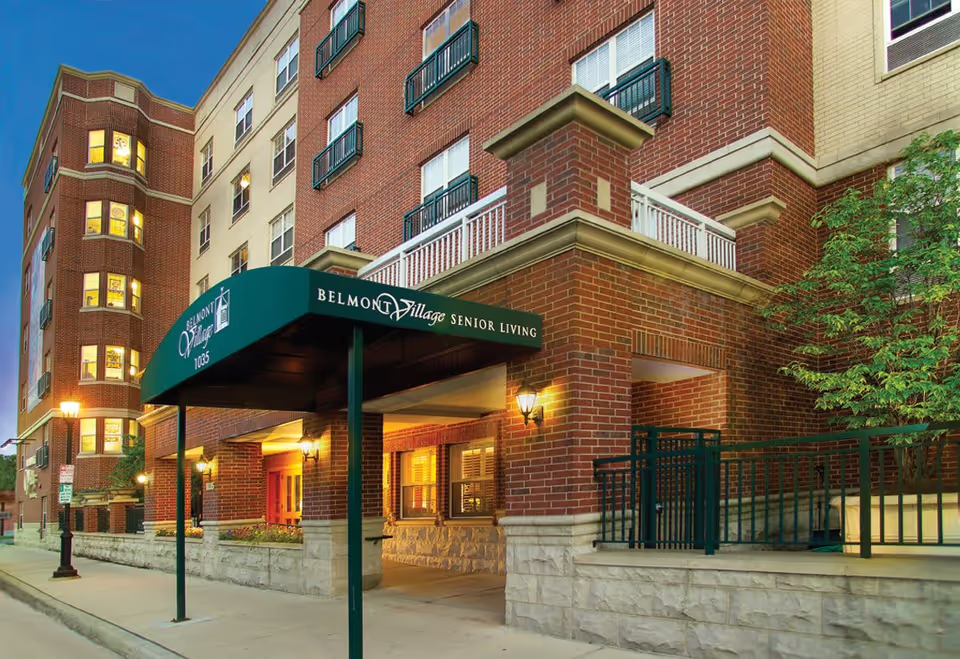
Facility features receive largely favorable comments: apartments are described as large, well-lit, and private with kitchenettes and wheelchair-friendly bathrooms; common areas were frequently called clean and well-kept. However, there are conflicting accounts—a portion of feedback flagged sanitation or cleanliness concerns in some areas—indicating intermittent issues rather than a uniformly poor environment. Visitor parking and site access were singled out as an operational limitation for guests.
Management and communications are generally viewed positively regarding move-in assistance, paperwork processing, and family updates, but there are also remarks about expectation-management and perceived discrepancies between marketing and lived experience. Taken together, the pattern suggests that leadership is engaged and supportive, yet communication consistency and some operational areas (cleaning, dining, nursing responsiveness, parking, and fitness infrastructure) may benefit from targeted improvements.
For prospective residents and families: a visit that includes a meal, a tour of available apartment types, questions about nursing coverage and after-hours response, current activity schedules, and on-site parking logistics would help clarify whether the facility’s strengths align with personal priorities. Asking for recent housekeeping quality audits, sample menus, and a list of regular and specialty activities can also help assess fit based on the mixed experiences reported.