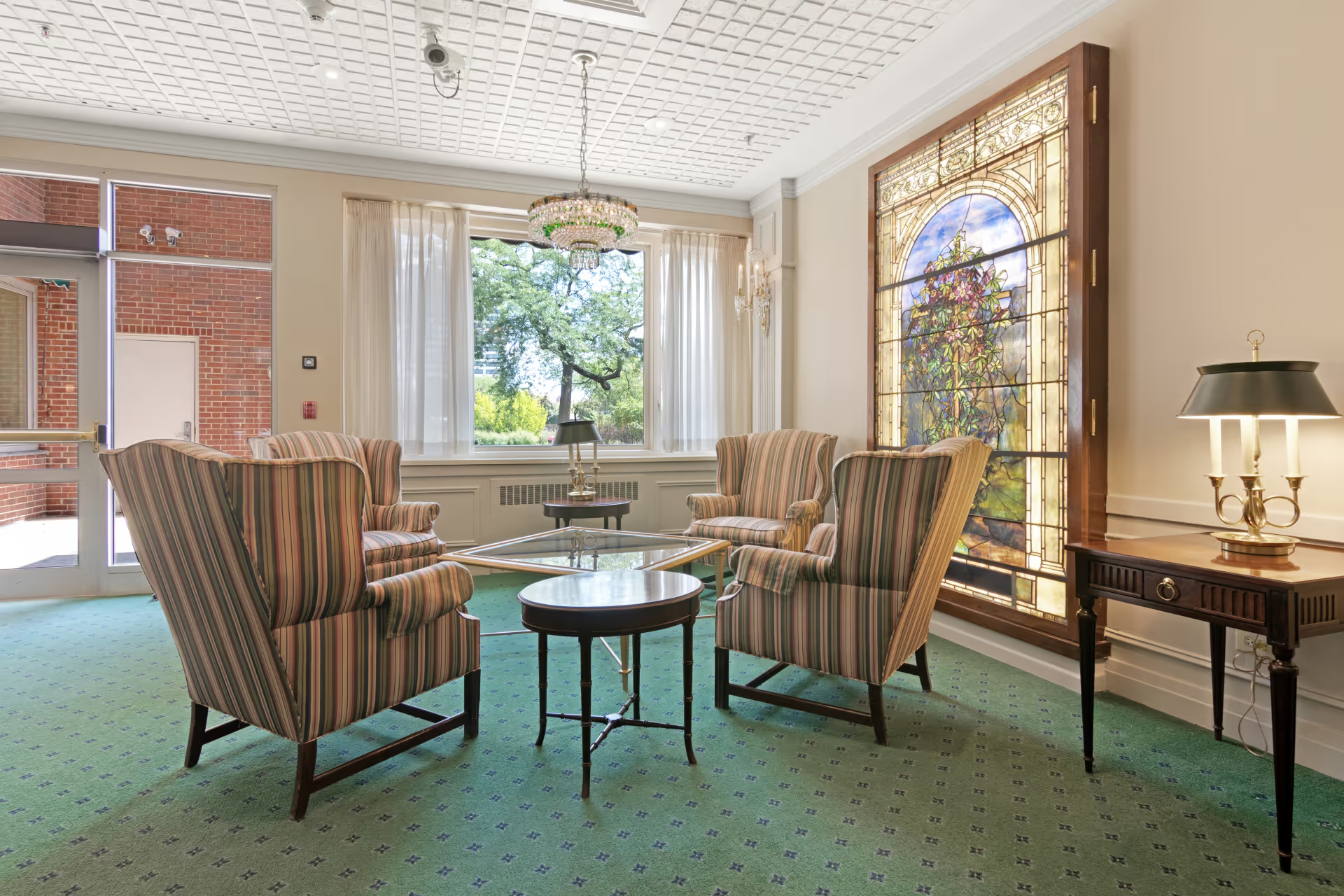
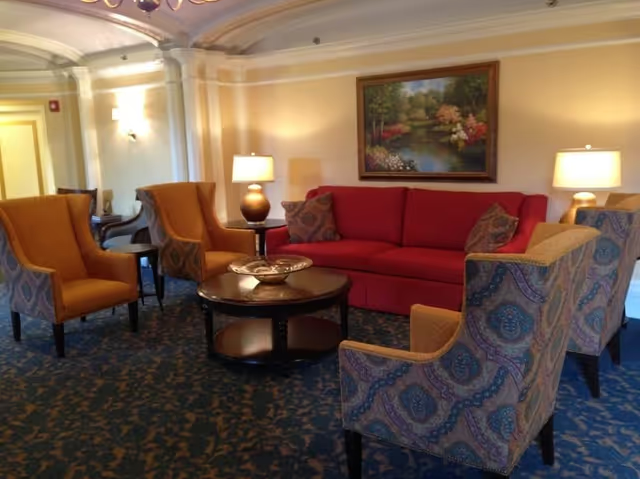
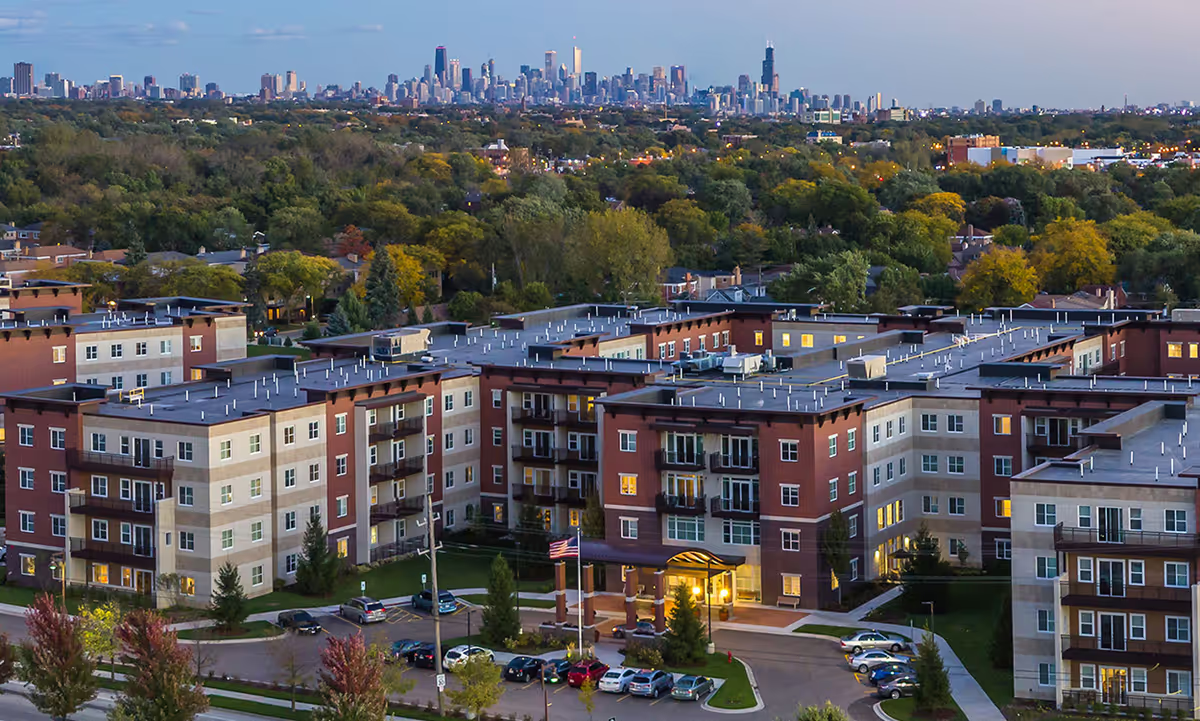
Trulee Evanston presents as a modern, well-maintained senior living community with strong aesthetic and programmatic strengths. The facility is new and attractively finished, with notable features such as skyline views, multiple common spaces (including a skyline room and outdoor patio), and an on-site bar area used for happy hours and events. The building’s location near downtown Evanston and its clean, contemporary environment are repeatedly highlighted as positives, and the move-in process is described as smooth and accommodating.
Programmatically, the community offers an extensive activity calendar that includes theater and opera outings, in-house entertainment, brain-exercise programs, art-studio offerings, and regular volunteer partnerships from a nearby university. Residents and families emphasize a robust social environment: many describe life-changing relationships, a strong sense of belonging, and staff who encourage and facilitate resident connections. Therapy services are also a strength, with several comments noting exceptional PT/OT support.
Staff performance elicits mixed impressions. Many accounts praise individual caregivers and activity-team members as compassionate, attentive, and willing to go above and beyond; front-line staff are frequently described as personable and welcoming. At the same time, there are recurring operational concerns: staffing levels are inconsistent, and reviewers describe delays in assistance and in clinical responsiveness when care needs escalate. There are also repeated notes about gaps in communication among facility staff, external clinicians, hospice, and families, which have translated into difficulties coordinating care and managing pain or end-of-life transitions in some cases.
Dining and hospitality are generally regarded as positive starting points—pleasant dining rooms, friendly service, and strong initial meals—but there is also commentary that meal quality and variety can change over time. Administrative areas show variability: while some families experienced proactive, problem-solving staff (including helpful front-desk and admissions interactions), others describe billing confusion, reimbursement issues, and inconsistent customer-service tone at the front desk.
Physical-unit characteristics and logistics are additional considerations for prospective residents. Some units are described as compact, with small bathrooms and limited storage; parking is noted as constrained and directions could be clearer. The community’s infection-control and care-level transition policies have occasionally resulted in abrupt changes for residents moving between independent and assisted services, suggesting a need to clarify how escalating care needs are handled.
Overall, Trulee Evanston offers a high-quality environment in terms of facilities, activities, and community life, and many families report positive experiences with therapy and day-to-day staff interactions. The principal areas for due diligence are operational: prospective residents and families should ask specific questions about staffing ratios and continuity, clinical-response protocols (including coordination with outside physicians and hospice), billing practices and invoicing timelines, unit dimensions and bathroom layouts, and parking arrangements. A detailed tour that includes a discussion of transition planning and examples of clinical communication processes will help families weigh the community’s strengths against the operational concerns raised by others.