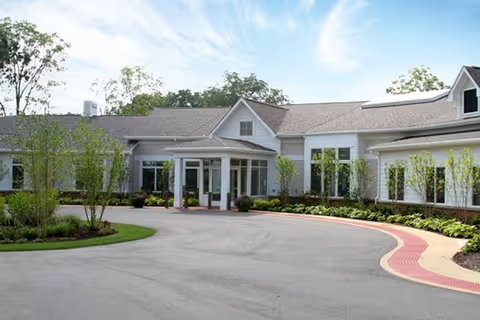
Brookdale Adrian presents as a community with a consistently praised caregiving culture and a broad set of resident services. Across feedback, staff are described as compassionate, friendly, and willing to go beyond routine duties; families point to attentive nursing and caregiving interactions, responsive maintenance, and housekeeping routines that support resident comfort. Residents and visitors frequently note the social, home-like atmosphere, well-maintained grounds, spacious apartments (many with patios), on-site therapy and salon services, and transportation options that support independence and engagement.
Dining and nutrition are an area of mixed experience. Many residents enjoy the meals, dining atmosphere, and family dining opportunities, and kitchen staff receive repeated praise for accommodating preferences. At the same time, reviewers identify operational gaps: inconsistent food temperature and preparation, limited nutrient-dense or plant-based options, and variability in side-dish variety. These issues appear as both culinary limitations (menu composition) and service continuity (timing, staffing in dining areas). Families who prioritize specialized diets, whole-grain/legume substitutions, or more vegetarian/non-dairy choices should evaluate menu flexibility during a tour.
The activities program is a clear strength: a busy calendar with on-site entertainers, music, outings, exercise classes, and intergenerational programming is described frequently. That said, accessibility of activities for residents with sensory impairments (notably vision limitations) and occasional reduced offerings during infection-control events or holidays are recurring themes. Prospective residents should ask about accommodations for sensory impairments and about typical activity levels outside peak seasons.
Operationally, Brookdale Adrian shows two recurring fault lines: staffing and management/administrative processes. Several reviewers describe intermittent staffing shortages that lead to slower response times to call buttons and longer waits for assistance. At the administrative level, there are mixed impressions of managerial responsiveness: the local executive leadership is often praised, yet families also describe constraints from corporate protocols, billing or charge-accounting inconsistencies, and occasional lapses in family communication. Cost is another consistent concern—monthly fees are described as high by some families, with worries about future increases and about complex cancellation/late-fee policies. Additionally, the facility does not broadly accept Medicare and offers no dedicated memory-care unit, factors that affect placement suitability for some residents.
Facility condition and safety are generally positive: the community is described as clean, accessible for limited mobility, and safe, with hospice coordination and security features noted as reassuring. A smaller set of comments mentions older interior finishes in some areas and isolated odor or water-quality issues; these appear addressable but are worth verifying in a visit. Overall, Brookdale Adrian is often recommended for families prioritizing warm, relationship-centered care, active programming, and a full-service campus; prospective residents should assess dining preferences, insurance coverage concerns, and the facility’s staffing and communication protocols during tours to ensure alignment with individual care needs and budgetary constraints.