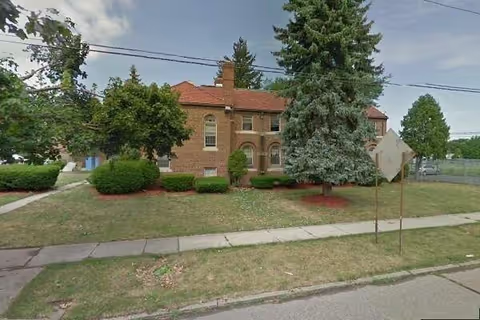
The reviews present a strongly mixed picture of Fairlane Senior Care & Rehab Center. Many family members and visitors praise dedicated caregivers, engaged nursing leaders, and a robust activities program that includes music, worship services, and specialty programming. Several accounts highlight compassionate, family-like interactions, celebratory dining events and holiday meals, large resident rooms, secure parking and campus access, and admissions staff who eased placement. In certain units families described consistent clinical attention and a cohesive team culture that they considered a strength.
At the same time, recurring operational concerns appear across multiple accounts. The most frequent themes are inconsistent staff responsiveness and variable staffing levels, which manifest as delayed assistance with basic needs and uneven coverage across shifts. Reviewers also describe gaps in medication-management processes and clinical oversight — for example, inconsistent physician engagement and missed medication-related coordination — which point to variability in clinical governance rather than isolated occurrences.
Dining and housekeeping show similar variability. Some families praised nutritious meals and an engaged food-service director, while others reported undercooked or missed meals and lapses in dining-room conduct. Housekeeping and maintenance concerns include inconsistent linen changes, room cleanliness, bathroom functionality, and odor or pest-control issues in certain areas. These suggest uneven adherence to environmental services protocols and building-maintenance routines.
The facility’s dementia unit and activity environment drew specific critique from families seeking more sensory and visual programming; reviewers described the memory-care setting as not consistently meeting those specialized needs. In addition, several reports raise concerns about clinical incident response and escalation — long delays in attending to acute events, skin-integrity and positioning practices, and coordination during transitions such as dialysis or post-surgical discharge. These patterns indicate opportunities to strengthen clinical incident pathways and handoffs.
Finally, broader management and safety themes emerge. Multiple accounts described inconsistent professionalism and communication tone from staff and leadership, difficulty obtaining timely family updates, and problematic discharge coordination. There are also serious allegations concerning theft and financial misconduct and reports of lapses in medication and supply security; such claims warrant formal investigation and tighter controls. At the same time, other reviewers described visible, effective leadership and staff who extended life and comfort for residents, which indicates that strengths exist within the organization but are not uniformly experienced across units or shifts.
For prospective residents and families: this facility appears capable of providing highly attentive, life-extending care in some units, with valued activities and compassionate teams. However, there are documented patterns of inconsistent operational performance — especially around staffing consistency, sanitation, dining continuity, clinical oversight, and security controls — that should be discussed directly with facility leadership. When considering placement, families should request current staffing ratios, recent inspection outcomes, examples of dementia-programming, medication-management policies, and a clear communication plan for clinical incidents and discharge procedures.