Overall impression: Reviews paint a facility where clinical strengths and interpersonal care are prominent drivers of positive family experiences, while operational and consistency issues create the primary concerns. Many families emphasize strong rehabilitation outcomes, attentive nursing, and a welcoming admissions process. At the same time, other families describe episodes of poor responsiveness, cleanliness issues, and billing or coordination difficulties that warrant careful inquiry by prospective residents and families.
Care and clinical services: The facility is frequently praised for its rehabilitation and therapy capacity — reviewers cite effective PT/OT, individualized treatment plans, and active progress monitoring. Nursing and caregiving staff are described as compassionate, attentive, and experienced; multiple comments reference long-tenured team members and specific clinicians who provided strong clinical and emotional support. However, there are recurring descriptions of inconsistent continuity after certain surgical or acute events and concerns about the frequency of assessments, which some families find burdensome.
Staff and leadership: Staffing quality is a clear strength in many accounts: staff are characterized as caring, professional, and resident-focused. Admissions, reception, and social-work personnel receive repeated positive mentions for being welcoming and helpful with transitions and Medicaid/insurance navigation. That said, several reviews describe variability in responsiveness, unreturned calls, and local differences in professionalism, suggesting management consistency and communication practices may vary across shifts or units.
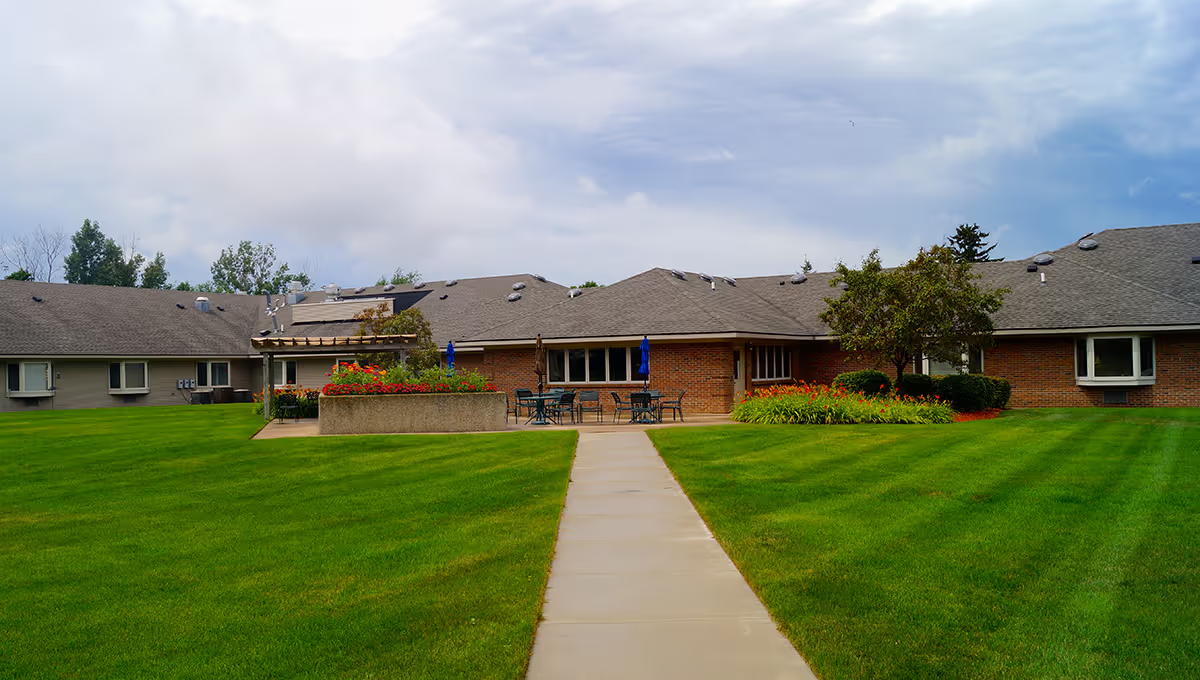
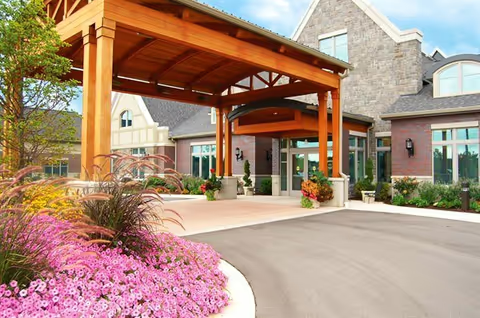
Dining, activities, and environment: Dining and activity programming receive largely positive feedback; food quality, engaged activities, and services such as hair care are highlighted as contributing to resident satisfaction. The facility is often described as clean and well kept, with friendly common areas and a sense of community. Contradictorily, a number of accounts raise sanitation concerns in specific instances and note small shared rooms that limit privacy — these represent operational inconsistencies rather than uniform conditions.
Operations, communication, and billing: Operational gaps emerge around family communication, follow-up after transfers or admissions, and aspects of billing or Medicare/insurance coordination. Some families experienced unclear cost expectations or escalation after Medicare days ended, while others praised assistance with Medicaid navigation. Prospective residents should verify discharge planning, insurance coordination, and the facility’s process for communicating changes to families.
What to watch for and concluding recommendation: The facility appears well suited for residents seeking strong sub-acute rehabilitation and a resident-centered caregiving culture. Families who prioritize therapy quality, compassionate staff, and active engagement programming are likely to have positive experiences. Because reviews indicate variability in cleanliness, staffing responsiveness, room configurations, and billing coordination, prospective residents should ask targeted questions during tours: request specifics on room size and availability, sanitation and housekeeping schedules, staffing ratios and on-shift contacts, examples of post-operative rehabilitation plans, and written estimates of costs and insurance coordination. These checks can help align expectations with the facility’s strengths and identify areas where additional oversight or advocacy may be needed.