Hooper Care Center elicits mixed impressions across the provided summaries. Several comments highlight positive elements — friendly staff, an active programming schedule, a dementia-secure unit, and a location convenient for family members — while other feedback raises operational concerns that may affect family confidence and resident well-being.
Care quality appears uneven. Some families describe the center as providing adequate or even very good care and note residents who seem content. At the same time, there are concerns that basic care processes can be inconsistent, most notably assistance with meals and hydration. These comments suggest potential gaps in routine assistance and timely attention to residents' nutritional and fluid needs rather than a uniformly poor clinical environment.
Staff performance is characterized as variable. Many remarks praise individual staff for friendliness and positive interactions; however, there are also descriptions of confrontational exchanges and a communication tone that some families found troubling. These mixed impressions point to variability in staff–family interactions and suggest that interpersonal communication practices may not be consistently applied across shifts or teams.
Dining and nutrition-related observations are a notable area of concern. While the facility offers regular meal service, summaries indicate inconsistent assistance during meals and potential risks related to insufficient monitoring of intake. Prospective families should inquire about mealtime staffing, tray/assistance procedures, and protocols for monitoring and documenting residents' nutritional and hydration status.
Activities are generally described positively. The center appears to offer an engaging activity schedule that supports resident engagement and may contribute to the reports of residents with a positive affect. The presence of a dementia-secure unit indicates programming and environmental controls intended for residents with cognitive impairment.
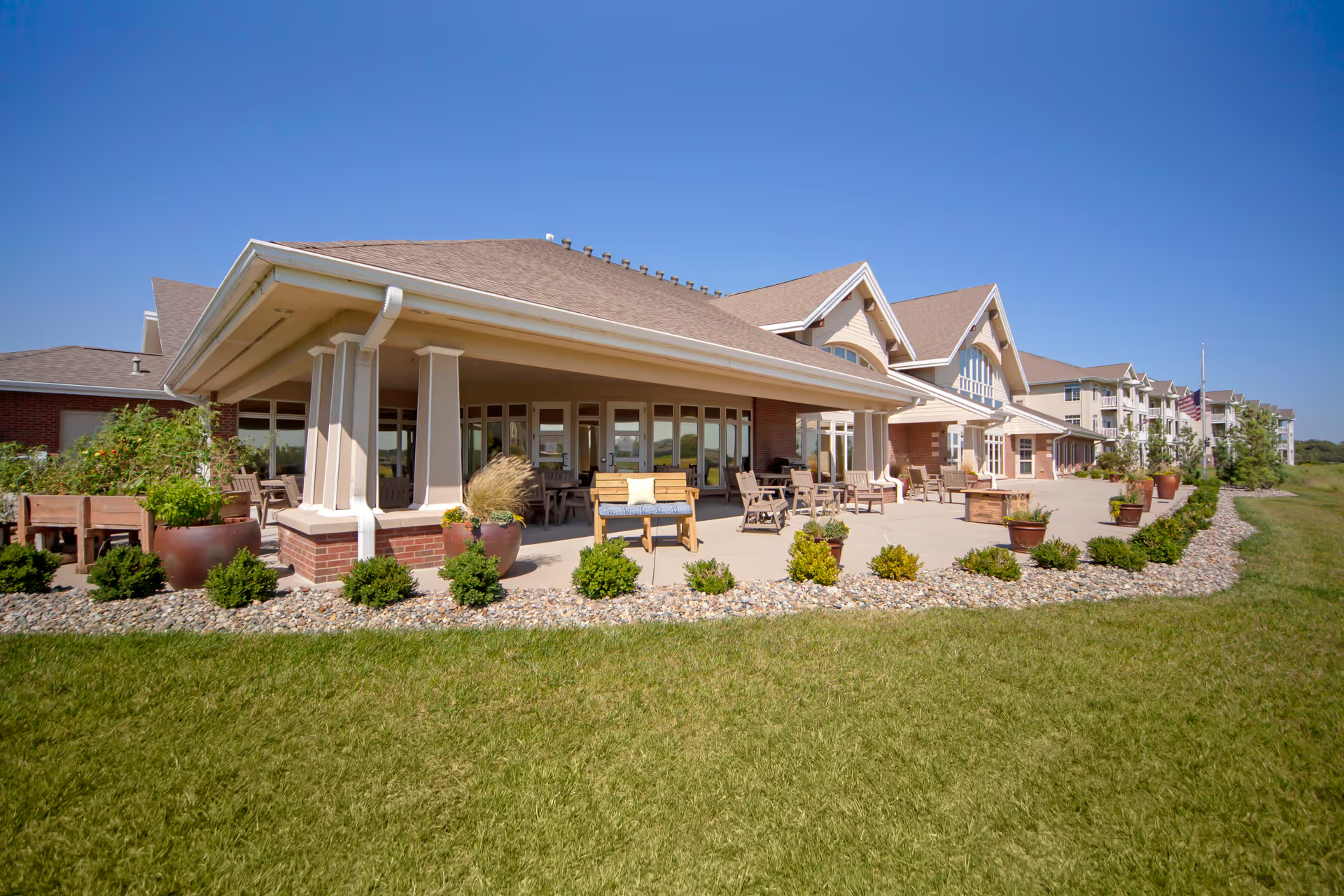
Facility characteristics include constrained room size and limited personal living space, which several summaries identified as a downside. The dementia-secure unit and the facility's proximity to family are operational strengths, but physical space limitations could affect comfort and storage for personal items.
Management and leadership communication emerge as another recurring theme. Descriptions of defensive responses from leadership and inconsistent responsiveness to family concerns suggest opportunities to improve transparency, family communication protocols, and complaint-resolution processes.
Overall pattern: experiences range from reassuring to concerning. The contrast between positive reports of staff, activities, and resident mood and the significant concerns about communication tone, meal assistance, and leadership responsiveness suggests variability in day-to-day operations. Recommended next steps for families considering this facility include scheduling multiple visits (including meal times), meeting frontline staff and administrators, reviewing care plans and mealtime/hydration protocols, and asking about staffing patterns and how family concerns are handled.