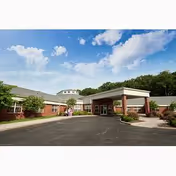
Reviews for Rosary Care Center present a mixed but distinct pattern: many family members describe warm, compassionate interactions and strong therapy services, while others raise operational concerns that affect consistency of care. The facility appears capable of providing positive long-term and post-acute outcomes for residents when staffing and procedures are functioning as intended. Several reviews single out individual employees and teams as exemplary, and families frequently cite a family-like atmosphere and confidence in day-to-day caregiving.
Care quality and staff: Positive comments emphasize compassionate caregivers who provide individualized attention and effective rehabilitation therapy. Therapy and nursing on some shifts are highlighted as strengths that contribute to resident progress and family reassurance. Counterbalancing those comments are repeated concerns about staffing levels, inconsistent training across floors, and variable professionalism among staff. There are also specific clinical process concerns, including inconsistent controls around medication administration and adherence to clinically ordered diets. Some families described serious incidents and subsequent concerns about how those incidents were documented and communicated; there are allegations of concealment in incident documentation that warrant careful review by prospective families and regulators.
Dining, activities, and facilities: Dining staff receive generally favorable mentions, with specific praise for kitchen personnel and named individuals. Therapy and activity programming are viewed positively by those who used them, with several families recommending the facility for rehabilitation stays. At the same time, reviewers noted instances of inconsistent dietary adherence for residents with clinical meal requirements, and a few comments referenced variability in how activities and ancillary services are delivered across floors.
Management, operations, and communication: Operational themes include rigid scheduling practices, last-minute schedule changes, and limited days off for staff, which reviewers link to morale and consistency problems. Training gaps—particularly expecting staff to cover multiple floors without comprehensive cross-training—appear to contribute to performance variability. Documentation transparency and incident reporting were highlighted as problem areas, as was perceived weak accountability from leadership on staffing and quality oversight. Communication with families is uneven: some describe clear, comforting interactions; others report inconsistent or defensive responses following clinical incidents.
Notable patterns and guidance for prospective families: The facility demonstrates meaningful strengths in compassionate caregiving and therapy outcomes, but operational weaknesses—staffing, training, medication and dietary controls, and documentation practices—create variability in the resident experience. Prospective residents and families should consider on-site observation and direct questions about current staffing ratios, training programs for cross-floor competency, medication-administration protocols, dietary safeguards for clinical needs, incident-reporting policies, and how the facility communicates with families after clinical events. Doing so will help determine whether the facility’s positive aspects reliably align with an individual resident’s needs.