Overall impression: Homestead Living is presented primarily as a small, dementia-focused residential home with a strong emphasis on personalized, family-style care. Many families describe a warm, homelike atmosphere supported by a high staff-to-resident ratio, staff with memory-care training, and an activity program that aims to keep residents engaged through meaningful tasks, live music, intergenerational offerings, and specialty classes. Several reviewers highlight effective hospice coordination and dignified end-of-life care.
Care and staff: Reviewers commonly praise the compassionate demeanor of caregivers, long-tenured staff in some roles, and staff who understand dementia-specific needs. One-on-one attention and a sense of a "family" culture are repeated strengths. At the same time, reviewers also describe variability in staff professionalism and responsiveness: staffing shortages, turnover, and inconsistent shift coverage were raised as operational concerns that can affect morning routines and general responsiveness. Families suggest asking about current staffing levels by shift and turnover history during a visit.
Dining and activities: Meals are frequently described as homemade, healthy, and locally sourced, with reviewers valuing an on-site cook and warmer, fresher food than the reviewers' prior facilities. Activity programming is a pronounced strength: an active coordinator, meaningful daily activities (folding laundry, meal prep, outings), live musicians, and intergenerational programming are cited as improving resident engagement and mood. A small number of families, however, raised food-safety and temperature-checking concerns; prospective families may want to review food-safety protocols and special-diet procedures.
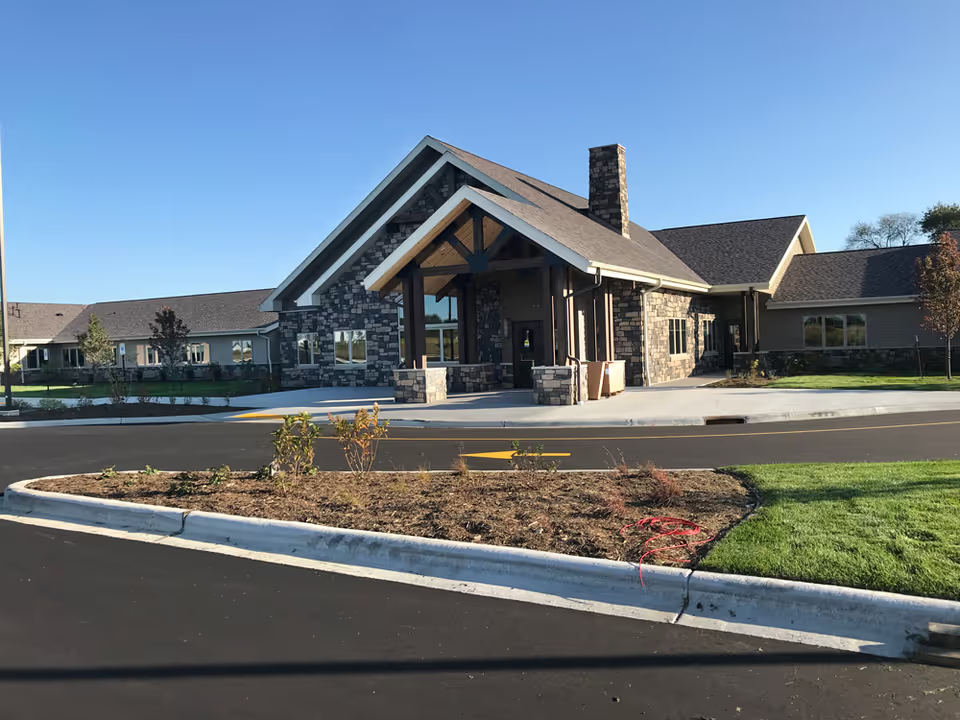
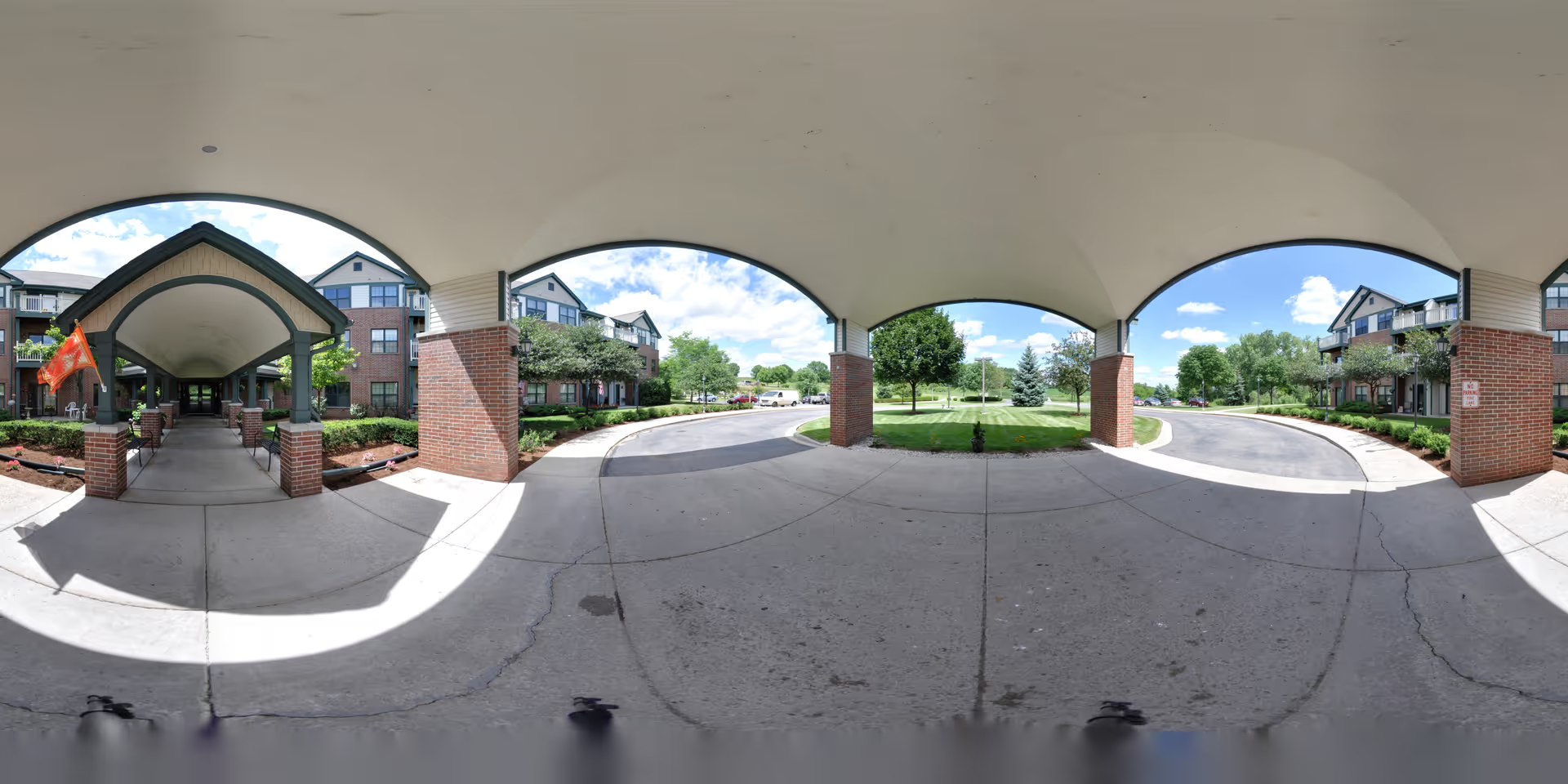
Facilities and amenities: The facility's small scale (about 16 residents) supports a homelike feel and ample communal spaces for socializing, and outdoor areas and gardens are appreciated. Practical amenities such as on-site laundry and underground parking are noted positives. Trade-offs include relatively small private rooms, shared hallway bathrooms, and absence of in-room toilets/sinks in some units; some reviewers also mention dated finishes in certain areas. These characteristics may influence fit for residents with higher physical-care needs.
Management and operations: Positive comments include straightforward billing and good family communication in many cases. However, there are recurring operational themes to consider: scheduling and management communication gaps, occasional favoritism or interpersonal staff conflicts, and uneven adherence to infection-control or sanitation practices in some areas. These patterns suggest looking closely at current management practices, staff supervision, and cleanliness/infection-control routines when touring.
Recommendation and next steps: For families seeking a small, dementia-focused, activity-rich, homelike setting with strong hospice collaboration and personalized attention, Homestead Living appears to be a strong match for many residents. Prospective residents with higher physical needs or who require in-room bathroom facilities should evaluate room layouts carefully. On a tour, ask for: current staffing ratios by shift, turnover statistics, housekeeping and infection-control procedures, food-safety checks and menu/sample, room measurements and bathroom arrangements, and details on billing/contracts. These focused questions will help clarify whether Homestead’s strengths align with an individual resident’s care needs and priorities.