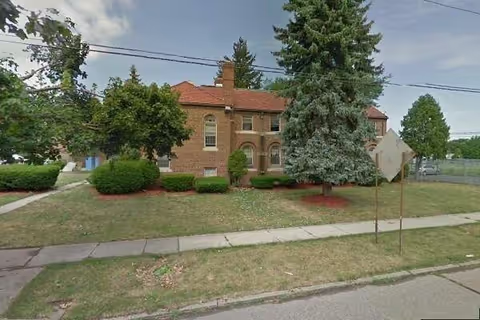
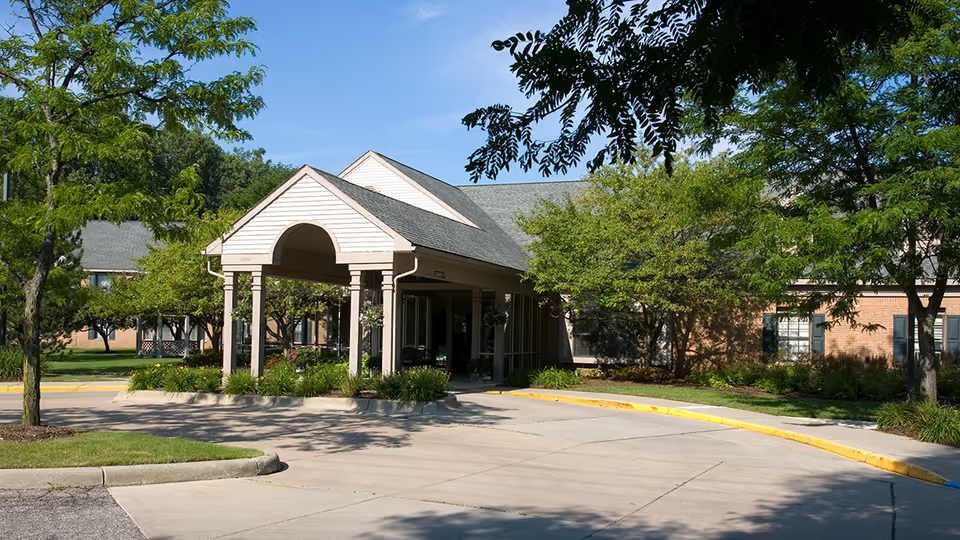
Morley Manor Cooperative operates as an independent-living, 55+ cooperative with a resident-appointed board and an emphasis on self-directed community life. The facility offers affordable units with utilities included, an on-site community center on the first floor, and a generally quiet environment. Resident committees appear to coordinate many activities and social functions, and there is demonstrable demand for larger units, as indicated by a waiting list for two-bedroom apartments. The cooperative model and long-term resident presence create a stable, cost-effective option for older adults who are able to live independently.
Care and services: Morley Manor is explicitly an independent-living property and does not provide assisted-living or clinical care services on site. Prospective residents who require assistance with activities of daily living, medication management, or continuous clinical oversight should plan for external home-care providers or consider alternative settings. Limited on-site staff and the cooperative governance model mean that many day-to-day needs are resident-managed or rely on outside transportation and support; proximity to transit and taxi services is a practical advantage for accessing off-site services.
Staff and management: Reviews present mixed views on staff and governance. Operational concerns include limited professional on-site management and recurring complaints about staff conduct and responsiveness; these have been described in terms of communication tone and enforcement interactions rather than clinical-care failings. The resident-appointed board governs policy, which some residents praise as unbiased and community-driven, while others raise concerns about inconsistent enforcement of rules and perceived favoritism in allocation of shared resources (for example, parking/carport assignments). Communication and enforcement practices have been characterized by some as adversarial, including formal notices around rule violations, which may be distressing for residents seeking a collaborative environment.
Facilities and operations: Physical amenities include the community center and shared facilities; utilities are commonly bundled into the price, enhancing perceived value. However, governance decisions—such as strict buy/sell rules, occupancy restrictions, and security-focused procedures—contribute to a highly regulated living environment. These operational traits can limit flexibility for residents and visitors. Pet policies are described as difficult to navigate, with inconsistency in approval processes noted.
Activities and community life: Social programming appears to be resident-led, with active committees organizing events. Long-term residents generally report satisfaction with community cohesion and value for money. The cooperative structure fosters involvement and self-governance but also places responsibility for day-to-day social and administrative tasks on residents rather than professional staff.
Notable patterns and suitability: Overall, Morley Manor may suit older adults seeking an affordable, independent-living cooperative with an active resident governance model and minimal reliance on institutional services. It is less appropriate for those who expect on-site assisted-living supports, consistent professional management, or a lenient enforcement culture. Prospective residents and families should weigh the cost benefits and community involvement against reported management and staff-conduct concerns, clarify pet and parking policies in writing, and confirm the level of external services they will need to arrange independently.