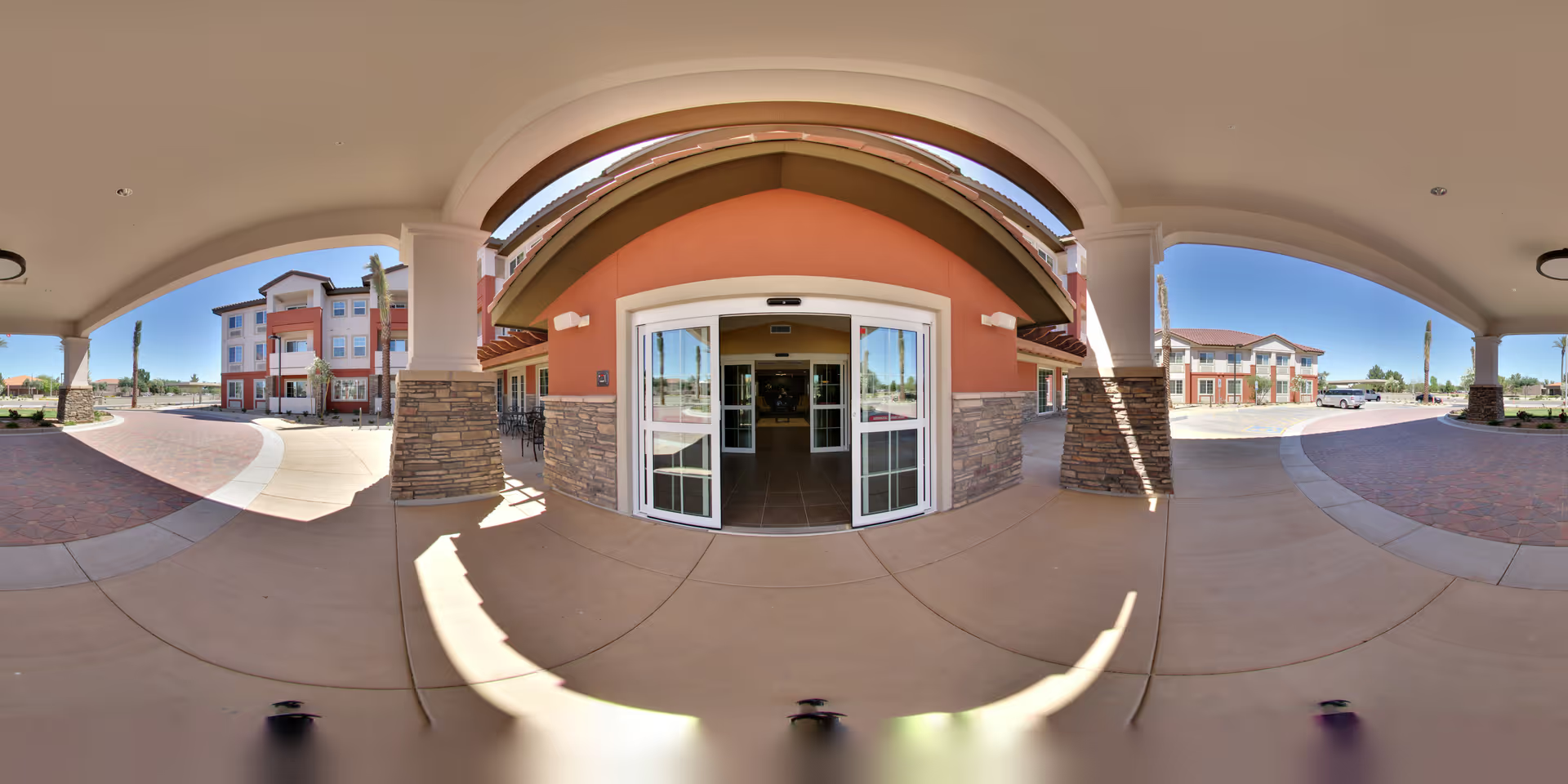
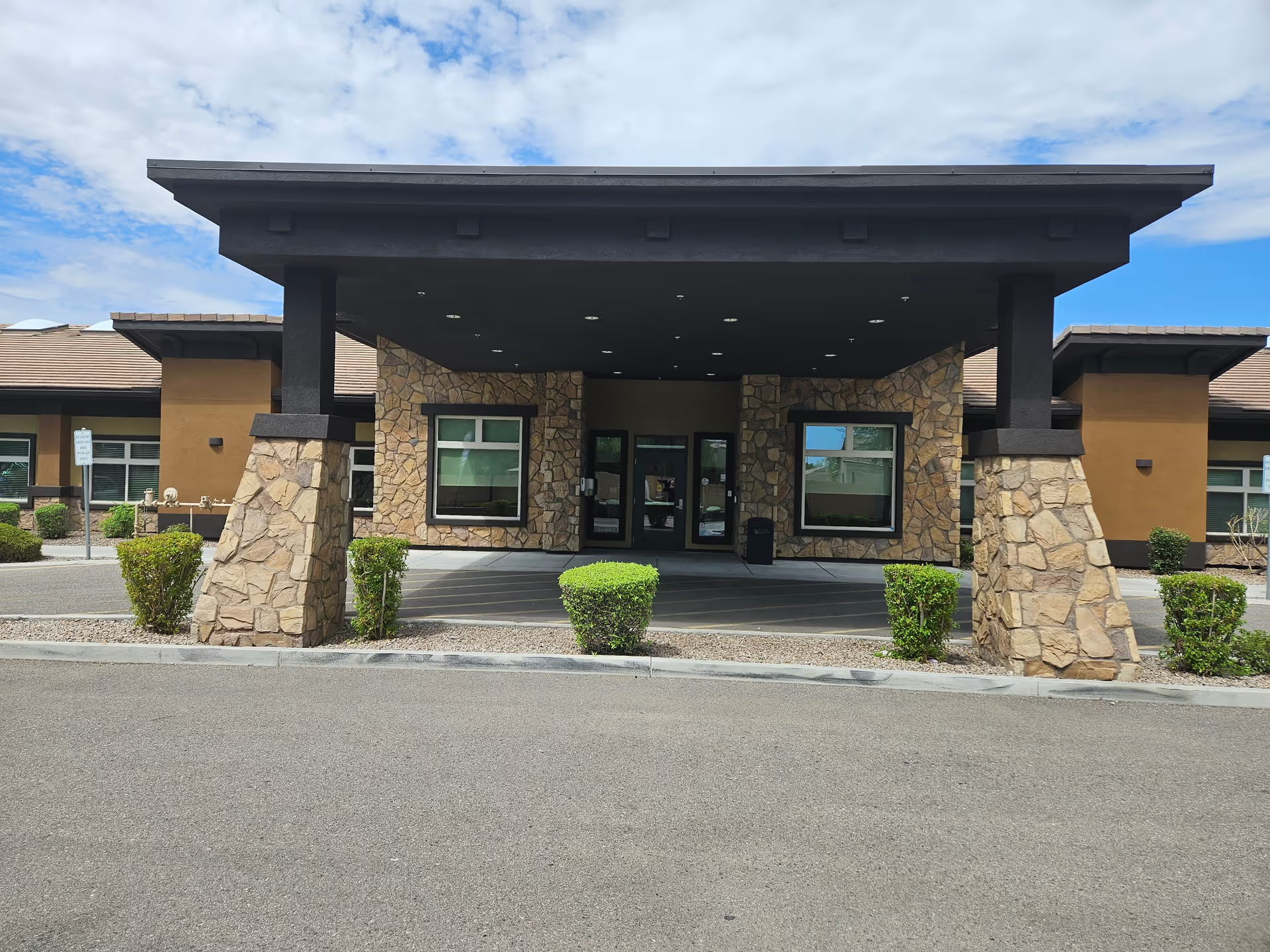
Across the reviews, Village at Ocotillo is repeatedly described as an attractive, well‑appointed community with strong social programming and a high-quality dining experience. Many families and residents praise the chef-driven restaurant, varied daily specials, and hotel-style food service; dining is often cited as a key strength that improves residents’ quality of life. The campus amenities — theater, library, gym, pool, beauty shop, courtyard and walking trails — and a wide range of classes and events (exercise, music, arts, excursions, and Zest lifestyle programming) support an active social environment, particularly for independent residents.
Staff and direct-care impressions are mixed but prominent. Numerous reviewers describe staff as compassionate, responsive, and service-oriented, with proactive maintenance and housekeeping and managers who solve problems quickly. On-site clinical supports such as in‑room imaging, PT/OT, visiting physicians, transportation van, and hospice partnerships are noted as conveniences that support aging in place. At the same time, a pattern of clinical-capacity concerns emerges for residents who require higher levels of care: inconsistent nurse staffing levels, a limited number of licensed nursing personnel covering assisted-living needs, and high staff turnover that can disrupt continuity. Reviewers specifically call out difficulties contacting nursing staff, delays in clinical communication to families, and medication-management lapses which suggest gaps in clinical operations.
Operationally, safety and emergency response are an area to probe. Several accounts describe delays or gaps in call-button coverage and in how clinical staff respond to urgent events; abstracted, these point to weaknesses in the facility’s emergency-response systems and transfer-safety practices rather than a uniform absence of oversight. Accessibility is another operational limitation: some apartment types and paths are not fully suited to wheelchair or walker users, and unit layouts and amenity availability vary across the community. Dining policies (reservations, table assignments during busy events) have created occasional friction despite the high praise for the food itself. Cost is also a recurring consideration; the community is often characterized as higher-priced relative to alternatives.
For prospective residents and families: the community appears particularly well suited to independent and low‑assistance residents who prioritize dining, activities, and an attractive campus. Families of prospective residents who need regular clinical supervision or high‑dependency assistance should request specific operational data during a tour — nurse-to-resident ratios by shift, call-button and emergency-response procedures, medication-administration protocols, staff turnover statistics, and unit accessibility details. Clarify which apartment models include full kitchens and verify shuttle/transport capacity for medical appointments. Asking for recent examples of how leadership addressed clinical incidents and for written policies on dining reservations and event seating can help set expectations.
Overall, Village at Ocotillo offers many amenities and strengths that create a vibrant, restaurant-quality living environment. Those strengths coexist with identifiable operational gaps in clinical staffing, emergency response, and accessibility that matter most for residents requiring higher levels of medical or mobility support. A targeted tour and specific, documentable answers to the clinical and accessibility questions above will help families determine fit based on individual care needs.