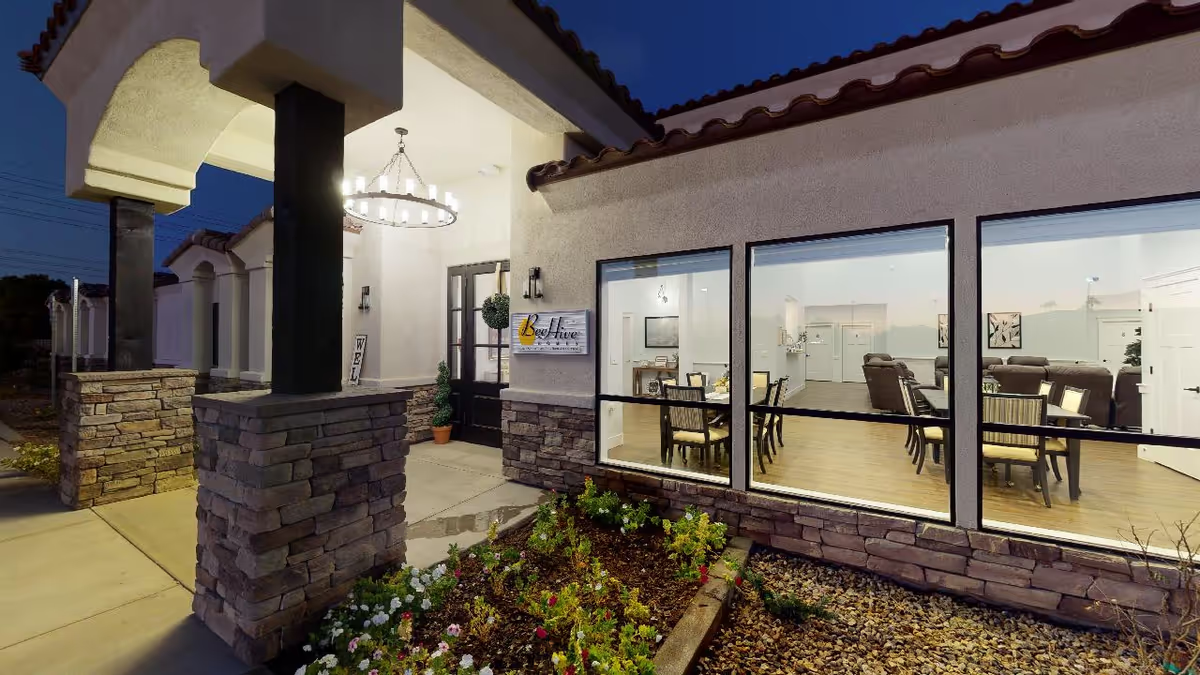
Savanna House elicits a strongly mixed but clarifying pattern: many families and residents praise the interpersonal side of care and the physical environment, while a consistent set of operational and quality-control concerns appears across other comments. Strengths cluster around staff relationships, amenities, meals, activities, and the facility’s modern, home-like design. Multiple reviewers singled out individual caregivers and leaders for compassionate, personalized attention; med-techs and nurses were described as capable and loving, and the executive and activities leadership received frequent positive mention. The campus layout, neighborhood-style memory-care design, accessible outdoor courtyard, ice cream bar, and abundant small-group activity options support a lively, family-like atmosphere.
Care quality shows two faces in the reviews. On the positive side, families reported thoughtful dementia-focused interventions, individualized support for chronic conditions, and accessible on-site therapy and medical services that helped residents settle and remain engaged. On the cautionary side, reviewers identified operational gaps: inconsistent staffing levels (including occasional overnight shortfalls), missed or irregular bathing and laundry schedules, delayed call responses, and care-coordination lapses. These patterns indicate variability in day-to-day clinical reliability rather than a uniform standard of care.
Dining and culinary services are similarly mixed. Several reviewers praised an accomplished chef, attractive meal presentation, and a flexible, family-style dining approach with menu choices and dietary accommodations. At the same time, others described intermittent declines in food quality after kitchen staffing changes, temporary kitchen closures or limited meal service, and sanitation or pest-control concerns in dining areas. These comments point to strengths in culinary concept and execution when staffing is stable, and vulnerability to service disruption when kitchen staffing is limited.
Activities and community life are consistent strengths: reviewers describe multiple daily activity sessions, outings, arts and crafts, memory-specific programming, and small-group social options that contribute to residents’ engagement and mood. The facility’s layout and amenities — bright, modern common areas, private and shared apartment configurations, barbershop/beauty shop, and accessible outdoor spaces — are repeatedly cited as supportive of an active, home-like environment.
Facility maintenance and management perceptions are mixed. Many reviewers note a clean, well-kept campus and responsive maintenance staff, while others cite isolated maintenance issues (for example, bathroom mold) and sanitation concerns in some common areas. Administrative themes include praise for welcoming admissions and particular staff members, but recurring criticisms about managerial follow-through, inconsistent communication, phone-system reliability, billing delays, and leadership turnover. A small subset of reviews raises serious operational concerns — including medication-related issues that prompted regulatory scrutiny — which suggests prospective families should review inspection history and ask for clarification on clinical and safety processes.
Overall, Savanna House appears to offer a strong social environment, engaging activities, and many compassionate staff members, with notable amenities and an appealing physical plant. However, the experience can vary depending on staffing stability, kitchen staffing, and administrative consistency. Prospective residents and families should tour the community, meet caregiving and clinical staff, review staffing ratios and training protocols, inspect recent regulatory and inspection records, and ask specific questions about overnight coverage, bathing/laundry schedules, medication management, and billing procedures to assess whether the site’s operational practices match their care needs and expectations.