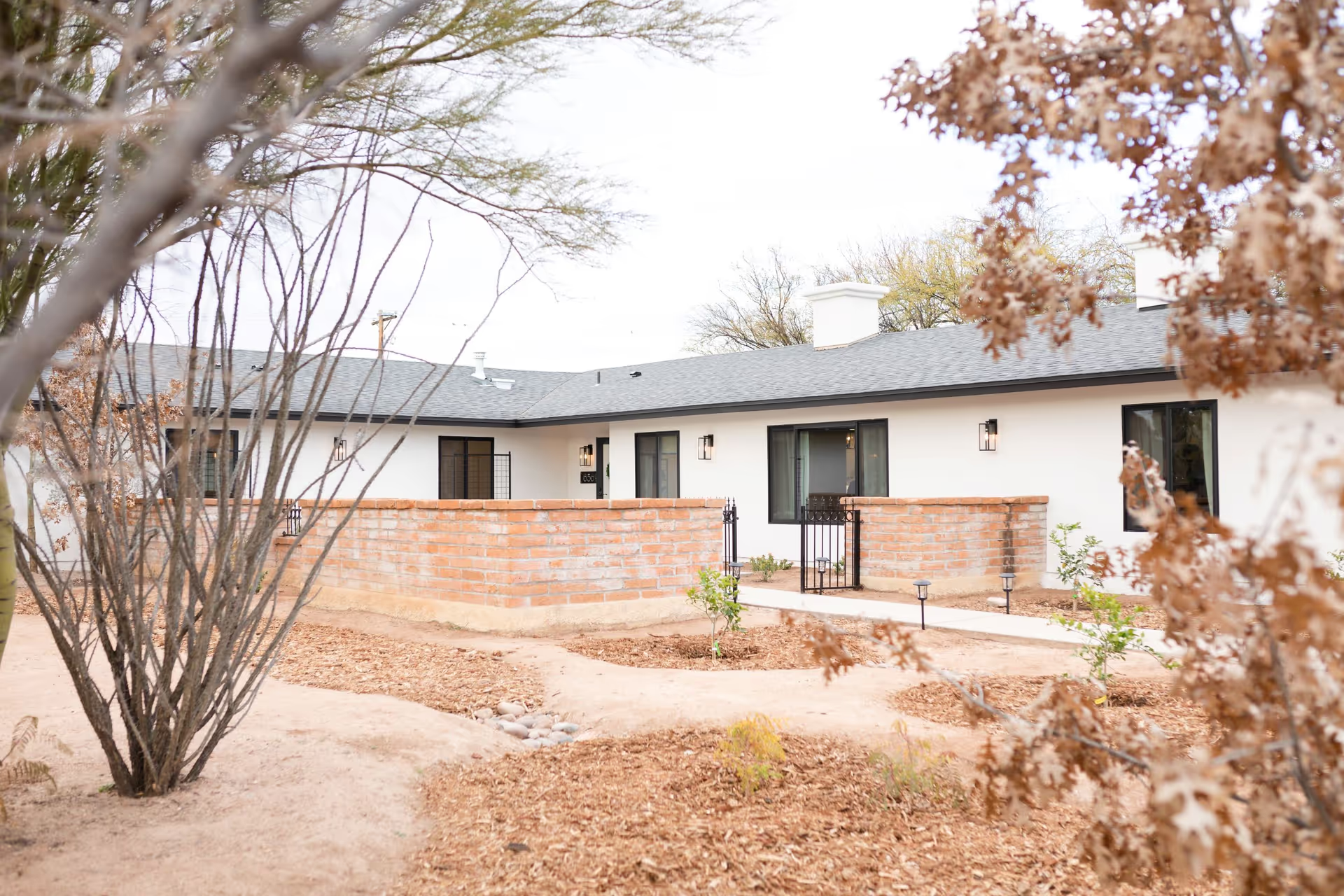
Atria Bell Court Gardens is consistently described as a distinctive independent-living community built around a restored historic mansion with extensive, well-kept landscaping. Reviewers frequently highlight the setting — Sonoran Desert and mountain views, courtyard spaces, and period architectural details — and the campus amenities, including a resort-like pool and spa, library, game rooms, salon, and an array of wellness spaces. Apartment configurations vary from compact studios to two-bedroom units; many residents praise the size and finishes of select units and mountain-facing views, while others find some units dated or small for wheelchair access.
Staff and care: Frontline staff and activity leaders receive strong, repeated praise for their responsiveness, friendliness, and willingness to assist; several reviewers cite specific employees and directors as going above and beyond, and many credit management with effective pandemic-era operations. The community provides housekeeping, maintenance, transportation, and recreational support, and some on-site clinical options (visiting providers, nurse practitioner, in-house home-care options) are available. Important to note is the facility’s emphasis on Independent Living: it is not positioned as an assisted-living or skilled-nursing provider, and families should plan for external or in-house home-care arrangements if activities-of-daily-living (ADL) assistance will be needed.
Dining and activities: Dining is a focal point for residents and visitors. Numerous reviewers describe chef-led, restaurant-style service, special menus, and high points such as soups, desserts, or particular signature meals. At the same time, a pattern of variable culinary quality emerges—some residents report excellent, gourmet dining while others characterize menu monotony, uneven entrée quality, or slower service at times. The activity program is a clear strength: a broad, frequently daily calendar includes exercise classes (water aerobics, Tai Chi, dance), arts and crafts, music and performances, discussion groups, outings to cultural venues, and routinized transportation for appointments and shopping.
Facilities and operations: The physical plant and common spaces are commonly described as clean, well-maintained, and historic in character; gardens, pool area, and communal rooms are repeatedly praised. Operationally, reviewers identify persistent issues: inconsistent housekeeping and laundry handling, occasional odor concerns in particular areas, confusing interior navigation and dark corridors in spots, and accessibility limitations in some apartments. Security and access-control have been raised as a concern by a subset of reviewers, who describe door-propping and a theft-related incident that contributed to perceptions of insufficient control measures.
Management, cost, and policy patterns: Several reviewers describe corporate-level decisions that have affected services — centralized budget choices, staff reductions, and perceived cuts to activities or dining support. Financial terms are a notable area for prospective residents: the community is frequently described as higher-cost, with annual rent increases, community fees, and some lease provisions that residents characterize as aggressive (including nonrefundable fees and escalators). Staffing turnover and variability in service consistency are tied by some reviewers to these management and budget pressures. Conversely, other families praise the leadership team for effective oversight and strong staff coordination.
Notable patterns and recommendations: The strongest, recurring positives are the historic, resort-like environment; active, varied programming; accessible transportation; and staff who create a welcoming social atmosphere. The most consistent operational cautions are around dining consistency, staff turnover, security controls, accessibility for higher-care needs, and financial terms. Prospective residents and families should verify the level-of-care match (Independent Living focus), confirm current dining menus and service model, review lease and fee structures carefully, and assess unit accessibility and security measures during a visit. For individuals prioritizing ambiance, social programming, and proximity to medical resources, Atria Bell Court Gardens often aligns well; for those requiring regular ADL support or who prioritize lower-cost, highly predictable service levels, it may be less suitable.