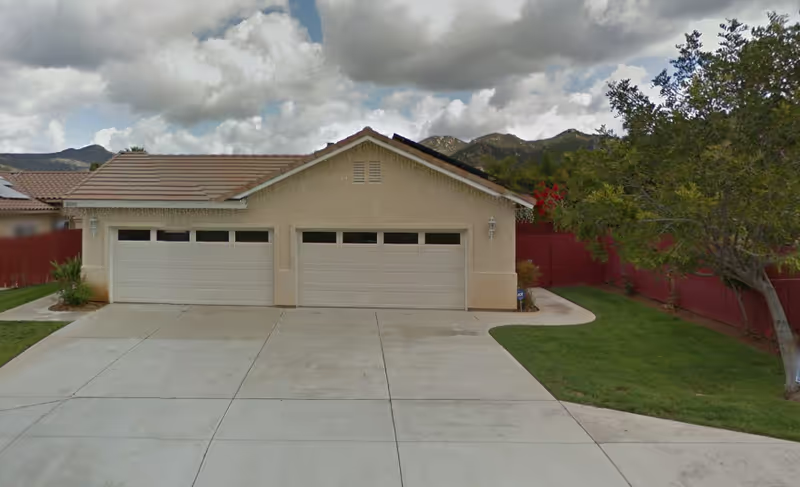
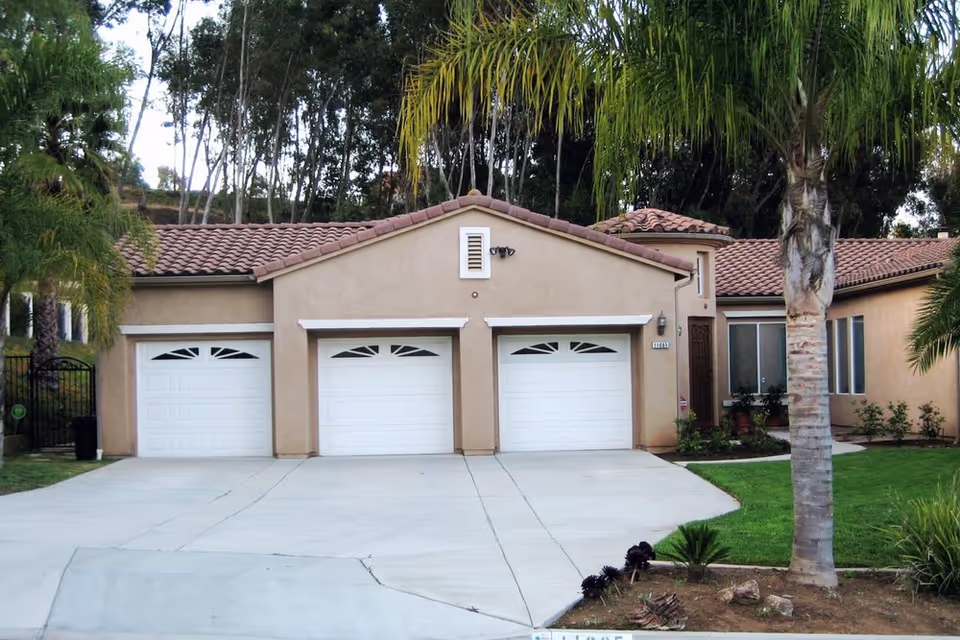
Overall impression: The facility presents a combination of notable operational strengths and relationship-management concerns. Physically and clinically, the environment is described as clean, well-maintained, and arranged to support a small-household style of living: private rooms with baths, casual dining at multiple small tables, and an open family room with a view. Staffing levels are characterized as favorable, and emergency-care responsiveness is noted as a positive attribute.
Care quality: Clinical care and routine assistance are portrayed positively. The facility’s staffing ratio and attentive staff behavior support timely care needs, and some reviewers described the placement as a good fit for residents who require personalized attention. Emergency response capability is seen as a strength, suggesting functional protocols for acute events.
Staff and interpersonal dynamics: While individual staff members have been singled out for praise, the commentary also raises concerns about staff conduct and the tone of communication with families. There are indications that dispute resolution can escalate quickly and that staff–family interactions may sometimes involve confrontational or coercive approaches. These suggest a need to confirm the facility’s conflict-deescalation training, protocols for handling complaints, and formal pathways for family communication.
Financial and safety processes: Review content points to weaknesses in financial-safeguarding and billing-dispute handling, as well as some perceived inconsistencies in safety and security practices. These are operational traits rather than single incidents; prospective residents and families should seek clear documentation on billing transparency, safeguards for resident funds, and the facility’s policies for investigating and resolving financial concerns.
Facilities, dining, and activities: The physical amenities and dining format are consistently described in favorable terms: casual, small-table dining and communal spaces that encourage interaction. There is, however, limited detail about formal activity programming; families should inquire about the regularity and variety of activities if that is a priority.
Management and recommendations: Leadership and owner engagement are cited as strengths, which may support quality improvement if concerns are raised. At the same time, the pattern of communication and dispute-handling issues suggests gaps in staff training, grievance procedures, and financial controls. Prospective residents should arrange an in-person visit, meet the leadership and primary care staff, review contract and billing policies, ask for examples of conflict-resolution protocols, and request references from current families to assess whether the facility’s operational practices match their expectations.