Feedback for Arcadian Residential Community is mixed, with a clear split between families and residents who describe attentive, long-standing care and others who raise operational and safety concerns. Several families praised the compassionate, patient demeanor of caregivers, continuity among long-term residents, and improvements under recent ownership. Positive comments emphasize good meal quality with monthly menus, live entertainment, easy access to TVs in rooms and common areas, and facility features that support mobility such as larger rooms, comfortable beds, and closet storage. Reviewers also noted dementia-focused care that produced demonstrable improvements for some residents and seasonal decorations that contributed to communal morale.
At the same time, a number of comments point to persistent operational weaknesses. Staffing consistency and language proficiency were recurring issues, creating communication challenges with residents and families. There are notable gaps described in incident reporting and fall-prevention practices; some accounts indicate falls and delayed or incomplete family notification. In parallel, reviewers raised sanitation and odor concerns in particular areas, and maintenance oversight was described as variable.
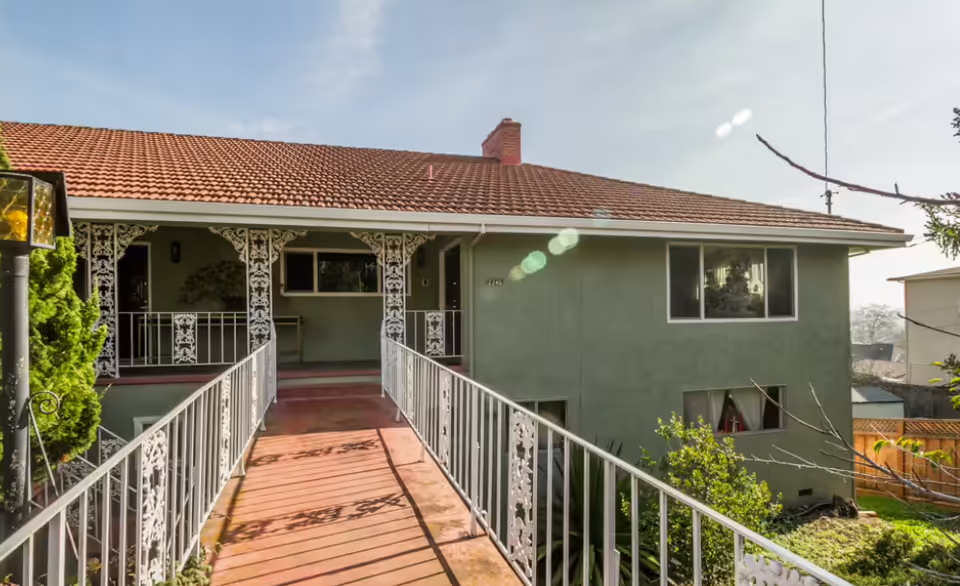
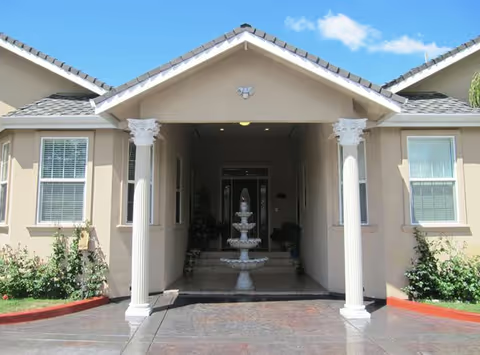
Facility design and amenities present trade-offs. The building is described as large and mobility-friendly, but room arrangements are often double-occupancy and characterized by an institutional or hospital-like layout that limits privacy. Common areas were described by some as drafty or uncomfortable, and outdoor access is limited though there have been yard improvements noted by other families. Activity programming appears uneven: bingo and occasional live entertainment are available, but several reviewers wished for a broader, more consistent schedule of engaging activities.
Management and governance perceptions vary sharply. Some families reported cooperative communication with staff and management, responsiveness to issues, and improvements after ownership changes. Others described more serious concerns about administrative practices, including disputed medication controls, financial irregularities, and inconsistent enforcement of emergency protocols. Given the severity of those claims, prospective families should treat governance and medication-safety processes as areas for direct inquiry.
Taken together, the pattern indicates a facility with several genuine strengths in relational care and certain amenities, alongside operational and safety areas that merit attention. Prospective residents and families are advised to visit in person, evaluate room types and privacy, review staffing ratios and language capabilities, ask for written incident-reporting and fall-prevention policies, verify medication-handling procedures and recent licensing or inspection history, and observe cleanliness and communal spaces during a mealtime and an activity period to get a balanced view.