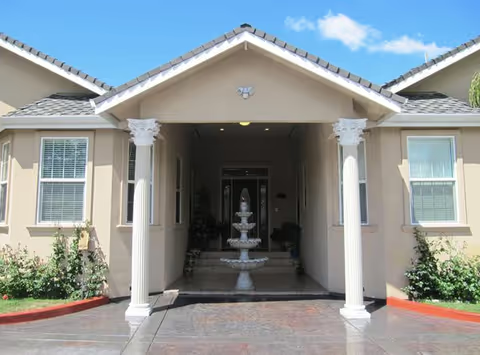
Driftwood Healthcare Center presents a mixed profile. Several reviewers praised the facility’s visible cleanliness and the professional demeanor of some staff during tours and visits; named nurses received specific positive recognition for helpfulness and responsiveness. At the same time, there are repeated operational and clinical concerns that families should weigh carefully when considering the facility.
Care quality is an area of notable concern. Reviewers describe delays in attending to care requests and gaps in clinical monitoring that, according to families, contributed to deterioration in some residents’ conditions. Wound and pressure-area management was mentioned as inconsistent, and families noted infrequent physician rounds and delays in escalating clinical issues. Call-bell responsiveness and removal or restriction of mobility aids were cited as factors that affected resident safety and independence. These indicate systemic weaknesses in bedside responsiveness and clinical oversight rather than isolated incidents.
Staffing and workforce stability appear to be significant contributors to those care-quality problems. Multiple accounts point to understaffing, unstable scheduling, and frequent shift cancellations that undermine continuity of care. Reviewers also raised concerns about staff conduct and professionalism in some interactions, while simultaneously acknowledging that several individual caregivers provided compassionate, competent care. This pattern suggests variability in staff training, supervision, and workplace culture that affects day-to-day resident experience.
Dining and personal management exhibited inconsistent performance. Families reported instances of dietary restrictions not being observed and unexpected meal charges for residents, as well as missing linens or personal items. Administrative processes likewise drew criticism: unanswered phones, delays completing admissions or care paperwork, and front-desk responsiveness issues were described as barriers to family communication and timely care coordination.
Facility layout and amenities have strengths and limitations. The building and common areas were frequently described as clean and welcoming, and admissions/tour experiences tended to be positive. At the same time, reviewers raised concerns about rooming practices—shared rooms that felt overcrowded—and specific sanitation and incontinence-care inconsistencies in some units. Personal-item management (lost clothing, missing blankets) and occasional equipment changes (replacement mattresses perceived as inadequate) were also noted.
Management and transparency are recurring themes. Families described inconsistent decision-making by administrative staff and a lack of clear, timely communication—especially when clinical changes occurred. Several reviewers referenced regulatory complaints, an APS conduct report, and allegations of staff misconduct; infection-control visitor restrictions (such as during COVID) were cited as complicating family oversight. Overall, the pattern of comments points to a need for stronger clinical governance, standardized care protocols (especially for wound and pressure-area care), improved staffing stability, and clearer family communication pathways.
For prospective residents and families: the facility shows strengths in appearance and in pockets of individual caregiver performance, but multiple reviewers identified operational and clinical patterns that may affect safety and quality of care. If considering Driftwood, families should ask for recent staffing and inspection data, clarify physician and nursing coverage, review wound-care and dietary protocols, confirm roommate arrangements, and arrange a timed visit to observe call-bell response and direct-care interactions before making a placement decision.