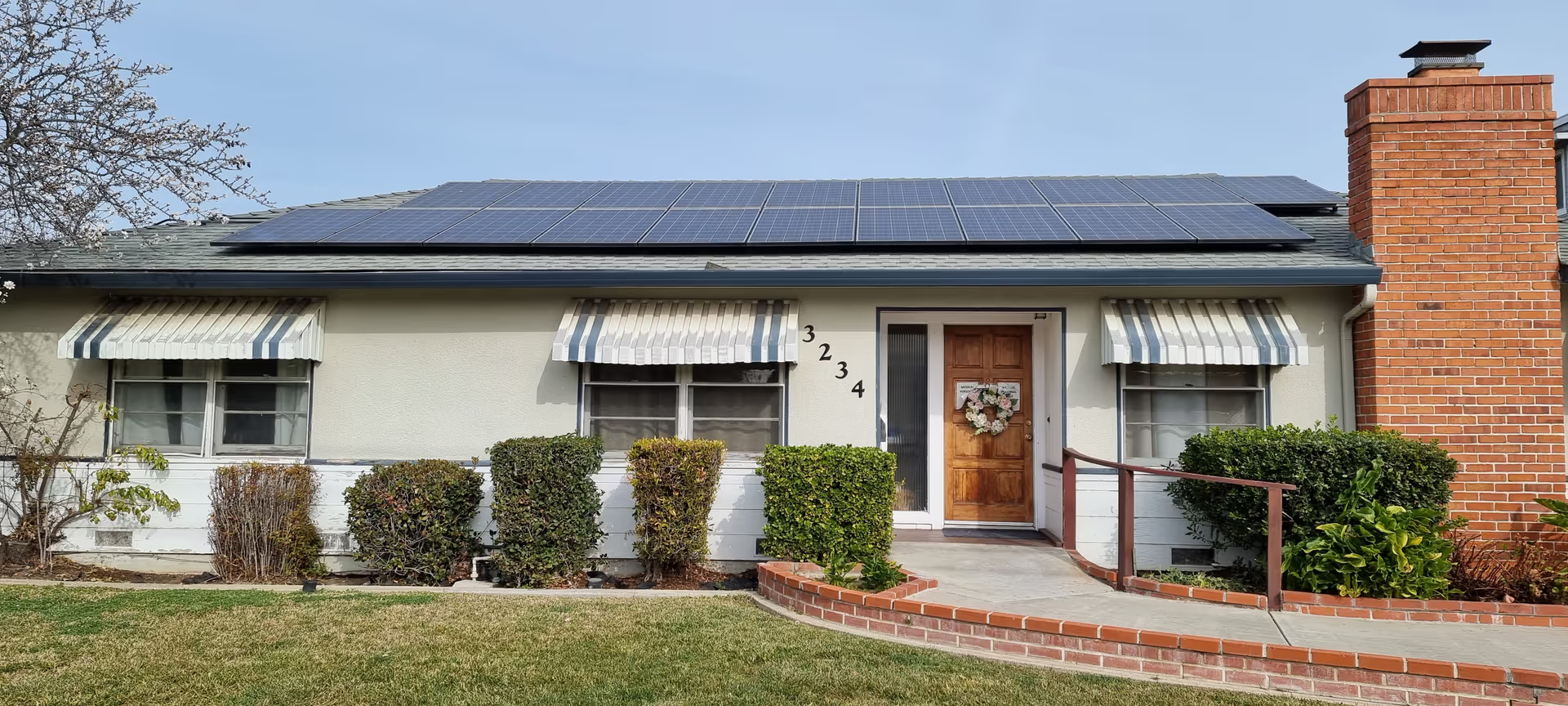
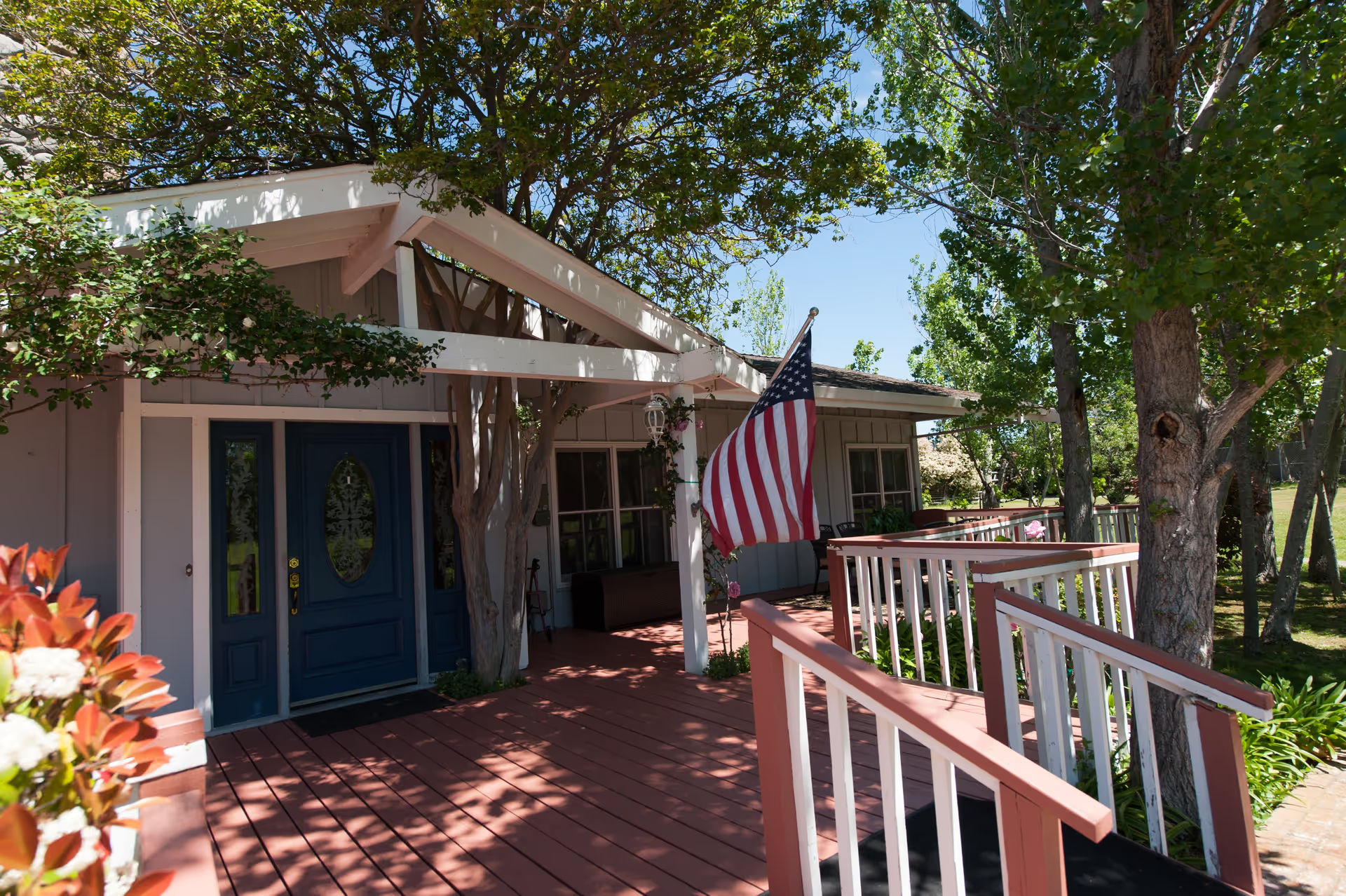
Overall impression The Watermark at Rosewood Gardens is frequently described as a warm, well-kept community with an emphasis on social programming, dining, and a neighborhood feel. Families and visitors commonly highlight compassionate staff, active engagement programs, chef-driven meals, and pleasant grounds. The community provides a range of living options — independent living cottages, assisted- and memory-care settings — and presents as a largely home-like environment with ongoing room upgrades and visible attention to landscaping and common areas.
Care quality and clinical services Care delivery is generally characterized as personalized and compassionate, with several families noting strong medication-management practices and a well-regarded memory-care program. Staff are often described as attentive and respectful; named employees were singled out for their engagement and responsiveness. At the same time, there are repeated descriptions of variability in care consistency across shifts or units. Specific operational gaps cited include delays in responses to acute needs and instances where higher-acuity clinical tasks fell outside the facility’s scope because of regulatory limits. Prospective residents with complex clinical requirements should confirm the facility’s capabilities and escalation procedures during a tour.
Staff, management, and communication Staff-resident relationships are a consistent strength — many comments emphasize a family-like culture, staff recognition of residents by name, and staff who go beyond routine duties. Activity staff and some managers received particular praise for outreach and programming. Counterbalancing that, families also described occasional communication shortfalls and administrative friction: admissions paperwork challenges, episodic unresponsiveness to family calls or questions, and instances of perceived high-pressure admissions behaviors. These suggest variability in front-line administrative practices and the need to clarify admission steps and ongoing communication expectations up front.
Dining and food services Dining is a central positive in the community profile: several reviews applaud chef-prepared meals, diverse menus, special events, and programs like Gourmet Bites for residents with modified diets. Reviewers also cite accommodating kitchen staff and restaurant-style service. However, there is not uniform agreement about meal quality — some describe inconsistent execution or days when food did not meet expectations — indicating that meal quality may fluctuate and that families should sample service during different meal periods if dining is a key factor.
Activities and social life The activity program is robust, with a wide variety of offerings including music, performances, group outings, volunteer opportunities, games, exercise classes, and day trips. Many residents report improved socialization and friendship formation after moving in. That said, there are isolated notes of loneliness in parts of the independent-living population, suggesting that social outcomes can depend on individual fit, unit composition, and participation level. Prospective residents should review specific activity calendars and speak with the activities director about social integration plans.
Facilities and amenities Physical amenities — gardens, roses, fountain, gym, pool, salon, and pet accommodations — are frequently praised. Interior spaces are commonly described as clean and welcoming, with renovations underway in many units. At the same time, reviewers noted some aging elements (exterior appearance, HVAC/temperature-control inconsistency) and maintenance items that the community is addressing. Location advantages (close to medical offices, groceries, and restaurants) were also cited as convenient for families.
Cost, transparency, and notable patterns Cost is a recurring consideration: several comments reference perceived high pricing and a desire for clearer pricing transparency. Admissions procedures and document handling have been the source of frustration for some; prospective families should request full written estimates and clarify admissions timelines. Additionally, regulatory constraints (for example, limits on certain clinical procedures) mean that some medical tasks may require outside support or a higher-acuity setting.
Conclusion and guidance for prospective families Rosewood Gardens appears to be a strong option for families seeking an active, social community with attentive staff, varied programming, and quality dining. Its memory-care program and social calendar are particular strengths. At the same time, the facility shows operational variability in staffing consistency, communication, meal execution, and occasional maintenance issues. Prospective residents and families should tour multiple times, meet care and activities staff, sample meals, obtain clear written cost and scope-of-care information, and ask specific questions about staffing patterns, emergency response protocols, and admission paperwork to ensure a good match with the resident’s clinical and social needs.