Overall impression: Arroyo Vista is repeatedly described as a small, rehabilitation-focused nursing center with notable strengths in therapy, individualized attention, and an attractive physical environment. Reviewers frequently highlight an effective physical and occupational therapy program that produces measurable recovery for post-operative and stroke patients. Many families and former patients credit the therapy and rehabilitation teams with above-expected progress and successful returns home.
Care and staff: Staffing is the most mixed dimension. Numerous accounts emphasize compassionate, attentive CNAs and nurses who provide individualized care and maintain strong personal relationships with residents. Case management and social services receive praise for helpful coordination and follow-up. At the same time, reviewers also describe variability in responsiveness (including delayed call-button responses), differences in communication tone, and instances where coordination with primary care physicians or continuity of clinical oversight broke down. A small number of serious individual claims involving emergency transfers and concerns about wound or post-operative care were reported; these accounts suggest the need for careful review of clinical handoffs and oversight protocols.
Dining and activities: Dining is consistently cited as a strength — varied, hearty meals and a dining experience that some describe as more homelike than typical institutional fare. The activities program is another clear asset: a dedicated activities coordinator, structured daily programming, socialization opportunities, and event-focused engagement contribute to a family-like atmosphere and resident stimulation.
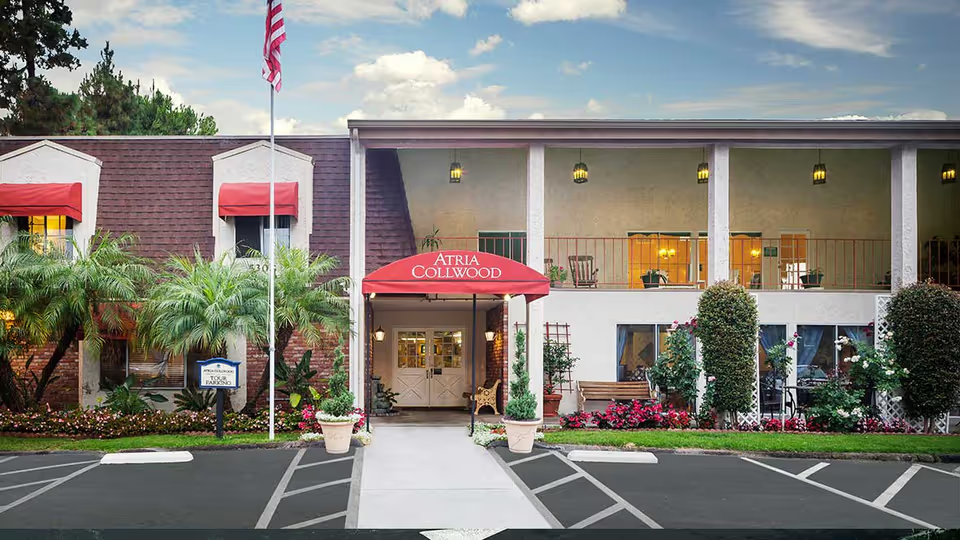
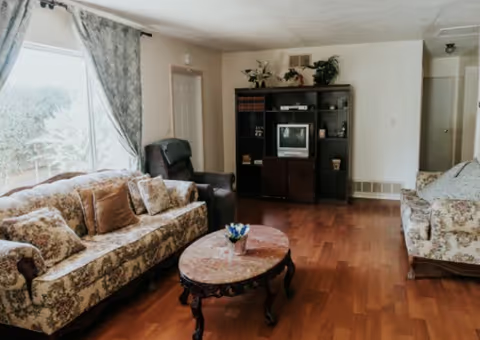
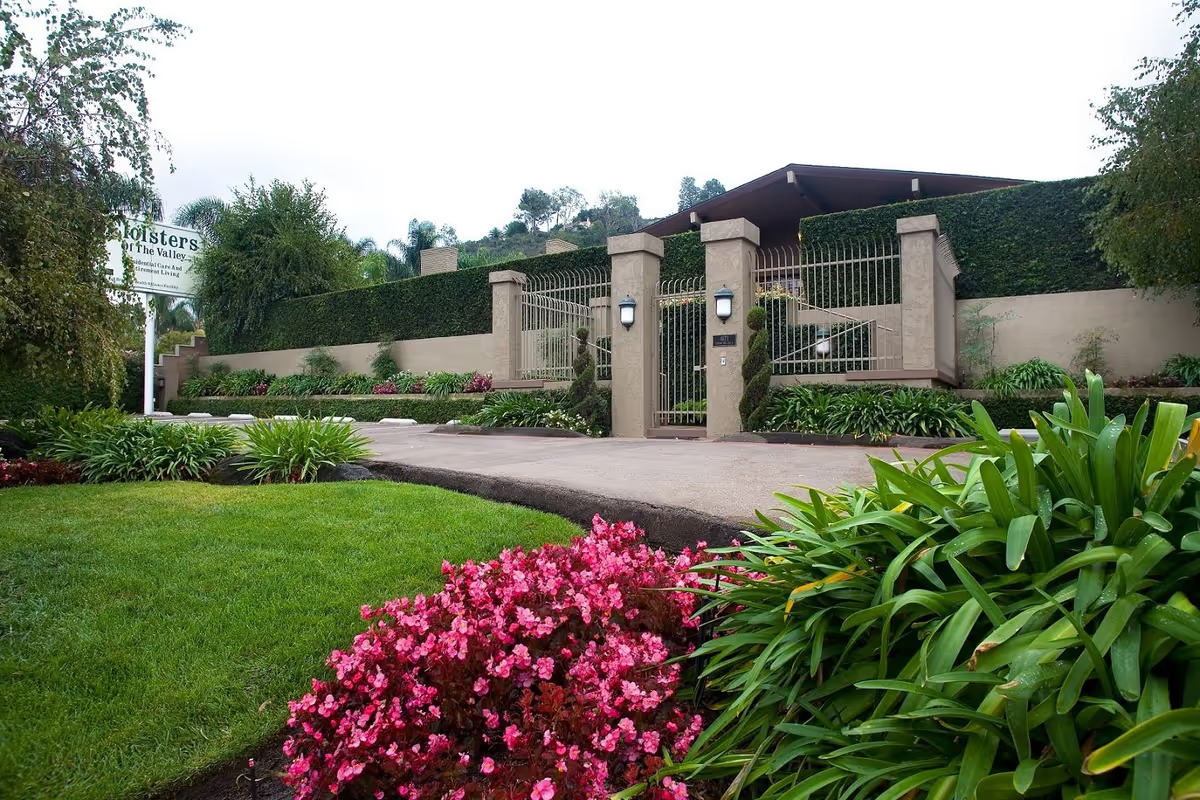
Facilities and amenities: The campus and interior spaces receive frequent praise for cleanliness, landscaping, gardens and water features, and small-scale, residential feel. Many reviewers note private rooms with en-suite bathrooms and outdoor access, a library, a personal gym, and pleasant common areas. A subset of reviewers, however, flagged noise during certain shifts, limited in-room media options (absence of live news broadcasts), and occasional comments that some rooms could use aesthetic updates.
Management and operational patterns: Management and front-desk interactions are described positively in many accounts — patient, professional, and helpful — though other reviewers point to inconsistent phone access, routing problems, and at least one instance of an unhelpful or pushy social-worker interaction that caused stress around discharge timing. Security- and visitor-safety procedures drew concern in a few comments, indicating the facility may benefit from reviewing after-hours security and visitor controls. Language-barrier issues were also noted as a source of occasional misunderstandings.
Notable patterns and guidance for families: The overall pattern is one of a small, rehabilitation-oriented facility that achieves strong therapy outcomes and delivers a warm, family-like environment for many residents. However, variability in operational consistency appears to be the primary risk area: responsiveness to requests, communication during clinical transitions, discharge documentation, and certain aspects of clinical follow-up show inconsistency across accounts. Prospective families should consider touring the facility to evaluate cleanliness and amenities, ask specifically about call-response times, clinical handoff procedures with external physicians, wound/post-operative care protocols, language-interpretation resources, media and recreation options, and after-hours security measures. Reviewing recent state inspection reports and discussing individualized care plans with therapy and nursing leaders can help clarify whether the facility’s strengths align with a particular resident’s needs.