Brookside Inn is consistently described as a staff-driven facility with many families and patients praising the quality of hands-on care. Strengths in clinical care are a recurring theme: reviewers highlight competent CNAs and nurses, effective physical and occupational therapy, strong wound care, and coordinated rehabilitation that supports hospital-to-home transitions. The facility maintains an on-site provider during weekdays and emphasizes discharge planning and care coordination (social work, transport, doctor visits), which contributes to positive short-stay and post-acute outcomes for many residents.
The workforce is widely viewed as compassionate and attentive, and multiple accounts describe staff who create a welcoming environment, prepare rooms for incoming residents, and provide emotional and end-of-life support in many cases. Recreational programming is noted as a meaningful part of daily life: music, arts, bingo, and monthly Vaudeville-style performances are cited as activities that enhance resident engagement. The memory-care unit and acceptance of Medicaid are important operational positives for families seeking those services. Facility upkeep and incremental updates (paint, carpeting) are observed, and many families describe the interior as clean and well-maintained.
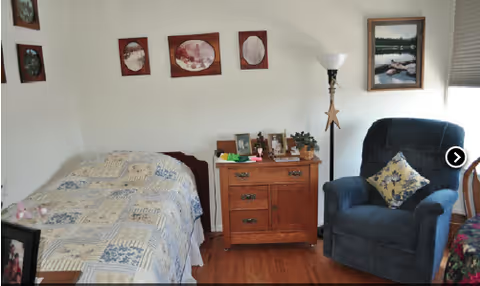
Despite these strengths, several operational patterns emerge as areas for improvement. Dining and meal-service organization are inconsistent: reviewers describe variability in food quality and interruptions or disorganization in meal delivery. Resident living space is frequently described as small, with some rooms configured as two-person units separated by curtains and shared closets and bathrooms; reviewers suggested re-spacing or renovating for greater resident comfort and privacy. Laundry handling and personal-item management are recurrent concerns, including delays, mixed-up or unlabeled clothing, and reliance on lost-and-found processes rather than systematic labeling.
Communication and staffing patterns show mixed signals. While many families praise individual caregivers, there are reports of variable communication tone from some senior nursing staff and instances in which family expectations around visitation were not met during critical moments. These accounts point to inconsistent visitation policy application and gaps in family–facility communication during clinical incidents. Reviewers also express concern about staffing stability; where staffing levels or continuity fluctuate, it appears to affect service consistency.
In sum, Brookside Inn appears to deliver high-quality, person-focused clinical care and engaging programming, making it a strong option for rehabilitation, hospice coordination, and memory-care placement in the eyes of many families. Prospective residents and families should balance those strengths against the facility’s operational limitations: confirm room size and configuration, ask about meal options and dining schedules, review laundry and labeling procedures for personal items, and clarify visitation policies and staff continuity plans. For families prioritizing skilled rehab, compassionate caregiving, and active programming, Brookside offers palpable advantages; for those for whom private room size, consistent meal service, and tightly managed personal-item logistics are decisive, these operational issues merit direct discussion with facility leadership before placement.