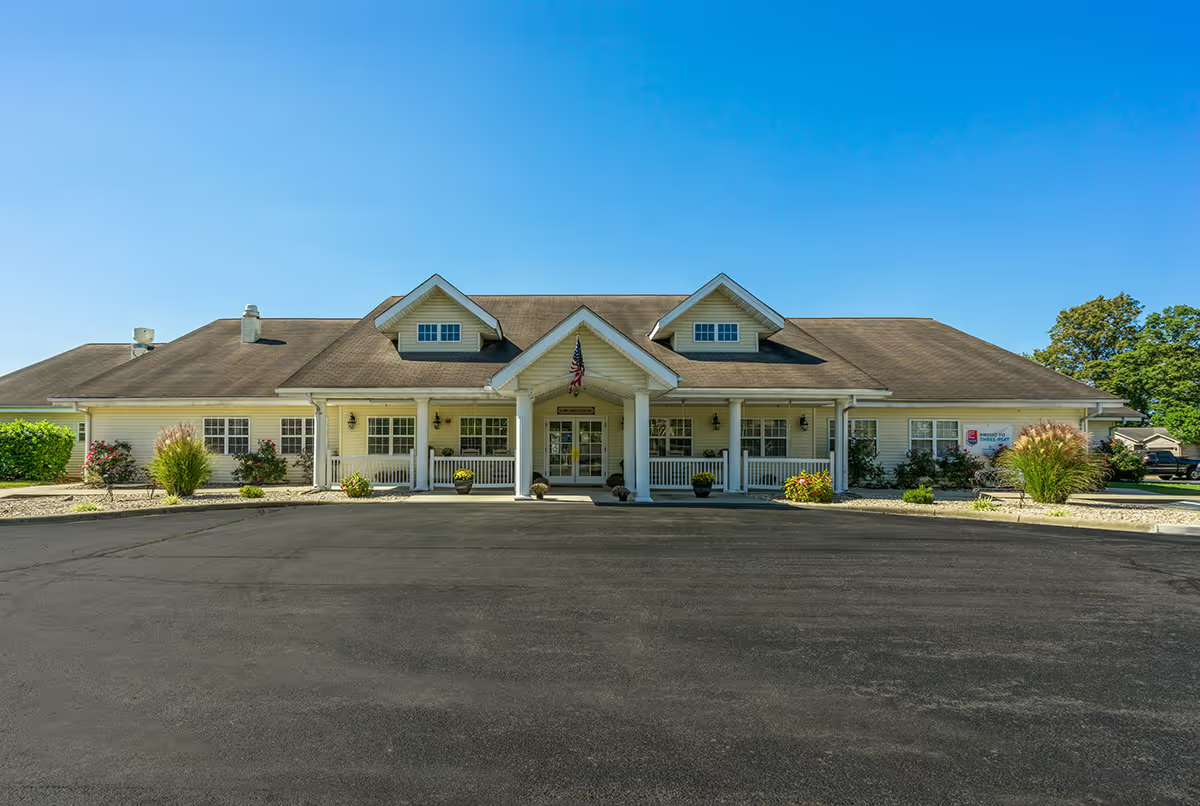
Thornton Terrace Health Campus elicits a mixed but clear pattern: many families and short-stay residents describe strong day-to-day caregiving, while other accounts raise concerns about clinical consistency and management practices. Positive feedback centers on a number of dedicated caregivers and CNAs who provide attentive, compassionate support; those staff members are frequently credited with good immediate care, clear family updates, and successful short rehabilitation stays with regular therapy sessions. The facility’s activity program, including field trips and a variety of on-site programming, contributes to a family-like atmosphere for residents who are able to participate.
Clinical quality appears uneven across units and incidents. Several reviewers noted effective rehab outcomes and timely therapy, but other accounts describe incomplete assessments, repeat falls, and gaps in fall-prevention practices for higher-dependency residents. Those concerns are often paired with observations that staff were overwhelmed during peak periods, suggesting that staffing levels and assignment practices may not consistently match acuity. Cleanliness and general maintenance are frequently praised, yet there are also specific references to sanitation and incontinence-care delays in some cases, indicating inconsistency in routine clinical support.
Dining and daily-life services receive predominantly favorable comments: reviewers mention appetizing meals and a clean dining environment. Activity staff and social programming are commonly described as energizing and varied, supporting social engagement. The campus layout and size, however, create navigation challenges for some residents and families; the facility’s scale can contribute to a perception of impersonal service in certain areas and makes wayfinding a practical issue.
Management and administrative practices are a notable area of concern. Several families described communication gaps and a lack of transparency around clinical decisions and asset controls; one set of comments referenced allegations of missing personal property and inventory issues, which has contributed to distrust among some families. Visitation flexibility during infection-control events was also identified as limited in certain periods, which affected family access and confidence.
In sum, Thornton Terrace demonstrates clear strengths in individualized caregiving from committed frontline staff, a robust rehabilitation offering, and active programming that supports resident engagement. At the same time, prospective residents and families should probe clinical-assessment protocols, staffing adequacy for higher-acuity needs, management transparency around property controls, and the practical implications of the campus layout. A focused tour that includes conversations with nursing leadership about fall prevention, staffing ratios, and asset-management procedures would help clarify whether the facility’s strengths align with a particular resident’s needs and expectations.