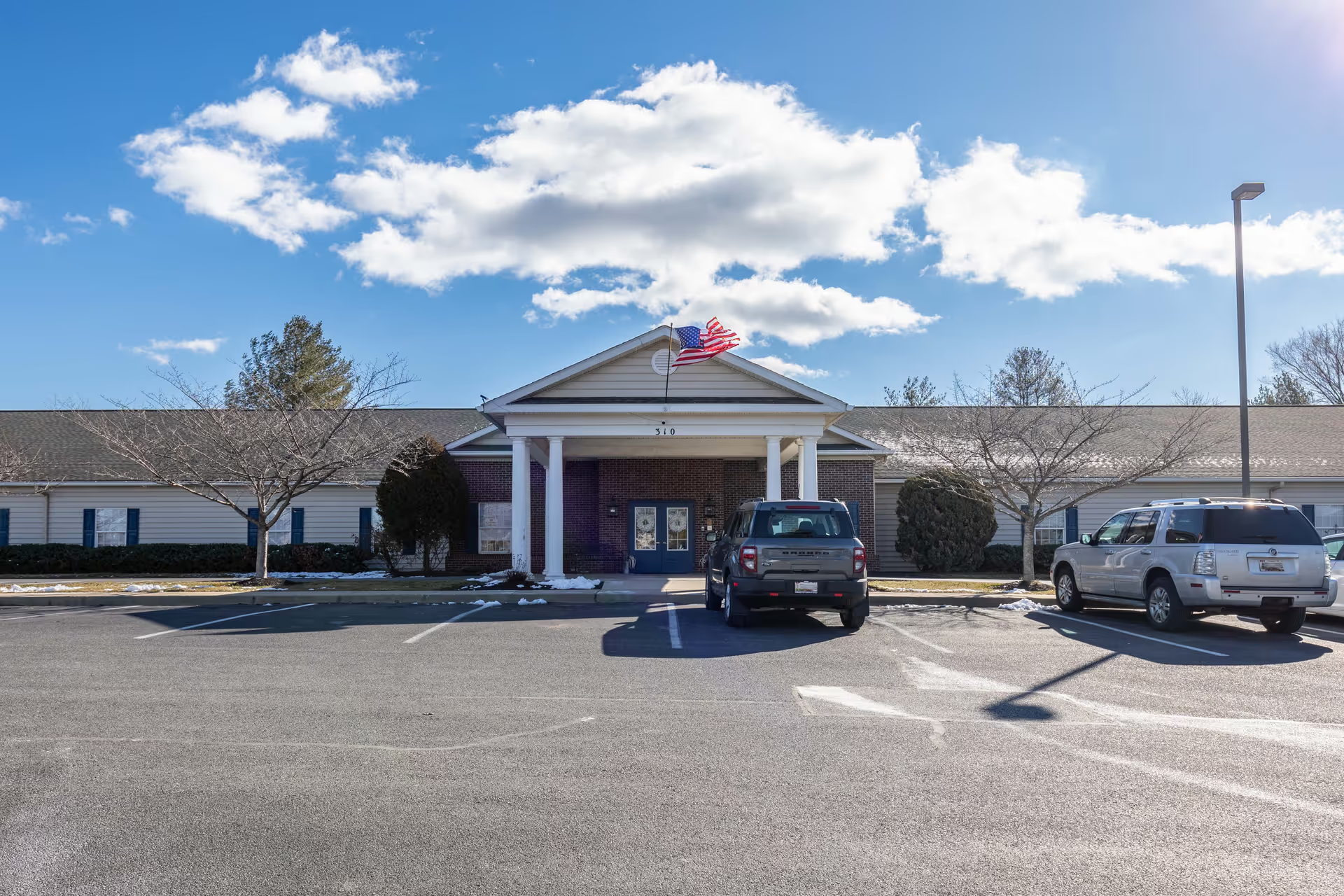
Brookdale Hagerstown elicits a broadly mixed but specific set of impressions. Many families and residents highlight strong relational strengths: staff are frequently described as warm, patient and attentive, and reception and leadership presence is frequently noted as helpful. The community presents as attractive and well maintained in public spaces, with spacious apartment options, kitchenettes, a large dining room, salon services and a pleasant garden/courtyard. Therapy services, routine housekeeping and included laundry are cited as operational strengths, and the community offers a full activities calendar with trips, arts, live music and pet programming that supports social engagement for many residents.
Care and staffing present a split picture. Numerous accounts praise hands-on caregiving, responsive management and coordinated therapy programs that produced measurable resident improvement. Simultaneously, a set of recurring operational issues appears across reviews: inconsistent staffing levels and turnover, gaps in medication management (including missed or mixed medications), and insufficient supervision at times for higher-acuity or memory-care residents. These patterns have been linked by families to delays in response, care-process inconsistencies and, in some cases, transfers to other facilities. Reviewers also cited concerns about limited clinical oversight during some shifts, suggesting variability in how nursing resources are allocated.
Dining and activities receive generally positive marks for variety and atmosphere, with multiple mentions of appealing, restaurant-style dining and engaged activity staff. However, meal quality and service continuity are uneven: some families praise high-quality, holiday-style meals and attentive servers, while others note dry or poorly timed meals and occasional missed services. The activities program is robust when staffing is stable, but continuity can be affected by coordinator turnover or schedule gaps.
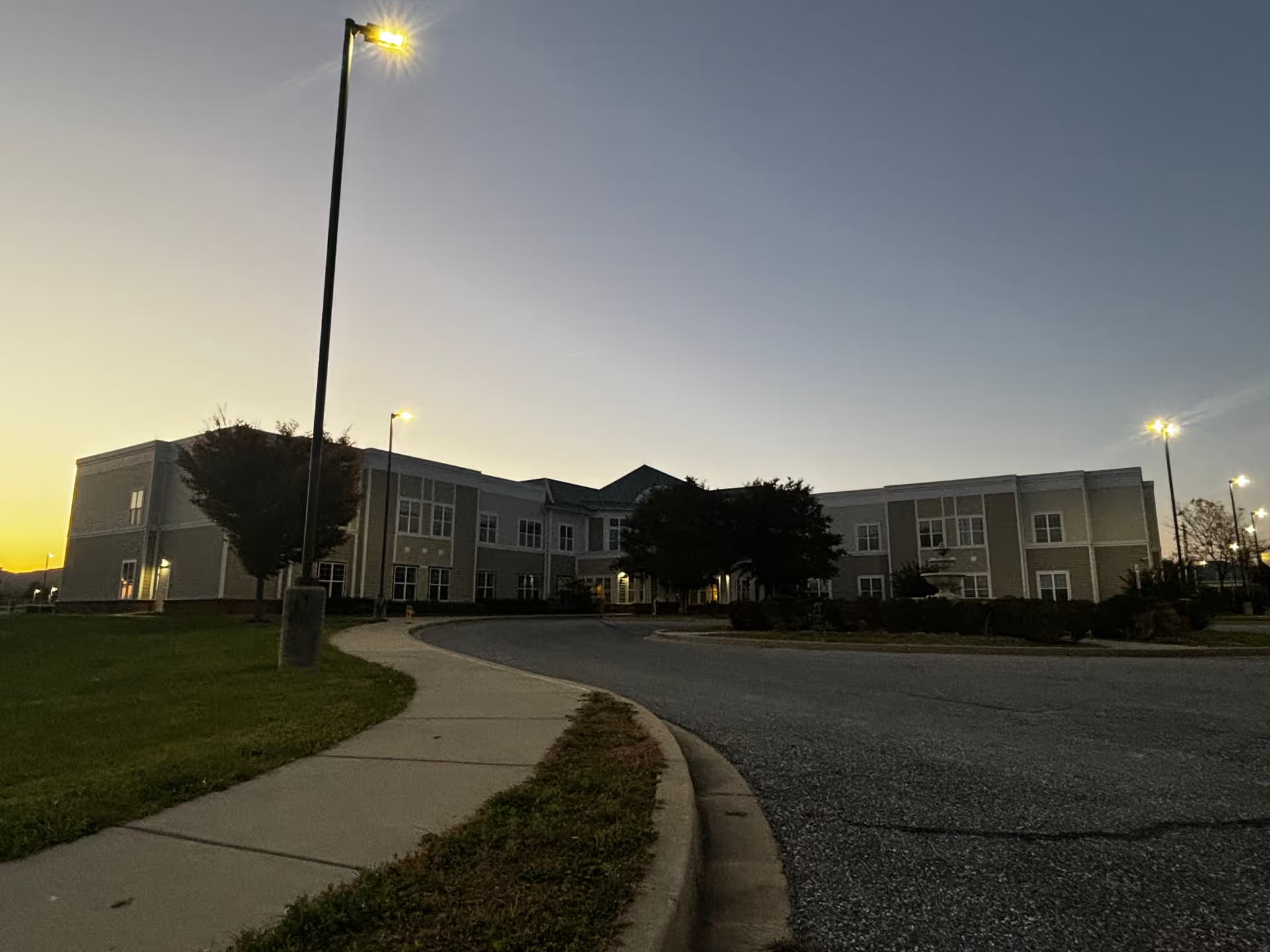
Facilities and operations are another area of contrast. The building, grounds and communal areas are often described as clean, bright and well appointed; residents and visitors frequently mention roomy layouts and pleasant décor. At the same time, sanitation and cleanliness inconsistencies between units — particularly within memory-care areas — appear in several accounts. Security and asset-management controls were also raised as a concern by some families, who cited missing valuables and inconsistent follow-up on those incidents.
Management and communication show both strengths and weaknesses. Many reviewers praise accessible executive leadership, regular updates (including during the pandemic), and staff who go beyond expectations to support transitions. Conversely, others describe poor communication about care updates, unclear billing or charge practices, and perceived favoritism or privacy concerns. A few reviews referenced external regulatory deficiency documentation and more serious individual allegations; these should be considered alongside the broader pattern of mixed operational performance.
In short, Brookdale Hagerstown offers many of the physical comforts and social programs prospective residents expect—good locations, attractive common areas, therapy services and active programming—backed by staff who are often caring and engaged. Prospective residents and families should weigh those strengths against recurring operational concerns: staffing consistency, medication and clinical oversight processes, unit-level sanitation variation, security controls for valuables, and clarity of billing and communication. A focused tour that includes the memory-care unit, a detailed conversation about staffing ratios and medication procedures, and direct questions about billing and security practices would help clarify whether the community’s current operational balance matches a given resident’s clinical and social needs.