The reviews describe a facility with a mixture of notably positive clinical supports and recurring operational weaknesses. Many families praised individual caregivers, rehabilitation therapists, the director of nursing and clinical manager for attentive, respectful care and for coordinating therapy, on-site medical visits, and hospice collaboration when needed. Positive experiences emphasize personalized feeding assistance, dignity-preserving routines, helpful social-work transition support, private rooms, and organized activity offerings that some residents and families found comforting and restorative.
At the same time, a pattern of staffing and responsiveness issues appears across accounts. Reviewers described inconsistent staffing levels, long waits for call-light responses, and situations where students or inexperienced personnel performed tasks with limited supervision. Those operational gaps contributed to delayed personal care, inconsistent bathing schedules, and difficulties with feeding assistance for residents who need help. Several reviewers also raised concerns about medication-management practices and clinical oversight in specific situations.
Dining and daily living were rated unevenly: some families commended meal quality and assistance at mealtimes, while others pointed to inconsistent food preparation, feeding support, and low intake for residents who require assistance. Activity and therapy programs were frequently identified as strengths when present, with rehabilitation outcomes and therapist competence singled out positively.
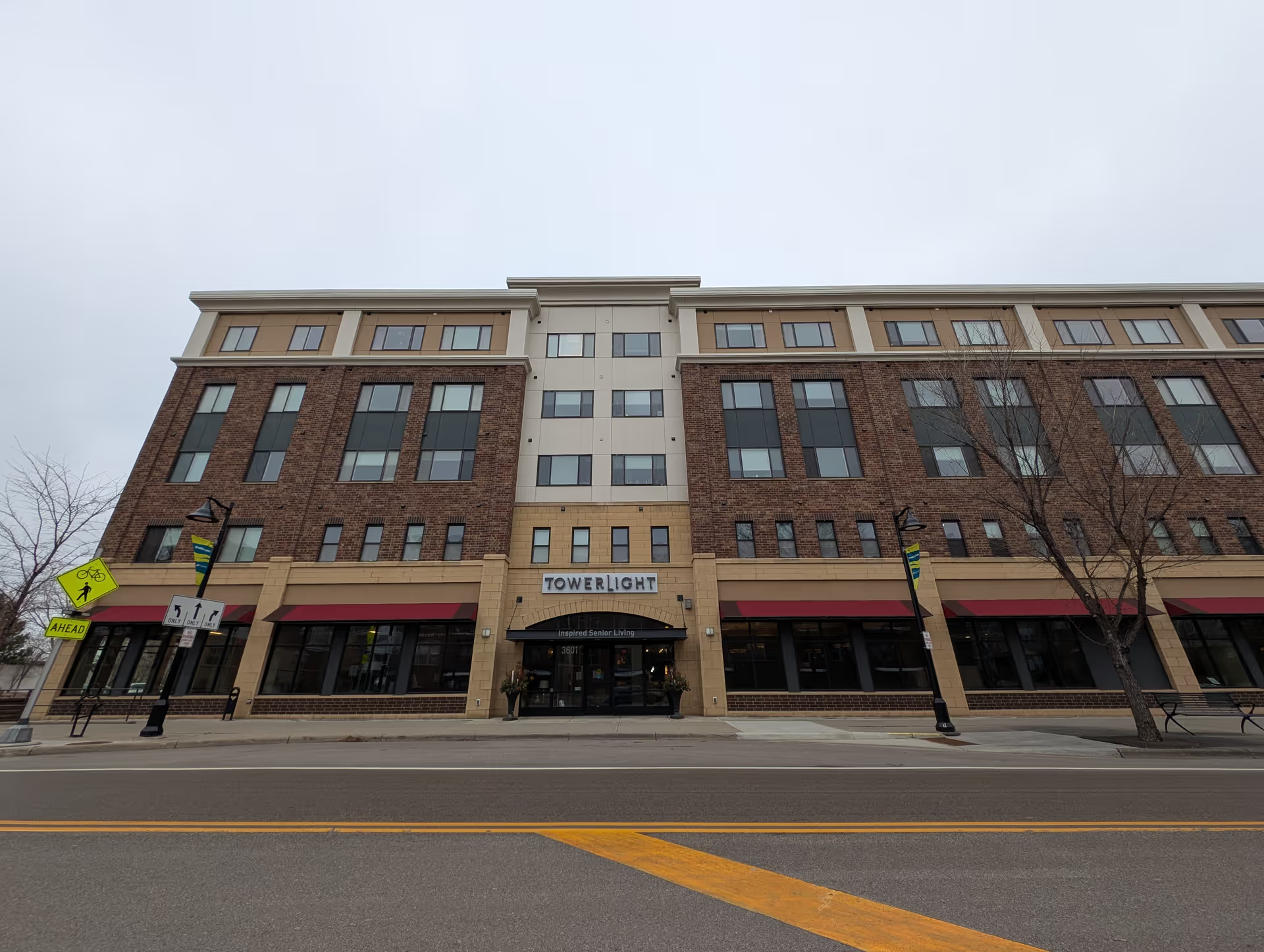
The physical plant and maintenance emerged as a separate area of concern. Multiple descriptions indicated dated décor, flooring and fixtures in need of update, plumbing problems, and odor or pest-control concerns in certain areas. While some areas were described as clean and orderly, others reflected sanitation and maintenance shortfalls that affect resident comfort.
Management, communication, and administration show bifurcated impressions. Several families praised clear, timely communication from specific leaders and cited smooth transitions when social workers or directors were active and engaged. Conversely, many accounts describe high leadership turnover, unresponsive executives, unresolved billing disputes, and breakdowns in insurance authorization and paperwork processes. There are also allegations of missing personal items and unresolved property concerns; given the seriousness of those claims, families should seek documentation and clarification directly with administration.
Overall, prospective residents and families will likely find strong clinical and rehabilitative capacity when leadership and frontline staffing are stable and engaged. However, the facility exhibits recurring operational challenges — staffing consistency, maintenance and sanitation, property controls, and administrative communication — that have materially affected some residents' experiences. Visitors should assess current staffing levels, ask about recent maintenance and pest-control actions, review the facility’s billing and property-control policies, and request references about recent leadership stability before making placement decisions.