Summary:
This collection of reviewer summaries portrays a facility with clear strengths in hospitality, admissions, and select aspects of day-to-day living, alongside persistent operational weaknesses that affect clinical quality and building safety. Many families and residents described warm, helpful front-office and caregiving staff, smooth move-in experiences, attractive common spaces, and private-unit options (including studios with en-suite baths and kitchen/pantry amenities). The dining program receives mixed but notable praise from several reviewers for quality meals and skilled culinary staff, and activity programming is viewed positively by people who value engagement opportunities and therapy-animal visits.
Care quality and clinical operations show variability. Positive accounts cite compassionate nursing and prompt emergency response in certain incidents; however, other accounts describe gaps in clinical training, inconsistent medication-administration controls, and concerns about timely recognition of falls and urgent needs. These operational gaps align with reports of delayed call-bell responses and staffing levels that fluctuate by shift. Taken together, the pattern suggests uneven clinical oversight and training rather than uniformly poor or uniformly excellent clinical care.
Staff and communication are also mixed. Numerous reviewers praised individual staff members for being kind, helpful, and professional, and intake coordination was frequently singled out as a strength. At the same time, there are recurring concerns about tone and responsiveness from some supervisory staff, high staff turnover, and weak family communication processes — especially around hospital transfers, significant incidents, and sensitive events. These communication weaknesses are coupled with access and privacy process issues (night entries, difficulty obtaining keys), which may erode family confidence despite positive interpersonal interactions with some caregivers.
Dining and activities: The facility offers an active activities calendar and multiple dining venues per floor; several reviewers enjoyed high-quality meals and described a chef-driven dining experience. Conversely, other reviewers described limited menu variety, repetitive starch-heavy meals, and inadequate accommodations for allergies or special diets. This suggests a capable dining operation that may not consistently meet individualized dietary needs or expectations for variety.
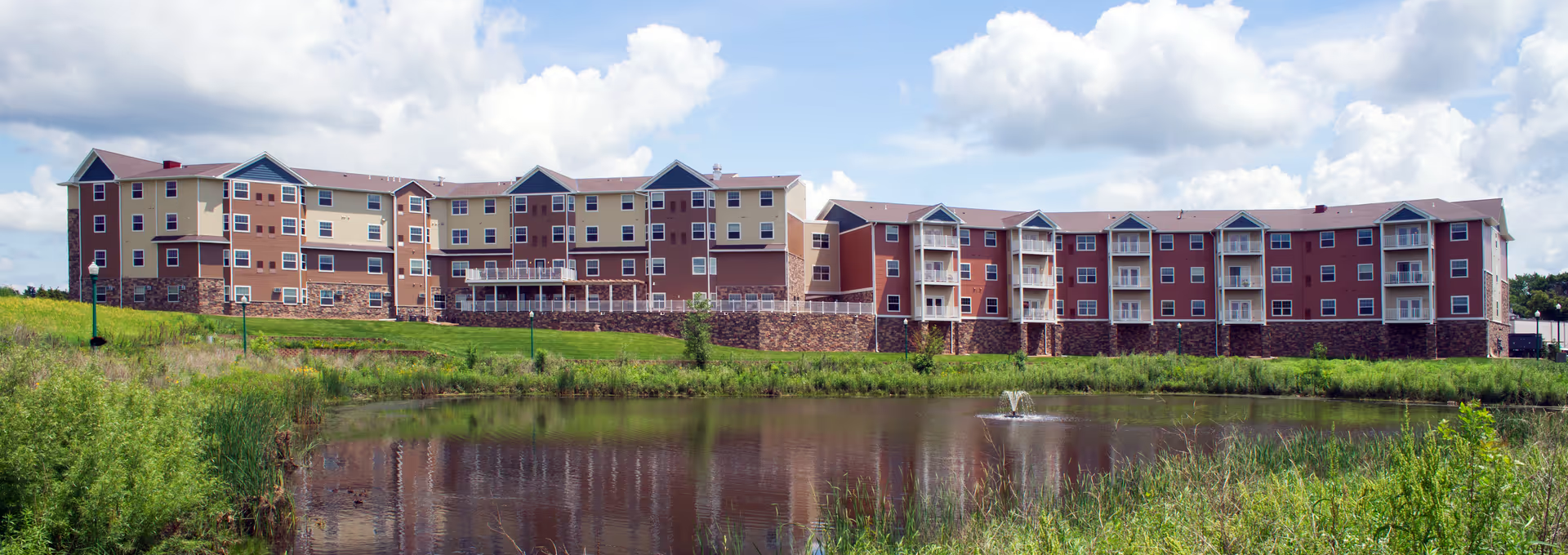
Facilities and maintenance present one of the clearest areas of concern. While common areas and recent cosmetic renovations are frequently praised for aesthetic improvements, reviewers cite persistent functional problems: water intrusion around windows and roofing, thermal-control issues (frost/ice buildup in cold weather), intermittent leaks, failing elevators and call systems, and an overall impression that some renovations are cosmetic rather than structural. Grounds and exterior maintenance, trash pickup, and pest-control programs were also identified as deficient in certain areas. These infrastructure and sanitation lapses contribute to safety and comfort concerns that are operational rather than purely aesthetic.
Management, contracts, and policies: Several summaries express dissatisfaction with management priorities, citing perceived underinvestment in building systems, gaps in enforcement of care standards, billing and contract transparency issues, and the availability of paid versus included services. While some reviewers had positive interactions with specific administrative staff, others reported adversarial exchanges with supervisors and frustration over unmet promises. These mixed management experiences indicate inconsistent administrative oversight and variability in how policies are implemented.
Overall patterns and guidance for prospective families: The pattern is one of significant variability. Prospective residents and families who prioritize warm interpersonal care, attractive common areas, and a strong admissions experience may find strengths here. Those for whom consistent clinical oversight, reliable building systems, memory-care specialization, transparent billing, and consistently maintained sanitation are nonnegotiable should seek specific, verifiable assurances before committing: review the unit-level maintenance history, request documentation of staffing levels and medication-administration policies, tour multiple apartments at different times of day, ask for sample menus and allergy-accommodation procedures, and confirm contract terms in writing. Where concerns are raised about safety or medication management, consider requesting references from current families and review recent regulatory inspection findings as part of the decision process.