Life Care Center of Carrollton presents a mixed but largely human-centered profile: reviewers frequently praise the compassion and attentiveness of direct-care staff, the friendliness of nurses and aides, and the facility’s emphasis on rehabilitation and social engagement. Families describe meaningful, respectful interactions between staff and residents, continuity of caregivers who often learn residents’ names and preferences, and instances of strong end-of-life support. Several care-team members and administrators were singled out positively, and the front office and social services received specific praise for helpfulness.
Clinical quality shows a bifurcated pattern. On the positive side, in-house therapy (PT/OT) and recovery-focused programming are frequently highlighted as effective, and many families credit staff interaction with cognitive and emotional improvements for residents. At the same time, a number of accounts indicate operational weaknesses in clinical processes: medication-management controls appear inconsistent, wound-care follow-up has been delayed in some cases, and nighttime responsiveness can be variable. These are trait-level concerns that could affect clinical reliability for medically complex residents if not addressed.
Staffing and management impressions are similarly mixed. Many reviewers describe attentive, kind, and responsive staff and name specific leaders and clinicians who provided excellent service. Conversely, other accounts describe uneven staff professionalism and practices that suggest gaps in supervision and scheduling (for example, problematic break-management and variability across shifts). These discrepancies point toward inconsistent staffing practices and oversight rather than uniform facility culture.
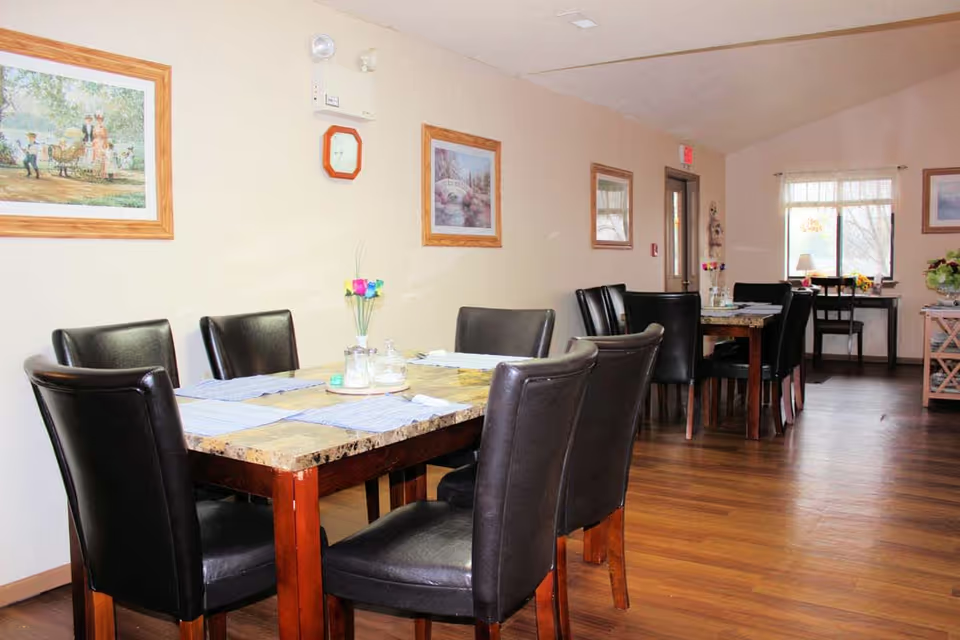
Dining and activities are clear strengths. The facility receives consistent compliments for meal quality and choice, and residents are described as enjoying the food. The activity program—bingo, entertainers, and routine social interaction—receives positive feedback for providing stimulation and social opportunities, which families link to improved mood and engagement. The presence of an on-site therapy gym supports the facility’s rehabilitation orientation.
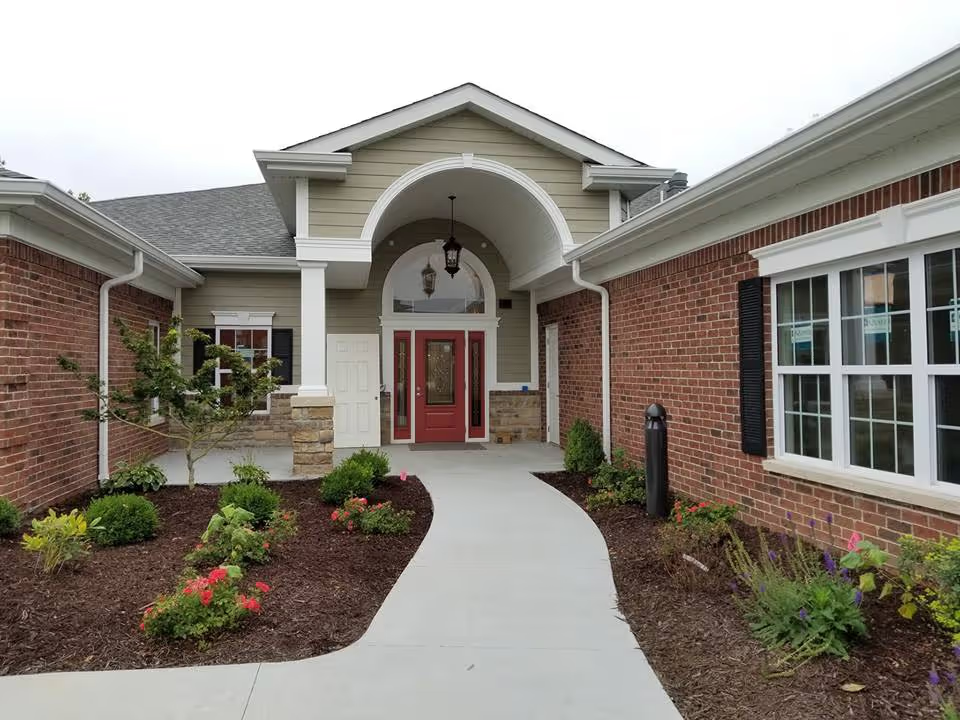
Facilities and cleanliness comments are mostly favorable about common areas and overall upkeep, though the physical plant is described by some as aging or outdated. A small number of reviewers raised sanitation concerns and inconsistent resident-level hygiene practices; these notes should be interpreted as operational inconsistencies rather than a universal condition of the facility.
For prospective residents and families: Life Care Center of Carrollton offers clear strengths in compassionate caregiving, rehabilitation services, and social programming, and it can provide strong end-of-life support. At the same time, prospective families should assess operational consistency by asking specific questions about medication-administration protocols, wound-care processes, nighttime staffing ratios and responsiveness, bathing and incontinence-care schedules, and supervision of staff breaks. An in-person visit during different shifts and conversations with clinical leadership and social services can help determine whether the facility’s strengths align with an individual resident’s clinical and daily-care needs.