The reviews present a mixed picture in which individual staff members and social work personnel receive positive remarks, but systemic operational weaknesses are repeatedly described. Several reviewers praised direct-care staff as kind and patient and noted that social workers or specific team members kept families informed. At the same time, multiple patterns of concern emerge about daily operations, safety, and oversight.
Care quality and staff conduct: Comments indicate variability in day-to-day care. While some staff are characterized as attentive and communicative, others are associated with delays in responding to residents, rough handling concerns, and at least one reported safety incident that resulted in a head injury. These accounts point to gaps in monitoring, transfer and handling practices, and timely bedside checks rather than uniformly poor staff behavior.
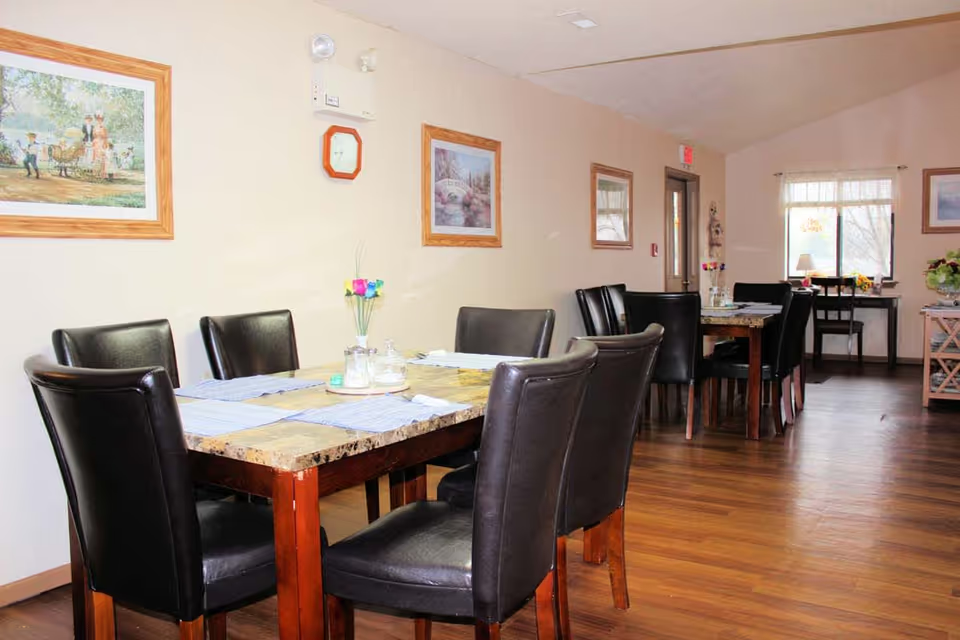
Dining and nutrition: A consistent theme involves meal quality and service reliability. Reviewers describe late or cold meals, limited menu variety on certain nights, and instances where requested items were withheld or not delivered. In addition, concerns about kitchen cleanliness and food presentation were raised; together these suggest weaknesses in meal-service continuity, kitchen hygiene practices, and food-safety oversight.
Activities and social engagement: Activity programming is described as limited in scope and frequency, with bingo cited as the primary offering. This indicates constrained recreational resources or scheduling that may not meet diverse resident interests or cognitive and mobility needs.
Facilities, cleanliness, and infection control: Several comments raise sanitation concerns in resident rooms and common areas and note pest-control issues. There are also mentions of infection-control practices (e.g., external tenting) that some families perceived as contributing to transmission rather than containment. While some units were described as having adequate room sizes, facility-level cleanliness and environmental control appear inconsistent.
Management, communication, and security: Reviewers point to uneven communication and managerial oversight. Specific operational issues include inconsistent phone/service availability, difficulty with third-party food deliveries and site procedures for accepting external orders, and allegations of missing personal property. These items reflect broader gaps in property controls, policy enforcement, and transparent family communication. Medication administration inconsistencies and occasional inattentive practices were also reported, indicating a need for stronger clinical oversight.
Overall patterns and implications: The overall pattern is of a facility with capable individual staff members but with systemic shortcomings in staffing consistency, quality assurance, and management oversight. Prospective residents and families should weigh the positive accounts of individual caregivers against recurring operational issues—particularly around meal service, sanitation, safety monitoring, medication practices, and communication—and consider asking facility leadership for specific policies, staffing ratios, incident logs, pest-control records, and examples of corrective action before deciding.