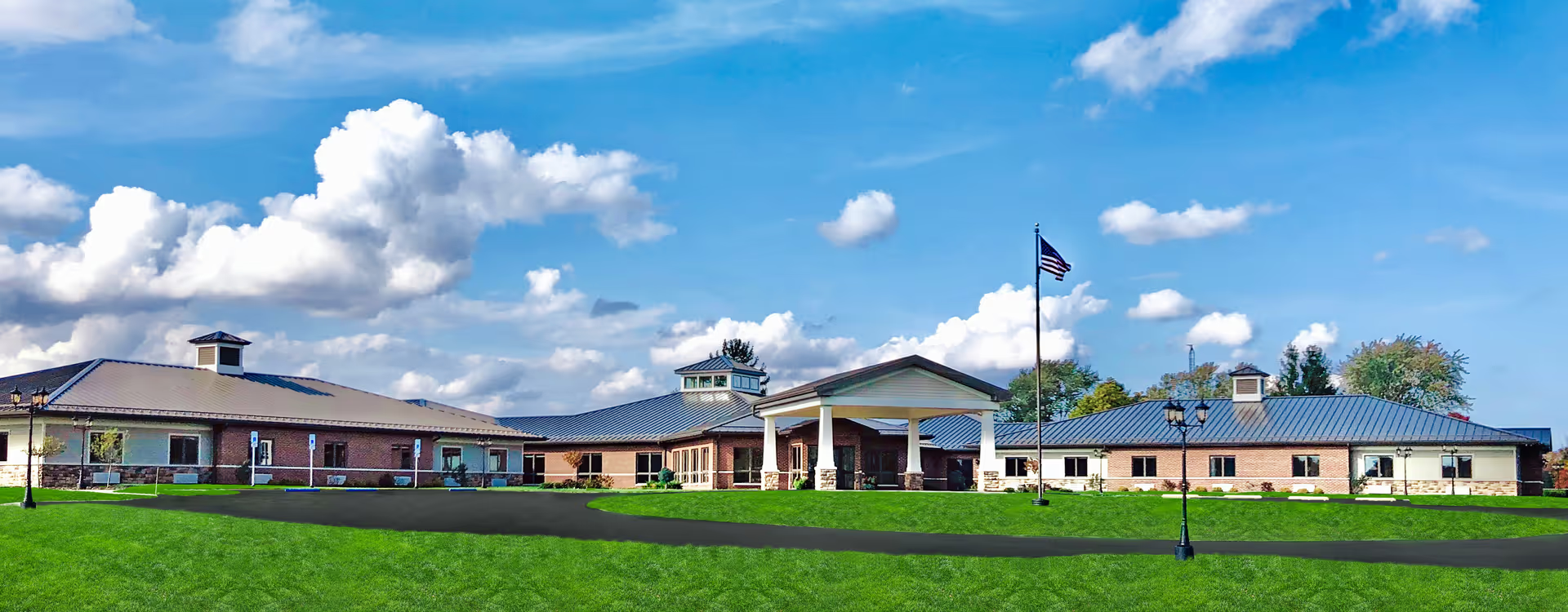
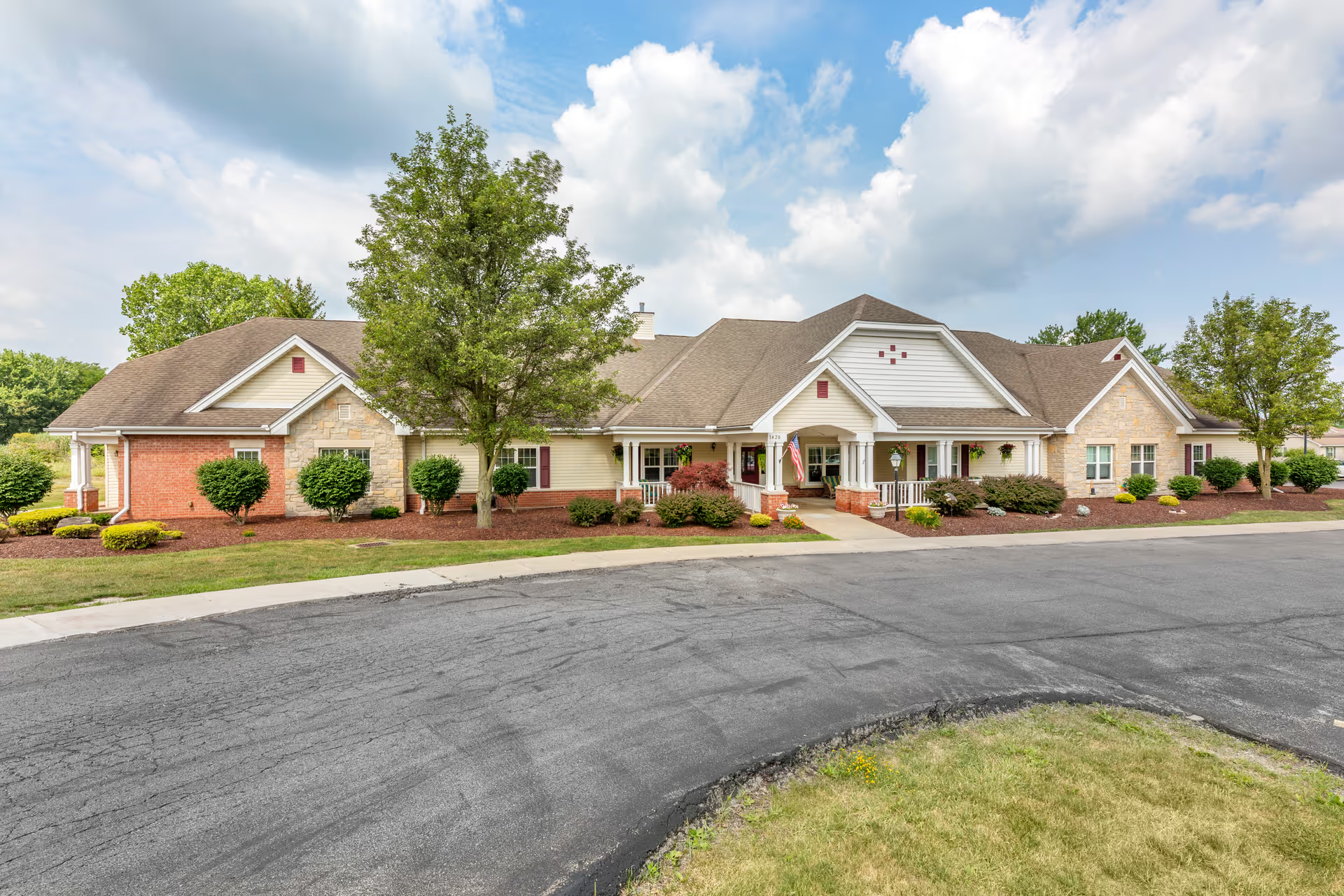
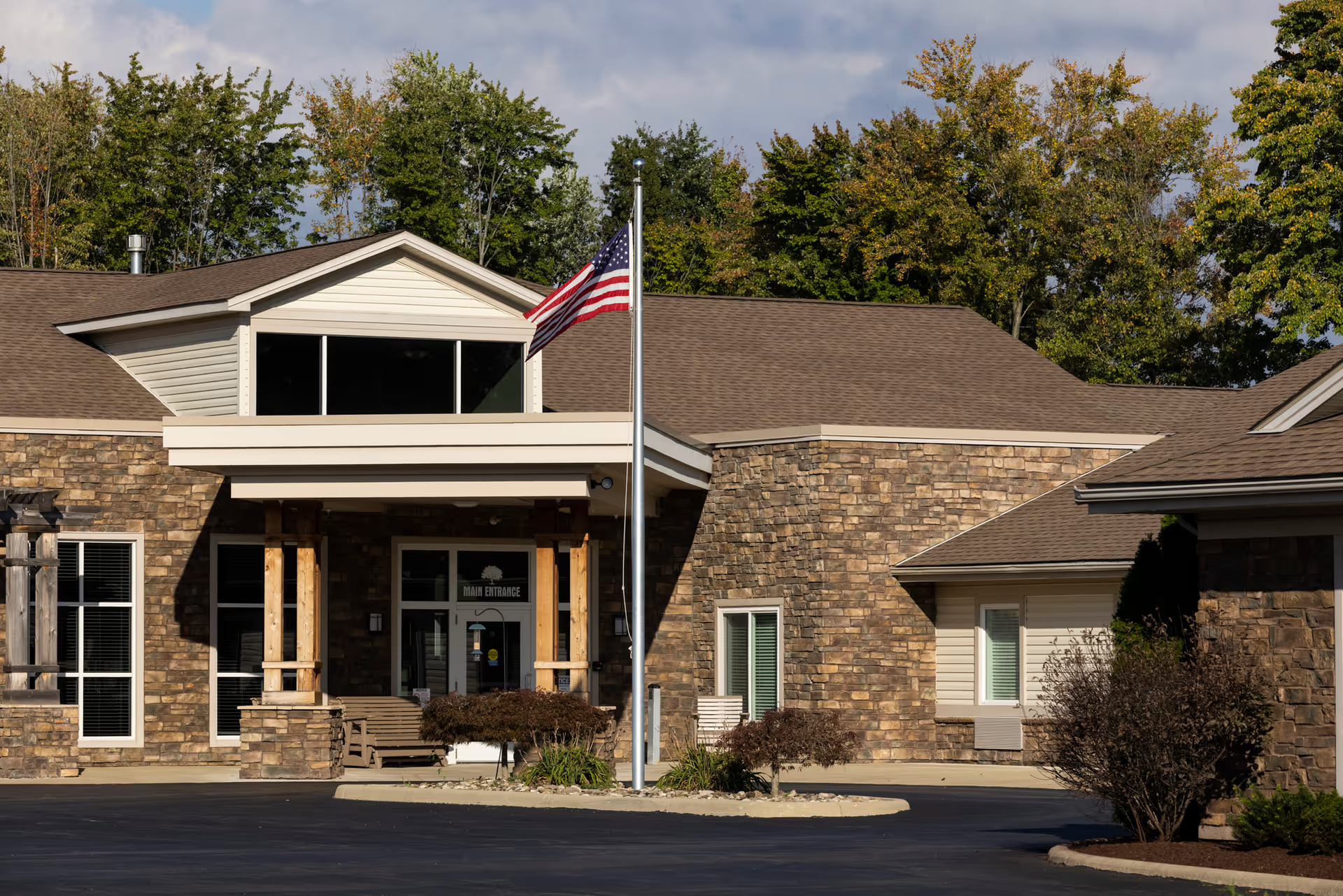
The reviews of Windsor House at Champion describe a facility with notable strengths in therapy-focused rehabilitation, an engaged activities program, and a generally warm physical environment, alongside a set of recurring operational concerns. Many families and residents praise the therapy department, on-site clinical resources (including physicians and podiatry), and the presence of a secured memory-care unit. The campus layout, outdoor seating, porches, courtyards, and social programming (bingo, movies, painting, outings) are frequently cited as contributors to an active, home-like atmosphere. Several reviewers also highlighted compassionate caregivers, hands-on administrative leadership, and good hospice coordination.
Care quality and staffing were areas of the strongest divergence in experiences. Positive accounts emphasize attentive nurses and aides, effective restorative therapy, and successful short-term rehab outcomes. Counterbalancing those reports are a number of reviews describing inconsistent responsiveness (long waits for assistance, missed call-button responses), uneven personal-care delivery (inconsistent bathing and toileting support), and staffing instability. Medication timing and medication-management gaps emerged repeatedly as a clinical concern and, in some cases, were tied to delayed therapy progress. Prospective families should understand that direct-care reliability appears variable across shifts and units.
Dining and activities receive mixed but actionable feedback. The dining areas and the option to have meals delivered to rooms are appreciated by many residents; activities such as movie nights, religious services, outings, and indoor games support social engagement. At the same time, other reports point to variability in meal quality, portion sizes, and accuracy for modified diets—an operational area that may require clarification at intake for individuals with specific dietary needs.
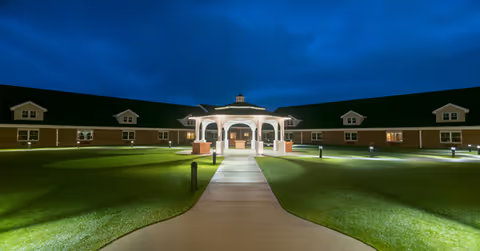
Facility condition and layout are generally seen as strengths: several reviewers note clean, modern common spaces, well-kept grounds, and bright, single-level circulation that supports walking and bird-watching. However, shared rooms and curtain-separated arrangements result in privacy and visibility limitations for some residents, and a subset of families raised sanitation and odor concerns in particular rooms or areas. Room location relative to the nurses’ station was also cited as affecting response times for residents in distant rooms.
Management and organizational issues form a recurrent theme. While some reviewers credit the administrator and newer leadership with measurable improvements in staff quality and food, others report problematic interactions with management, payroll and HR inconsistencies, unclear policy enforcement (including around advanced directives and infection-control practices), and occasional adversarial family-staff communications. There are also accounts of inconsistent information transfer during hospital-to-facility transitions and differing views about readmission following infection events.
Overall, Windsor House at Champion presents as a facility with legitimate strengths in rehabilitation, social programming, and on-site clinical resources, but with operational variability that affects daily care consistency for some residents. Families considering placement should tour the specific unit, ask for current staffing ratios and turnover data, review medication- and diet-management protocols, verify policies on privacy and shared rooms, and seek examples of recent quality-improvement actions taken by management. This targeted due diligence will help align expectations with the facility’s demonstrated strengths and known operational weaknesses.