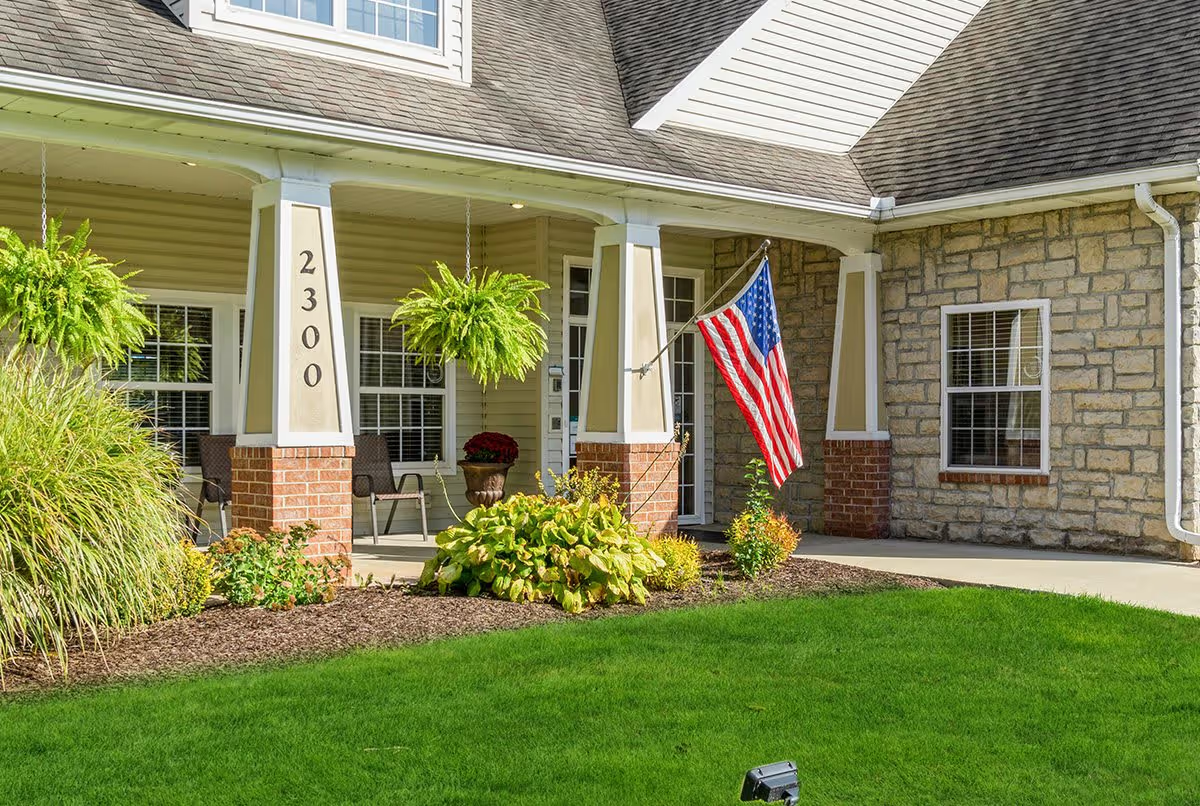
Reviewer accounts of Delaware Court Healthcare Center are highly polarized, with many families describing positive rehabilitation and long-term care experiences while other families raise serious safety and operational concerns. Strengths most commonly noted include an engaged therapy department and staff who create a family-like atmosphere; several reviewers described meaningful functional gains during rehab and attentive daily caregiving from particular nurses and aides. The facility's activity program and amenities (bingo, crafts, talent shows, aquariums, a birdcage) are frequently cited as beneficial to resident quality of life, and many families found meal options to be more appealing than typical nursing-home food.
At the same time, a notable subset of reviews describes lapses in clinical oversight and safety. Concerns include inconsistent staffing levels that contribute to delayed responses, gaps in fall-prevention and transfer procedures, and weaknesses in pressure-injury prevention and wound management. A small number of accounts reference serious clinical incidents that have attracted regulatory attention; these reports underscore the importance of confirming current oversight and incident-response processes before placement. Several families also raised concerns about medication-management practices used for behavioral control and the facility's protocols for escalation and family notification when incidents occur.
Operational and management issues appear to be inconsistent across units and time. Multiple reviewers praised specific caregivers and an overall clean, well-kept environment, yet other reports mention sanitation and pest-control problems in particular areas, inconsistent resolution of maintenance complaints, and examples of lost personal items or billing irregularities. Communication with families is another recurring theme: positive experiences feature frequent progress updates and respectful interactions, while negative accounts cite poor communication about clinical changes, transfers, or discharge planning.
Dining and activities are generally seen as strengths, with many families noting variety, occasional special treats, and active programming that supports social engagement. However, food quality and consistency were described as variable by several reviewers. For prospective residents and families, the pattern of highly positive individual caregiver experiences alongside episodes of operational and clinical inconsistency suggests careful, targeted due diligence: arrange a tour focused on staffing levels, ask about current clinical oversight and incident-response protocols, review recent inspection reports, inquire about medication and behavior-management policies, confirm billing practices, and observe meal service and activity programming in person.