The reviews coalesce around operational and communication issues rather than detailed commentary about clinical care or programming. Several commenters described experiences that indicate concerns about how daily operations are managed, with repeated references to coordination failures, forced relocations of belongings, and the transfer of moving- and storage-related costs onto residents. There is limited direct information about clinical care quality; however, the described tone and responsiveness of staff raise questions about the facility's ability to consistently provide respectful, resident-centered care.
Staff behavior and front-office interactions are a prominent theme. Reviewers described an unresponsive or dismissive approach from office personnel and management, including refusal to answer questions and a confrontational tone from a manager. These descriptions suggest concerns about staff conduct and family/staff communication processes — areas that can affect perceived dignity and satisfaction even when clinical care meets standards. Direct examples of staff positivity are lacking in the material provided, so no consistent strengths in staff–resident relations emerge from these summaries.
Management and operational policies are another recurring issue. Multiple items point to inadequate procedures for moving residents' belongings and storing them, with associated financial burdens placed on residents. A winter-related hardship for a resident with multiple pets further highlights potential gaps in pet policy and in the facility's ability to anticipate and accommodate special circumstances. The pattern implies a need for clearer written policies, better logistical planning, and transparent billing practices for operational actions that affect residents.
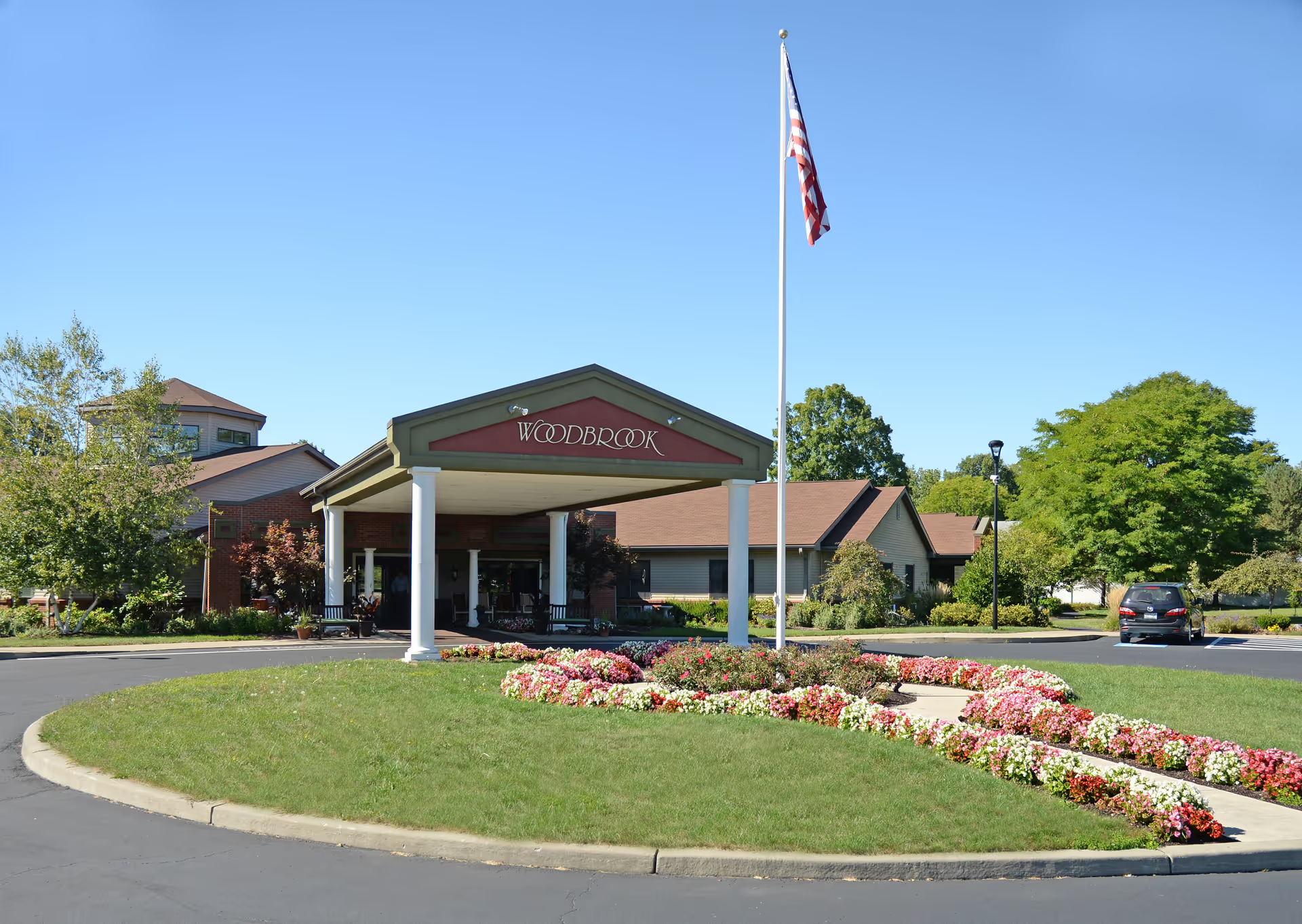
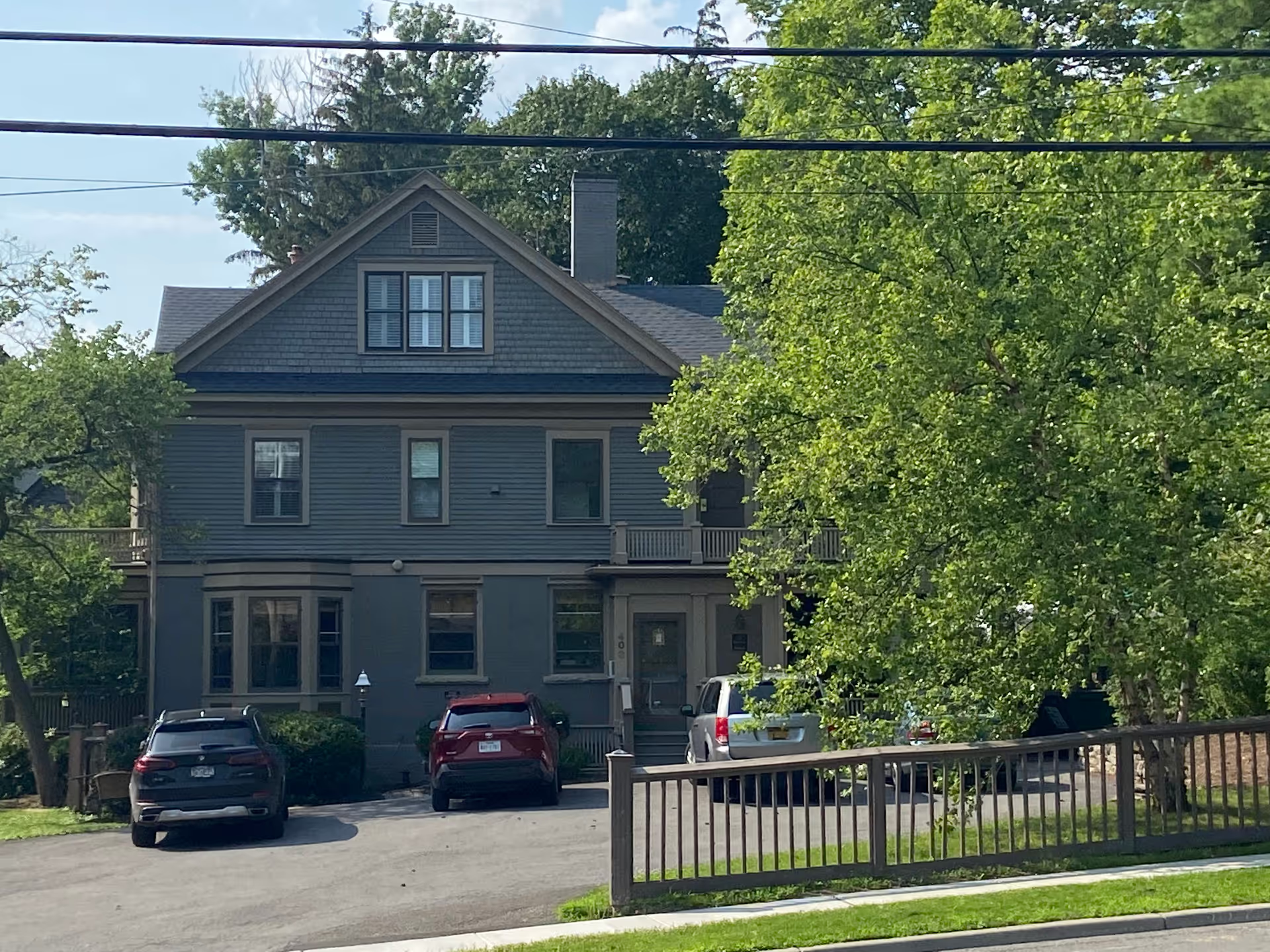
Facilities and living conditions are described in broad, negative terms. The building is referred to as an apartment-style setting, but reviewers expressed concerns about overall conditions and the lived environment, using language that conveys a restrictive or institutional atmosphere. Sanitation and maintenance specifics are not detailed in these summaries, but the overall characterization suggests that prospective residents should verify unit upkeep, common-area cleanliness, and the general condition of the property during an in-person visit.
There is little or no substantive information about dining quality, activities, or enrichment programming in the supplied summaries. The absence of commentary on those domains should be interpreted as a gap in the available feedback rather than evidence of quality. Prospective residents and families would benefit from direct questions about meal service continuity, menu variety, and activity calendars when evaluating the community.
Notable patterns to weigh: consistent concern about management responsiveness and tone; operational gaps around relocation, storage, and cost allocation; limited pet accommodations; and general facility-condition worries. For decision-making, request written policies on relocations and storage, ask how the facility handles pet situations and winter contingencies, obtain examples of resident billing for operational actions, and evaluate staff communication through direct interactions with the office and management team. An in-person tour and review of written contracts and grievance/appeals procedures would help clarify whether operational shortcomings reflected in these summaries are isolated incidents or indicative of systemic issues.