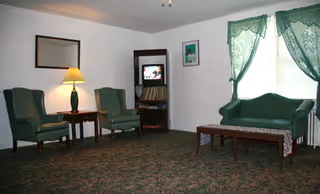
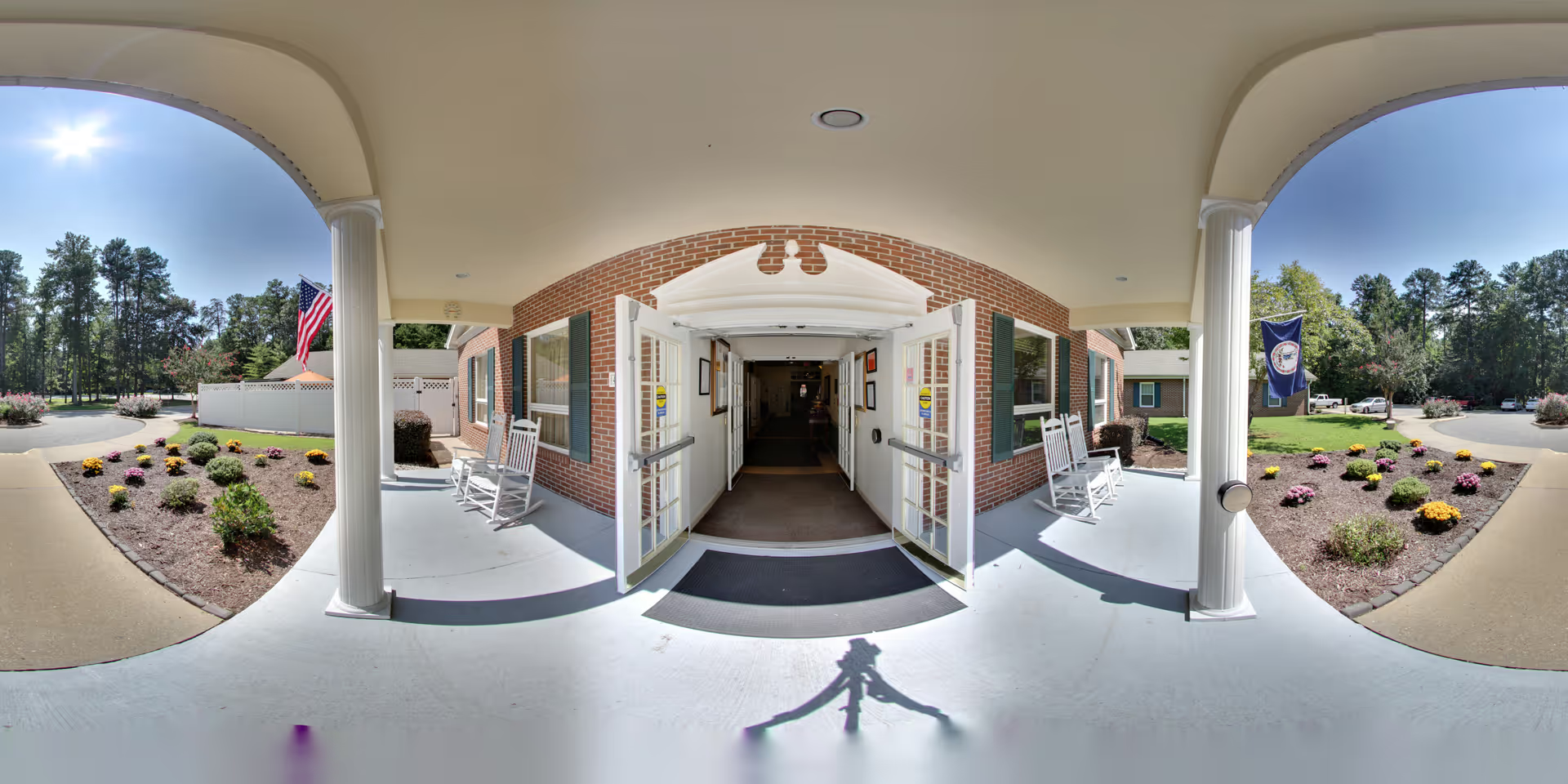
Commonwealth Senior Living at Kilmarnock presents as a newer, well-appointed community with many strengths alongside several operational inconsistencies families should consider. Reviewers commonly describe an attractive, bright, and home-like environment with wide corridors and an accessible layout that supports walkers and wheelchairs. Communal spaces including a garden and large activity rooms are repeatedly noted, and many families praised the memory-care unit’s 24-hour coverage and supportive hospice coordination. The facility’s reception and administrative presence receive positive mention from multiple reviewers.
Staff quality is a clear mixed but overall positive pattern: numerous reviewers emphasize compassionate, personable, and attentive caregivers who build strong interpersonal relationships with residents and respond helpfully in many situations. At the same time, there are recurring notes about variability in staff conduct, occasional forgetfulness, and difficulty reaching personnel or receiving timely follow-up. These staffing themes extend to concerns about recruitment, compensation, and the need for more qualified caregivers; prospective families should inquire about current staffing levels and training practices.
Dining is a visible strength and a source of divided opinions. The community operates a capable culinary team noted for fresh, farm-to-table offerings, flexible dining, and an accommodating chef who will take special requests. Several reviewers praised the quality and presentation of meals. Others described periods of limited variety or lower-quality offerings (for example, repetitive simple fare), so dining consistency appears uneven. Visitors may want to arrange to sample a meal and ask about menu rotation and accommodations for preferences.
Activities programming and social life receive generally favorable comments: the community runs many events, exercise classes, and family-oriented functions, and staff are described as encouraging resident interaction. However, families also described activity repetition, limited variety for some residents, and low participation in certain programs. If engagement is a priority, ask for a current activity calendar and examples of resident-led or individualized programming.
Facility maintenance and amenities are generally well regarded — many reviewers describe clean rooms, bright windows, and updated decor — but there are isolated cleanliness and housekeeping inconsistencies (for example, uneven floor cleaning and occasional stained carpeting). In-room amenities vary: rooms tend to be spacious and comfortable, but refrigerators and in-room kitchen capabilities are limited in some units. The fitness area is compact and may not meet expectations for more robust exercise programming.
Management and operational issues are the main recurrent concerns. While several families praised responsive administration and supportive coordination with hospice, other accounts note problematic communication, billing or room-assignment transparency issues, and instances where promises or expectations were not fully met. Medication-management concerns, including errors and renewal delays, appear in multiple accounts and suggest prospective residents should ask about clinical oversight, medication administration protocols, and incident reporting processes.
Overall, Kilmarnock may suit families seeking a modern, welcoming community with strong interpersonal caregiving and a culinary focus, provided they perform targeted due diligence. Recommended tour questions include current staffing ratios and training, medication-administration safeguards, housekeeping schedules, sample menus and meal observation opportunities, activity participation data, and clear billing/room-assignment policies. These steps can help align expectations with the community’s demonstrated strengths and address the operational areas where reviewers observed variability.