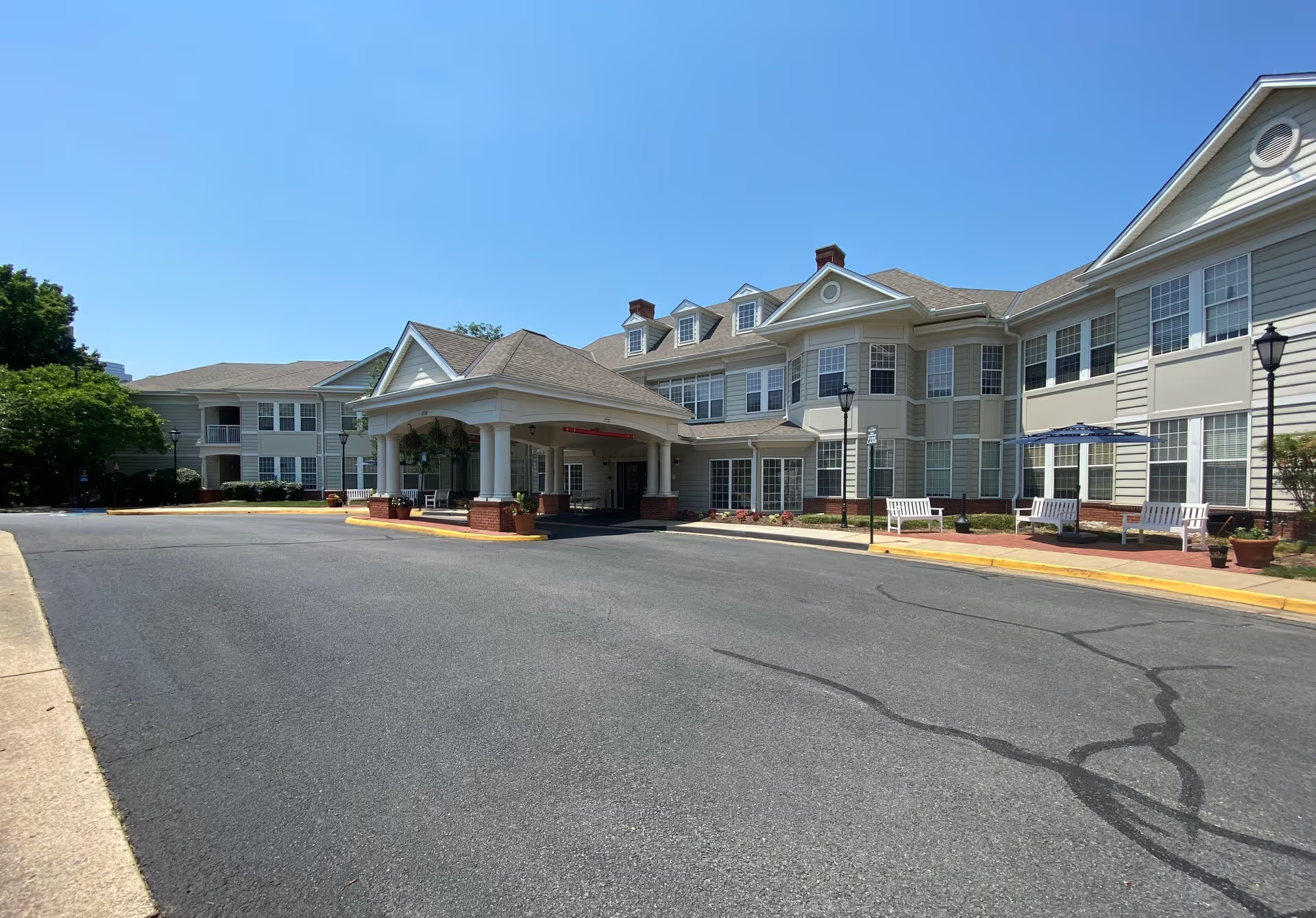
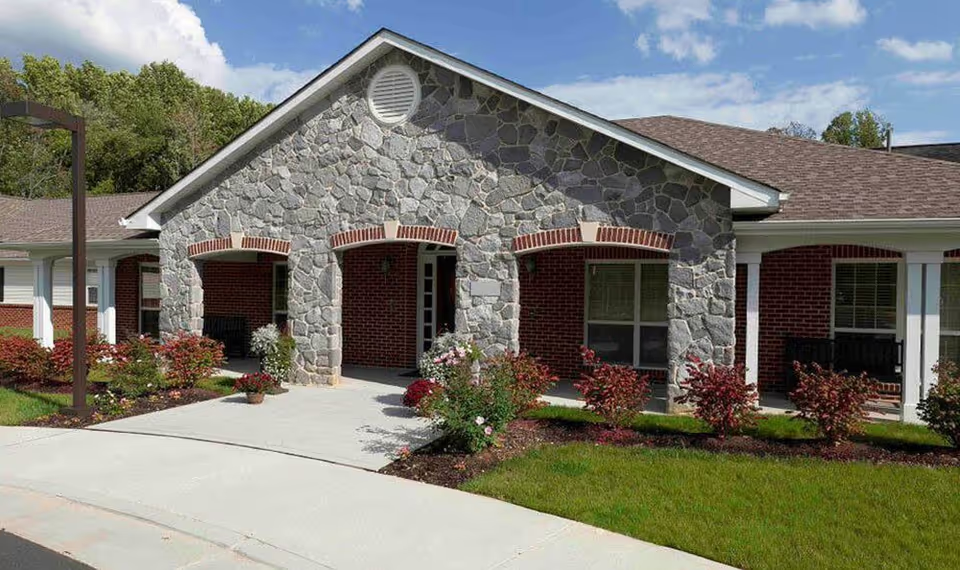
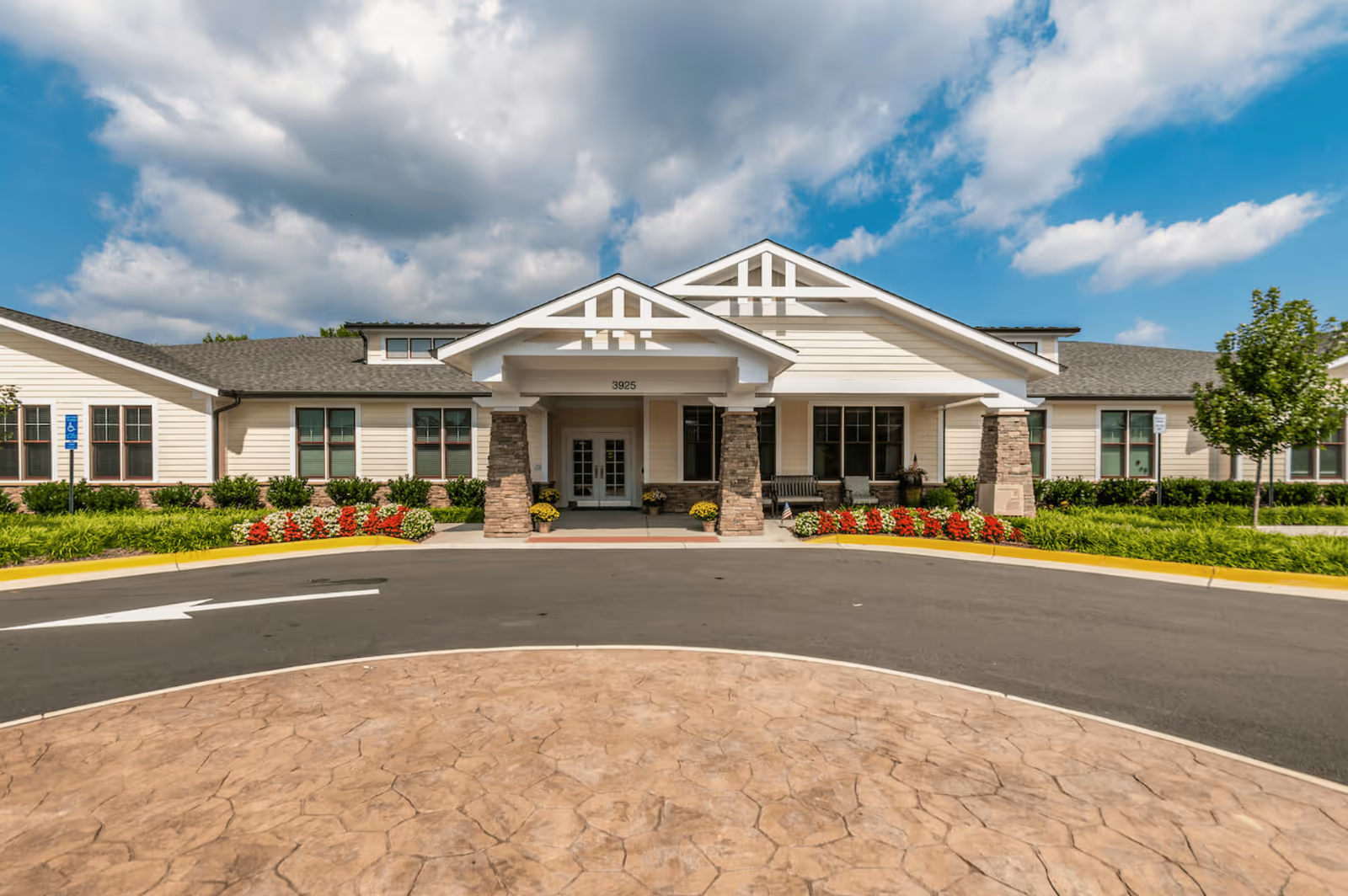
Hunters Woods at Trails Edge presents as a newly built, amenity-rich senior community with many elements that appeal to independent and assisted living residents: contemporary, well-designed apartments with in-unit washers/dryers and full kitchens; universal-design features such as roll-in showers and pocket doors; multiple communal spaces and activity rooms; a wooded campus with walking trails; and proximate community resources such as the Reston Community Center. Numerous accounts highlight a strong hospitality ethos—friendly admissions staff and hospitality leadership, responsive maintenance, thorough housekeeping in many units, and a broad activities program that fosters social engagement. Dining is frequently described positively for quality, presentation, and special events, and the overall aesthetic and cleanliness of the building are commonly praised.
Staff performance is one of the facility's most consistent strengths and simultaneously a source of variability. Many families and residents describe staff as compassionate, personalized in their approach, and willing to go above and beyond; several frontline and hospitality team members were named as standout contributors. At the same time, there are recurring operational concerns: high staff turnover and inconsistent staffing levels that have been linked to delays in care, uneven adherence to documented care plans, and instances of medication-management lapses. Reviewers describe unreliable call-bell response times and inconsistent bathing/hygiene routines and raise questions about training and language competency among some direct-care staff. Memory-care areas are noted as having particular operational pressure points, with comments about staffing and day-to-day program consistency that prospective families should evaluate closely.
Dining and social programming are strong selling points for many residents, with regular events, dress-up dinners, live music, and outings cited as contributors to an active community life. However, there are facility-level constraints worth noting: limited dining-hours flexibility (including a stated late-afternoon cutoff), occasional kitchen/service interruptions, and acoustic issues in dining and common areas that affect mealtime experience and hearing accessibility (including an ineffective T-coil implementation reported by some). Prospective residents who rely on hearing-assistive technology or who prefer flexible mealtimes should inquire directly about current solutions and service patterns.
Management and administrative themes are mixed. Some reviewers praise leadership, clear communication from business-office staff, and effective pandemic protocols; others describe slow corrective action on operational problems, grievances about enforcement of contract terms (including rent increases and deposit/service reversals), and a perception of corporate-level disengagement. Financial transparency, contract terms, and how rent increases are applied emerged as repeated concerns. There are also occasional mentions of limited on-site technical support and spotty cellular coverage, which can affect families relying on digital connectivity.
Notable patterns: experiences at Hunters Woods are polarized—many families cite excellent care, strong social fit, and top-tier amenities, while other families describe sustained issues that required advocacy to resolve. Because the facility is new and rapidly occupied, several reviewers framed problems as "growing pains," whereas others characterized them as operational gaps needing systemic correction. Prospective residents and their families should look for corroborating documentation (current state surveys and corrective-action history), ask targeted operational questions (staffing ratios, turnover rates, training and language support, call-bell response times, medication-review procedures, and memory-care staffing), observe a meal service and an activities period, and review contract language on fees and rent increases before committing.
Overall, Hunters Woods at Trails Edge offers a modern, well-appointed environment and many examples of individualized, compassionate care; however, it also exhibits recurring operational weaknesses around staffing consistency, care-plan adherence, communication, hearing-accessibility, and contract/pricing transparency that merit careful, specific inquiry by prospective residents and their families.