Overall impression of Complete Care at Oak Ridge is mixed but polarized: a substantial number of families and residents describe a well-kept, active community with strong therapeutic and social programming, while a distinct set of accounts raise operational concerns that merit attention.
Care quality and clinical services: Many reviewers praise the therapy departments (physical and speech therapy) for producing measurable rehabilitation progress and for staff who are goal-oriented and supportive of returning residents to higher function. Direct-care personnel (nurses and nursing assistants) are frequently described as compassionate, attentive, and respectful; families credit them with restoring a sense of dignity for their loved ones. At the same time, there are recurring concerns about gaps in clinical oversight and inconsistencies in day-to-day care processes — notably incontinence-care practices, timeliness of attending to residents, and variability in medication/medical paperwork follow-through. These concerns suggest uneven implementation of care protocols rather than a uniform failure of clinical capability.
Staff and management: Staff engagement, cheerfulness, and individualized attention are common positives. Several reviewers singled out named staff and departments (activities, admissions/guest services, social work, and therapy) as strengths, and some families describe transparent, responsive communication from administration including daily updates. Conversely, recurring themes include inconsistent staffing levels (particularly during certain shifts), perceived high workloads for CNAs, variable staff conduct or tone with residents and families, and instances where family members felt they had to fill caregiving gaps. These patterns point to managerial and resourcing challenges — scheduling, staff support/retention, and consistency of supervisory follow-up — rather than uniformly poor intent among frontline workers.
Dining and activities: Dining is a pronounced strength for many reviewers: made-to-order meals, attractive presentation, and memorable holiday dinners receive strong praise. However, there is variability in meal experience for some families — concerns about menu execution, specific food preparations, and accommodation of dietary restrictions appear intermittently. The activities program is widely lauded for variety, seasonal décor, and community involvement; some comments raise the operational issue of ensuring equitable participation for residents with dementia or higher-care needs.
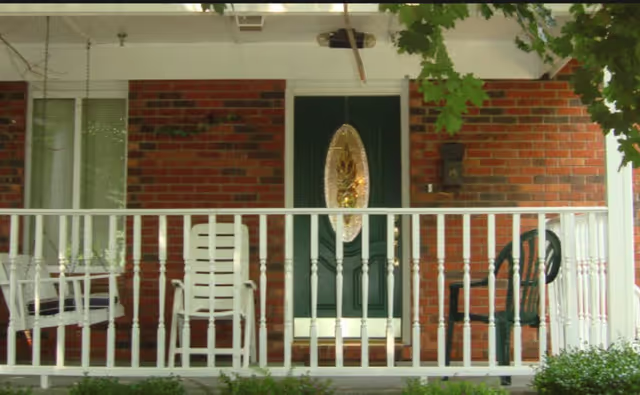
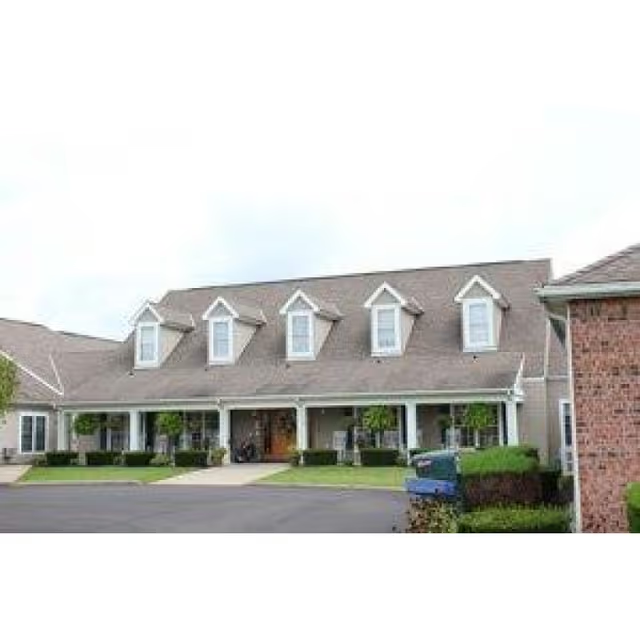
Facilities and maintenance: The building and common areas are often described as clean, welcoming, and well maintained, with prompt responses to maintenance requests and functioning safety systems such as backup generators. At the same time, a minority of accounts indicate sanitation or odor concerns and isolated facility issues (for example plumbing or room moves) that were handled with variable responsiveness. This suggests generally good facility upkeep with occasional lapses that affect specific rooms or areas.
Notable patterns and recommendations for prospective families: The dominant pattern is one of high-performing therapy and activities programs and many caring staff members, coupled with uneven operational consistency — particularly around staffing coverage, incontinence-care practices, timely responses, and communication. Prospective residents and families should confirm current staffing ratios, ask about protocols for continence care and timely toileting/changed schedules, review how dietary restrictions are handled, and meet with nursing leadership to understand how the facility manages shift handoffs and staff relief. For families already using the facility, raising concerns early with administration and documenting specific incidents will help trigger supervisory review and corrective action.
In sum, Complete Care at Oak Ridge demonstrates clear strengths in therapy, hospitality-style dining, activities, and community atmosphere, alongside recurring operational weaknesses tied to staffing consistency, certain aspects of daily personal care, and variable communication. Those strengths may make it a good fit when leadership maintains consistent oversight and staffing; the operational gaps identified by multiple reviewers are areas to probe before admission and to monitor during care transitions.