The review summaries reflect a pattern of dissatisfaction across several operational areas. Major themes include concerns about management and leadership, uneven resident treatment, and gaps in basic service delivery such as meals, activities, and housekeeping. Prospective residents and families should interpret these patterns as indications to verify the facility’s service commitments in person and to ask for documentation of staffing, training, and grievance procedures.
Care quality: Reviews suggest uncertainty about the facility’s care model and about the level of assistance available. Descriptions imply that daily-assistance tasks and support for activities of daily living may be inconsistent, and there are sanitation and cleanliness issues noted in both common areas and resident spaces. These items signal potential gaps in routine care practices and environmental maintenance rather than documented clinical incidents; visitors should confirm scope of care, staffing ratios, and housekeeping schedules before committing.
Staff: Feedback indicates concerns about staff engagement and conduct, with multiple references to unfriendly interactions and delays or gaps in resident support. Coupled with comments about management qualifications, this suggests training and supervision shortfalls. There are also recurring mentions of perceived unequal or discriminatory treatment, which points to inconsistent policy application and a need to review staff training on resident rights and non-discrimination.
Dining and activities: Reviewers describe unreliable meal provision and a lack of organized activities or social programming. These are operational service issues that affect daily life and resident engagement. Families should ask for sample menus, meal schedules, alternatives for missed meals, and a calendar of regular activities to assess whether the facility’s offerings match expectations.
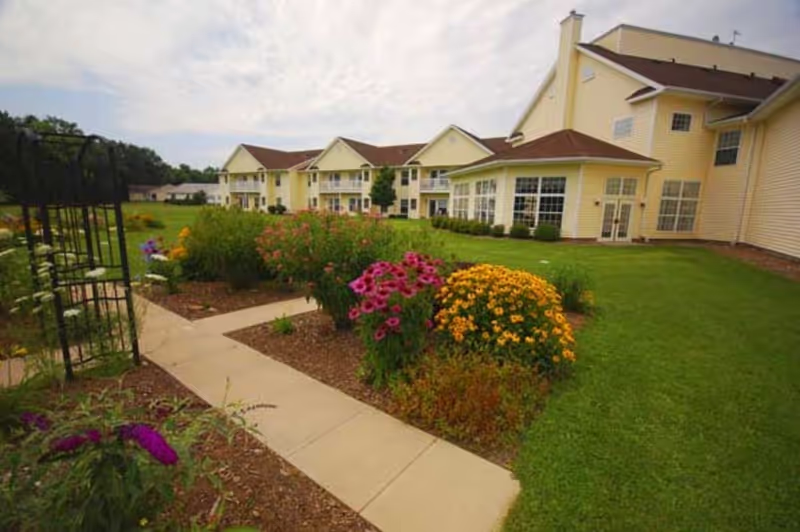
Facilities and housekeeping: Summaries raise sanitation and cleanliness concerns in living spaces and common areas, as well as limited custodial support such as trash removal. Seasonal comfort issues in winter and uneven exterior maintenance are also noted. These indicate potential weaknesses in facility maintenance and housekeeping operations; visitors should inspect multiple living areas and common spaces, and ask about maintenance logs and pest-control plans.
Management and policy: There is consistent commentary about weak leadership, inadequate conflict-resolution processes, and perceived unequal enforcement of rules. These are organizational-level traits that can affect resident well-being and dispute resolution. Prospective residents should request written policies on complaints, review recent inspection or citation history if available, and ask how management documents and resolves resident concerns.
Notable patterns and guidance: Taken together, the summaries suggest systemic operational weaknesses rather than isolated incidents. Families considering this facility should perform an in-person tour, speak with current residents and families, request documentation on staffing and training, review housekeeping and dining schedules, and obtain clear answers about how the facility handles complaints and enforces policies equitably. If significant concerns remain after these checks, contacting local licensure authorities or long-term care ombudsman resources can provide additional oversight and guidance.