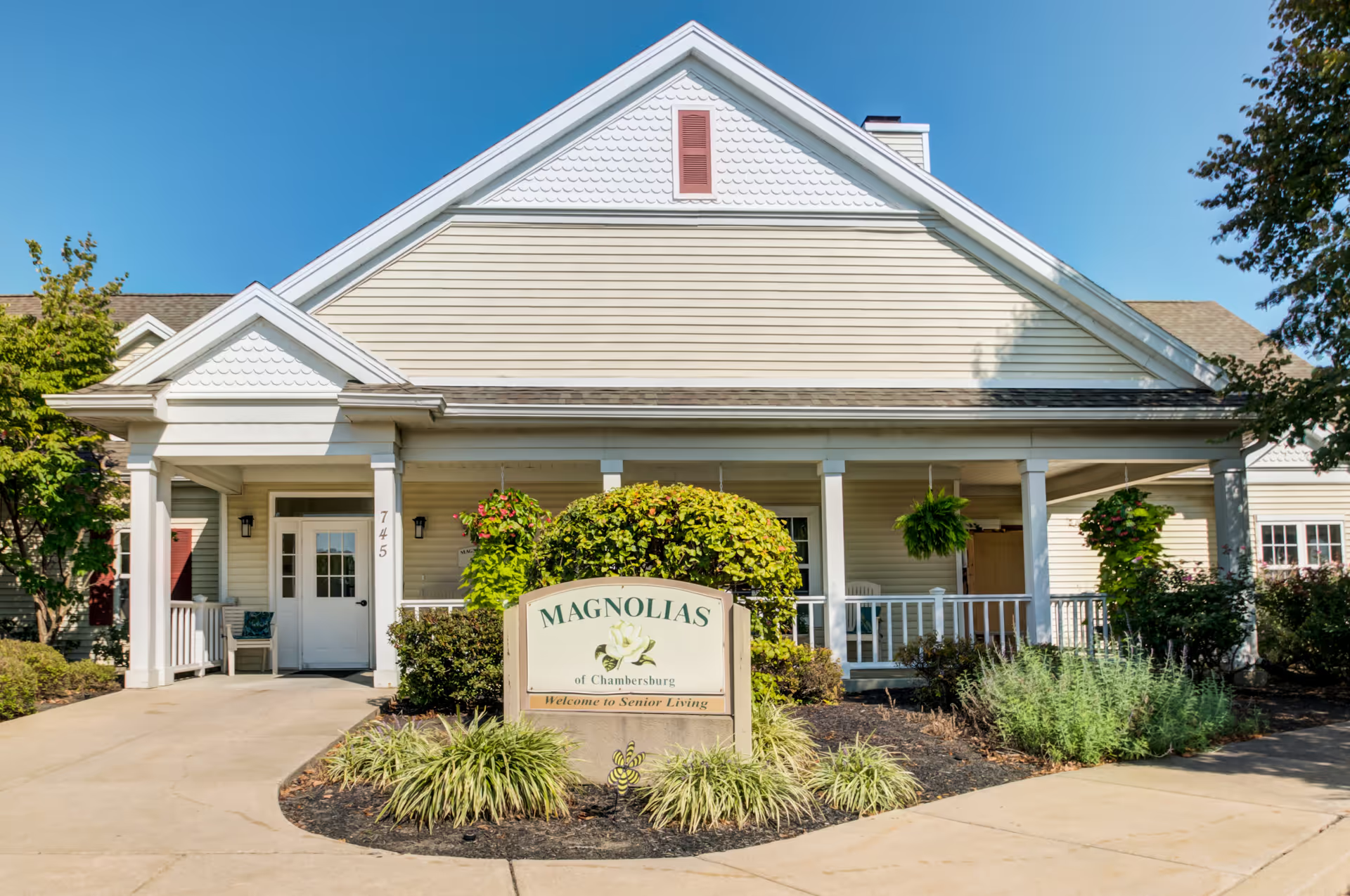
Washington Square presents a mixed but clarifying profile for prospective residents. On the facility and physical side, reviewers consistently praise the housing stock: units and townhomes are described as attractively maintained and recently updated in places, with clean grounds and comfortable interiors. The property’s location and small-town community feel are cited as strengths that help residents remain near family and form a welcoming neighborhood. Maintenance staff receive positive mentions for responsiveness and skill, and some residents single out property managers as attentive, fair, and proactive when present.
Care-quality signals reflect the independent-living orientation of the community rather than high-acuity clinical services. There are no consistent statements about clinical care needs; instead, concerns focus on operational and service-delivery elements such as timeliness of responses, staff conduct, and oversight of community behavior. These operational areas appear uneven: while some residents report excellent management and responsiveness, others describe lapses in communication, delayed follow-up on complaints, and instances where staff actions have raised privacy concerns. Taken together, the pattern is one of variable resident experience tied to staffing and leadership consistency rather than facility condition.
Dining-specific feedback is minimal and not a distinguishing factor in the available comments; reviewers did not consistently address meal quality or service. Activities programming is noted as limited in several summaries: there is at least one on-site Bible study, but multiple reviewers expressed a desire for a dedicated activity coordinator or more organized social programming to support engagement for residents.
Facilities and access issues are notable operational themes. Parking policy is described as confusing, with limited handicapped/accessible spaces and unclear visitor rules; this creates friction for residents and guests. Privacy and access controls also emerged as a concern, with accounts of staff entering units without resident presence or adequate notification, indicating a need to strengthen protocols for unit access and resident consent.
Management and administrative practice are the most recurrent sources of dissatisfaction. Reviewers describe inconsistent leadership, perceived favoritism in policy enforcement, unclear processes for tracking and resolving complaints, and occasional unexplained rent increases. These issues contribute to a perception among some residents of an institutional or subsidized-housing atmosphere and to affordability concerns for others. At the same time, the community’s strengths—well-kept living spaces, committed maintenance personnel, and pockets of strong onsite management—suggest that operational improvements in communication, complaint resolution, parking and privacy protocols, and activity programming could materially improve resident experience.
Notable patterns for families and prospective residents: expect good physical accommodations and a close community environment, but evaluate leadership stability and ask specific questions about complaint procedures, access/entry policies, parking allocations, activity offerings, and how rent changes are communicated. Visiting at different times and speaking with multiple residents and staff will help clarify whether the management approach that some residents praise is consistently applied across the community.