
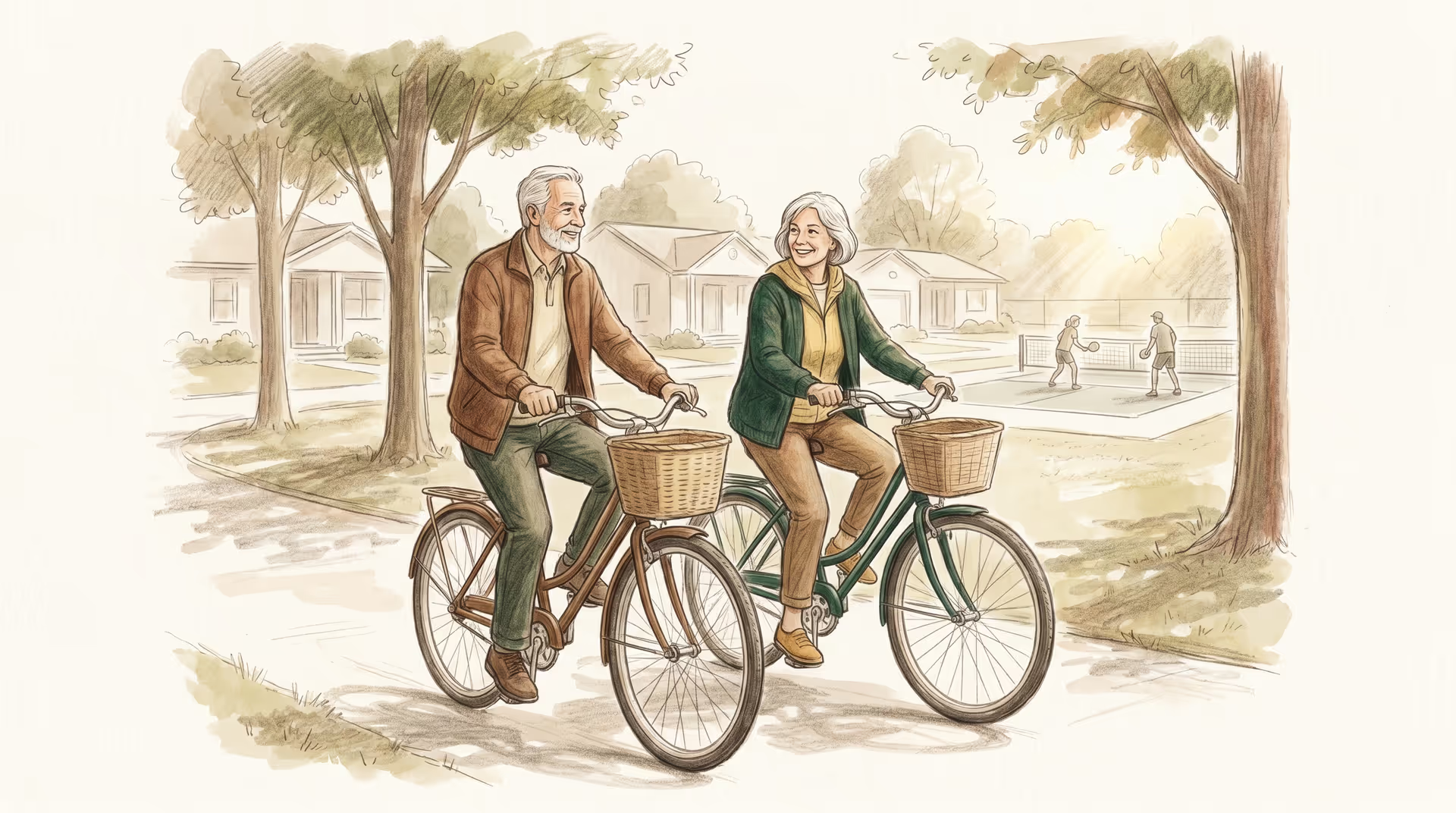
What is an active adult community?
An active adult community is an age-restricted neighborhood (usually for residents 55 and older) built for people who are fully independent and simply want a lower-maintenance, more social lifestyle. Residents own or rent their own home, condo, or villa, and a homeowners association handles the chores that eat up retirement: lawn care, snow removal, exterior upkeep, and trash. In exchange for a monthly fee, residents get access to shared amenities like a clubhouse, pool, fitness center, and walking trails.
Unlike senior living that is organized around care, an active adult community is organized around lifestyle. There is no on-site nursing or help with bathing and medication, and you are not required to buy into a dining plan. The appeal is freedom from home maintenance plus a built-in community of neighbors in the same stage of life.
How active adult differs from independent living
These two categories are easy to confuse, and many communities blur the line. The clearest distinction is ownership and services:
- Active adult: You typically own (or rent) your home. The HOA maintains the grounds and shared spaces, but day-to-day services like meals, housekeeping, and transportation are usually not bundled in. It is closest to a regular neighborhood that happens to be 55+.
- Independent living: You usually rent an apartment within a managed community, and your monthly fee bundles services such as restaurant-style dining, housekeeping, scheduled transportation, and activities.
In short: independent living is a hospitality model with services included; active adult is a real-estate model with amenities included. Neither provides personal or medical care; for that you would look at assisted living, memory care, or skilled nursing.
Who active adult communities are for
These communities fit people who:
- Are healthy and independent, and do not need help with daily activities
- Want to stop maintaining a house and yard without giving up homeownership
- Value neighbors their own age and an active social calendar
- Are planning ahead and want to downsize on their own terms
If a household already needs help with daily tasks, an active adult community is usually the wrong fit, because the support simply is not there.
Typical amenities and services
Amenities vary widely, but common ones include:
- A clubhouse with gathering, game, and multipurpose rooms
- Swimming pool, fitness room, and group exercise classes
- Tennis, pickleball, and bocce courts
- Walking and biking trails
- Resident-run clubs, events, and committees
Services are generally limited to community upkeep: landscaping, snow removal, exterior maintenance, and trash and recycling pickup, all covered by the monthly association fee.
Costs and fees
Because residents own or rent their homes, the cost structure looks more like housing than like care:
- Purchase price or rent for the home itself, set by the local real-estate market
- A monthly HOA or association fee covering amenities and grounds maintenance
- Special assessments that an association can levy for major repairs or upgrades
Active adult living is rarely covered by Medicare, Medicaid, or long-term care insurance, because those programs are designed to cover medical care expenses, while an active adult community is lifestyle housing. The U.S. Department of Housing and Urban Development's HUD housing resources are a good neutral starting point for understanding senior housing options and protections.
Questions to ask before you buy or rent
- What exactly does the monthly fee cover, and how often has it increased?
- Are special assessments common, and is there a healthy reserve fund?
- What are the age and occupancy rules, and how are they enforced?
- Which amenities are staffed, and what are the hours?
- What happens if my health changes and I eventually need care?
Is an active adult community right for you?
If you are independent, want to trade home maintenance for amenities and community, and are comfortable that care is not included, a 55+ active adult community can be a good fit. If you anticipate needing help with daily living in the near term, consider a community that offers care on-site instead. Browse active adult communities on Mirador to compare options near you.
