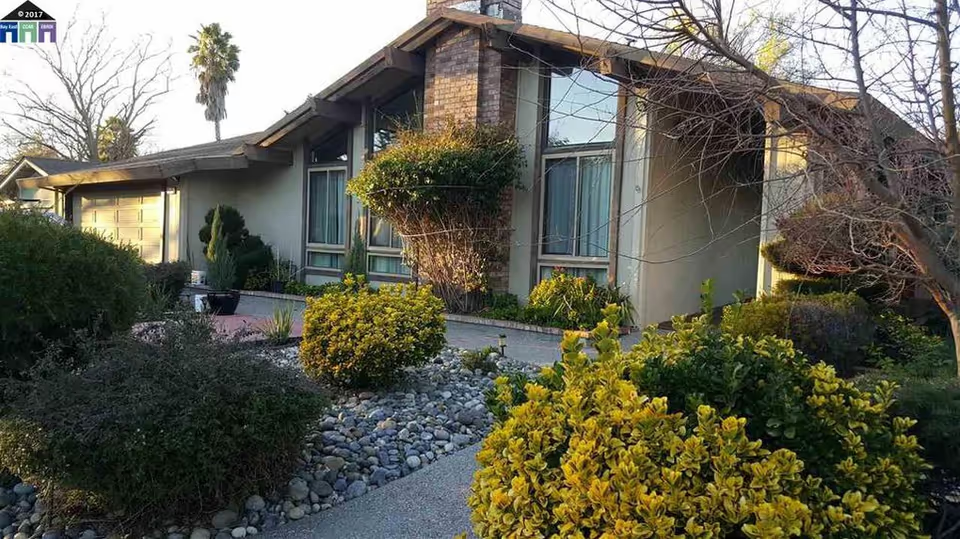
Bethany Homes presents as a small, residential memory-care/assisted-living environment with several strengths that appeal to families seeking a house-like alternative to larger facilities. The six-room layout and modest census consistently produce a community feel; many accounts describe welcoming, warm caregivers, respectful staff–resident interactions, and a family-style dining area that encourages socialization. The physical environment is frequently described as clean, attractively decorated, and well maintained, with an accessible garden, backyard ramps, patio seating, and straightforward entry from a nearby neighborhood.
Care and clinical scope are mixed. The provider uses electronic medication records (EMR/MAR) and staff administer routine medications; staff are generally described as attentive with timely laundry, bedding changes, and assistance with bathing and dressing. The home advertises the ability to accept residents across a wide range of needs, including hospice-level care. At the same time, reviewers identified operational limits on clinical services: the facility does not provide nursing-level interventions such as injections or advanced wound care, and there are examples suggesting gaps in clinical assessment and documentation (including concerns about skin integrity oversight). Some families praised the facility's dementia support, while others felt staff lacked specific Alzheimer’s training—this indicates inconsistent dementia-specific expertise across cases.
Staffing and operational patterns are important considerations. Multiple accounts point to limited daytime staffing ratios and frequent caregiver task overload (caregivers combining medication administration, meal preparation, laundry, and personal care), which can reduce direct one-on-one time. An overnight staffing model is in place, but the on-site overnight caregiver is not described as awake/active overnight; families should clarify supervision expectations and emergency response procedures. Communication practices also vary: several families found administrators sympathetic and enrollment responsive, while others reported lapses in family communication and unexpected pricing changes. Pricing is on the higher end for the market and has been cited as prohibitive by some families; prospective residents should confirm current rates and notice policies.
Dining and activities offer both positives and limitations. The facility provides three meals daily with dietary customization (including diabetic options), and many reviewers remarked on appetizing dinners and fresh fruit availability. Regular programming includes weekly live music and arts-and-crafts sessions, and there is at least basic technology for video calls. However, activity levels appear inconsistent among residents: some described lively communal engagement and restored appetites, while others experienced limited daytime social interaction and fewer activities than expected.
Safety and physical-space notes warrant attention during a tour. Private rooms are available but tend to be small; there is at least one noted exterior door without a lock, which raises an operational security question for residents who may be prone to wandering. Prospective residents and families should ask about door security, transfer and fall-prevention practices, skin-integrity protocols, and how clinical concerns are documented and escalated.
Overall, Bethany Homes is characterized by a homelike atmosphere, attentive and compassionate caregivers, and strong housekeeping and dining practices. Tradeoffs include constrained staffing levels, limited nursing services, inconsistent dementia-focused training, small private-room sizes, and pricing/billing transparency issues. Families should weigh the benefits of the small, community-oriented setting against the facility's clinical scope and staffing model, and confirm specific care capabilities, overnight supervision, and current costs before deciding.