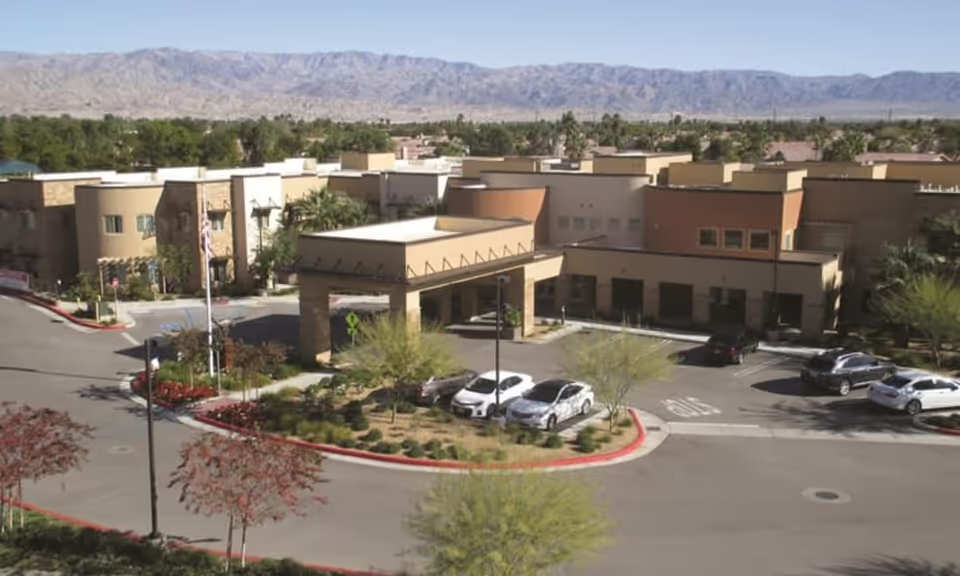
The reviews portray Indio Nursing & Rehabilitation Center as a facility with a mix of clear strengths and persistent operational weaknesses. Positive comments emphasize compassionate nursing and caregiving, availability of specialized services such as wound care and respiratory therapy, a busy activities program, attentive housekeeping and maintenance, and administrative support for admissions and insurance (including Medi‑Cal guidance). Several families described meaningful physical and emotional improvement for residents, steady therapy for some patients, a calm environment, and flexible visiting hours.
Conversely, a substantial set of concerns centers on inconsistent clinical care and staff performance. Reviewers cited variability in nurse and aide compassion and competence, and several noted failures in medication administration and medication-management processes. There are recurring mentions of delays in recognizing or escalating clinical deterioration and of delayed or inconsistent transfers to higher-level care. Given the seriousness of those accounts, including isolated references to severe infections and end-of-life events, families should consider asking the facility about clinical escalation protocols, staffing patterns, and recent quality- and safety-review outcomes.
Staffing and management patterns emerge as a central operational theme. High turnover, apparent staffing shortages (including reduced weekend coverage), scheduling pressure on staff, and disputes about earned sick time were described. These workforce challenges were associated with lapses in routine care tasks, inconsistent availability of physical and occupational therapy, and uneven responsiveness to family calls. At the same time, individual staff members and departments (wound care, respiratory therapy, activities, housekeeping, and some administrative personnel) received strong praise, indicating that experiences can vary significantly depending on assignment and shift.
Dining, activities, and facility condition receive mixed commentary. The activities program and some therapy services were highlighted as strengths that improved residents’ quality of life. Housekeeping and maintenance earned positive remarks in many accounts, with some reviewers noting a clean facility and pleasant common-area odor. However, other reviewers described sanitation concerns, incontinence-care delays, and inconsistent adherence to special diets (for example, diabetic meal plans). Meal quality was described as good by some and inconsistent by others.
Communication and family engagement are another area of divergence. Several reviewers thanked specific social‑services and administrative staff for being informative and helpful, while others described poor communication, brusque tones from discharge planners, refusal of calls, and unclear handling of personal items (e.g., denture replacement and payment processes). Language and staff-interaction dynamics were also mentioned as factors that sometimes affected attentiveness.
Overall, the pattern is one of variability: the facility demonstrates capacity for high-quality, compassionate care in certain units or shifts, supported by effective ancillary services, but also exhibits systemic weaknesses tied to staffing stability, medication and clinical escalation practices, weekend coverage, sanitation consistency, and management/HR policies. Prospective residents and families would benefit from targeted inquiries before admission—asking about current staffing ratios by shift, weekend coverage, infection-control metrics, medication-safety procedures, therapy schedules, policies for handling personal property, and recent quality audits or corrective actions—to gauge whether the facility’s operational strengths align with their priorities.