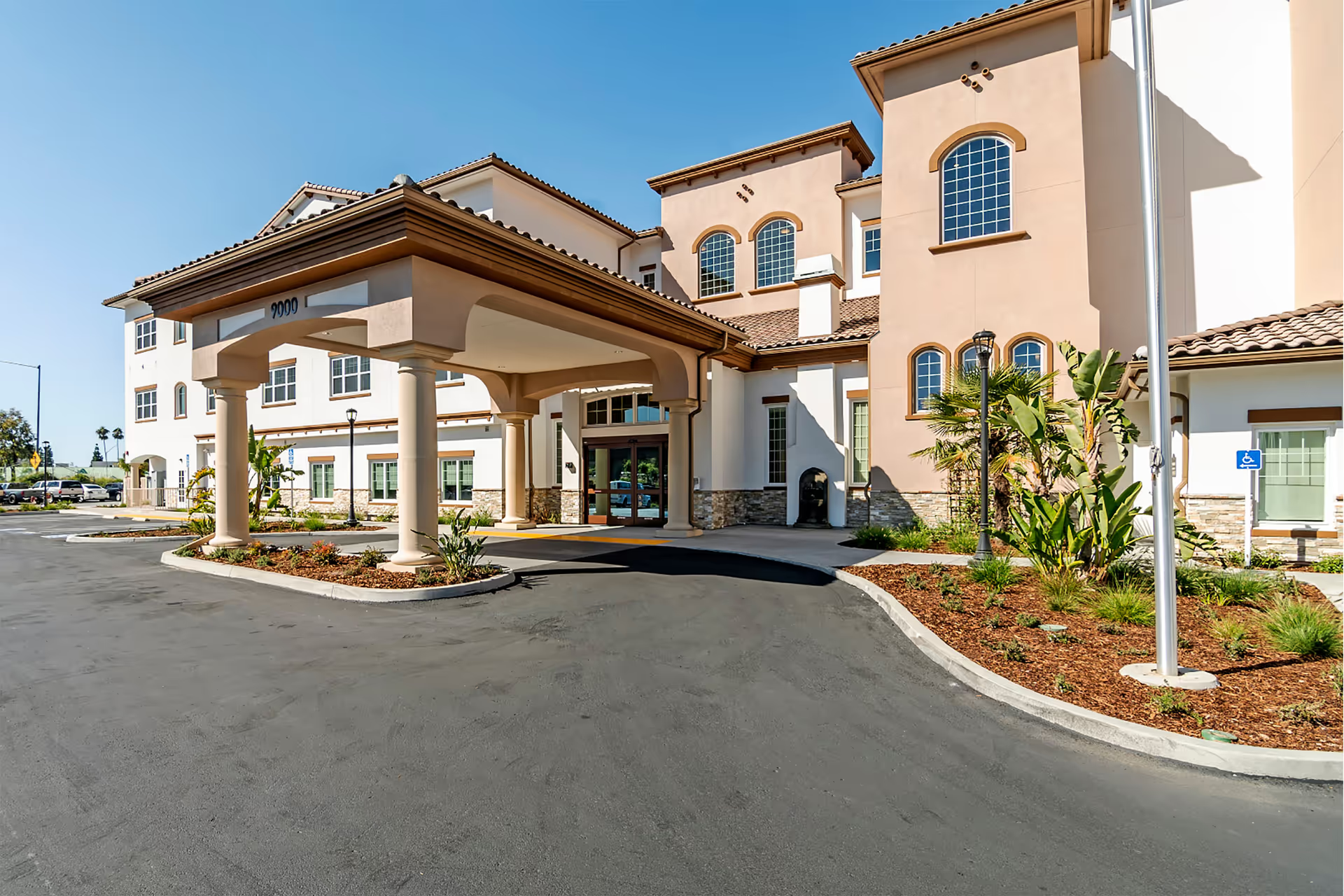
Stanford Court Skilled Nursing & Rehab Center elicits a broadly mixed but instructive set of impressions. The facility earns consistent praise for its therapy services, many families citing strong physical and occupational therapy, organized rehab spaces, and experienced therapists who support measurable recovery. Commonly commended elements include a clean, well-maintained environment, attractive outdoor amenities (courtyard, koi pond, aviary), an active activities program with music and group events, and helpful social-work and front-desk coordination that facilitates admissions and discharge logistics.
Care quality and frontline staff behavior present a divided picture. Numerous reviews highlight compassionate, attentive nurses and aides who provide patient-focused assistance and supportive bedside care; others describe longer wait times for assistance, delayed toileting or bed changes, and variability in responsiveness between shifts. A recurring operational theme is understaffing that appears to contribute to slower response to call bells and delays in routine care. A subset of reviews also raises concerns about inconsistencies in medication administration and in the documentation of vital signs and care events, as well as occasional lapses in clinical escalation and timely medical assessment.
Dining and daily-life services are similarly mixed. The activities program is widely seen as a strength — frequent offerings such as trivia, bingo, concerts, and crafts were noted as improving resident engagement. Food quality received variable comments: some families appreciated snacks and specific meals, while others found meal options and coordination inconsistent. Several reviewers suggested better alignment between activities scheduling and therapy to reduce conflicts and extend activity periods.
Facility amenities are a clear positive for many visitors and residents. Reviewers frequently mention pleasant common areas, a soothing lobby with piano, outdoor dining patios, and a sense of resort-like landscaping. At the same time, parts of the building and some patient rooms were described as dated and in need of updates; there are isolated sanitation and odor concerns in particular units that families felt warranted attention.
Management and administrative practices draw contrasting feedback. Some families praised efficient discharge coordination, courteous communications, and responsive business-office support. Others described gaps in administrative follow-through, unmet promises, and inconsistent communication around care plans and transfers. These coordination issues, combined with staffing variability, are the most commonly noted operational weaknesses and are linked in a number of reviews to rushed transfers, rehospitalizations, or family dissatisfaction.
Overall, Stanford Court appears to offer robust rehabilitative services, attractive grounds, and many individual staff members who demonstrate compassion and clinical skill. Prospective residents and families should weigh the strong therapy program and amenities against reported variability in staffing, responsiveness, and certain clinical coordination processes. If considering placement, it would be prudent to ask specific questions about current staffing levels and escalation protocols, review room/unit conditions in person, and confirm how the facility coordinates care communication with families and outside physicians.