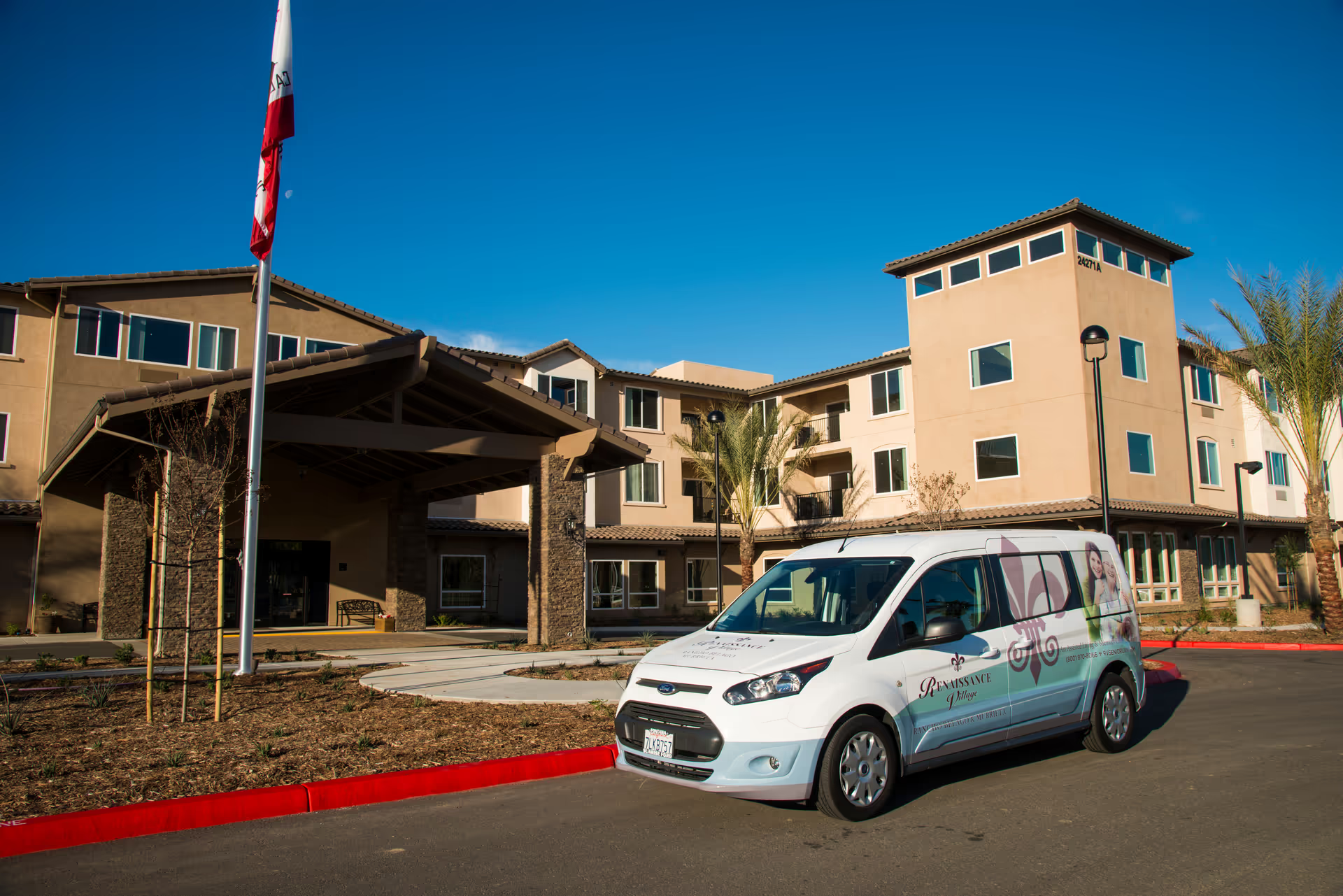
Angelic Manor is described as a homey, welcoming residence with a staff that many families characterize as kind and attentive. Reviewers highlight a clean environment, routine housekeeping, inclusive meal service with around-the-clock snack access, and a range of amenities such as a yard, swimming pool, and a pet-friendly policy. Several accounts note on-site hospice involvement and personal-care support, and some families report measurable improvements in basic functions (for example, appetite or bathing assistance) while in the program.
Care quality appears well-matched to lower-acuity needs: caregivers and aides are praised for preserving resident independence, offering companionship, and delivering day-to-day support. However, reviewers also indicate that the facility has limited capacity to meet higher-acuity clinical needs. When residents require continuous skilled nursing or 24/7 clinical oversight, the facility often relies on third-party nursing providers or is unable to accommodate the required level of care. Families seeking a community for someone with frequent medical needs or intensive nursing-level care should verify clinical capabilities and arrangements in advance.
Staff and management receive mixed-but-often-positive comments. Many families describe supportive ownership, courteous staff, and useful communication practices such as regular updates and video messages showing progress. At the same time, communication and responsiveness are not uniformly consistent across cases; some families experienced delays or gaps in updates. Prospective families should clarify expected communication channels, escalation procedures, and who to contact for clinical or administrative questions.
Dining and housekeeping are generally viewed positively. Meals are included in the service offering, and 24-hour snacks are available; reviewers described the home as clean with weekly room cleaning. Activities are modest but present — card games, group television, and other small-group interactions — and the setting supports social engagement and companionship rather than an intensive activity program.
The physical setting and location have trade-offs. The facility's larger building and scale contribute to available amenities but can reduce intimacy for some residents. There are also mentions of perceived safety or neighborhood concerns; while not detailed, these perceptions suggest families should assess neighborhood environment and on-site security measures during a visit.
Overall patterns point to a facility that fits residents who need assisted living–level support in a warm, domestic atmosphere and who do not require continuous skilled nursing or advanced memory-care programming. Important due diligence items for prospective residents and families include confirming the facility's clinical limits, understanding third-party nursing arrangements (if needed), clarifying communication expectations, and evaluating neighborhood and security considerations during an in-person tour.