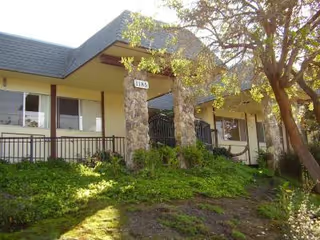
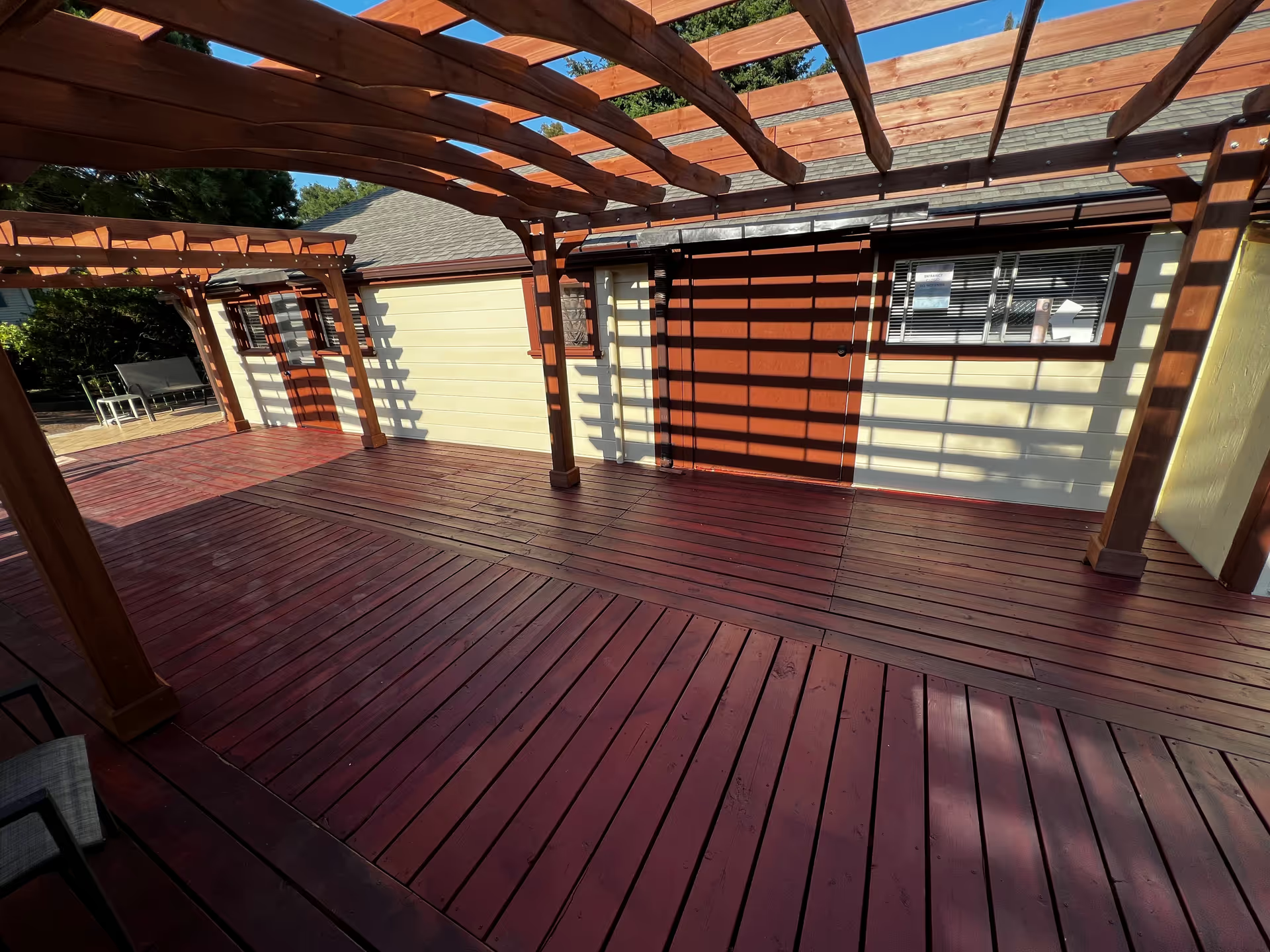
Ilima at Leihano is consistently described as a new, well-kept community with a housekeeping and infection-control emphasis and a compact, apartment-style layout. Reviewers frequently note the facility’s cleanliness, wide walkways, roomy apartment layouts, and attractive common spaces including gardens, pool, salon, private dining, and lounges. The memory-care neighborhood is identified as single-level and ground-floor, which reviewers saw as a deliberate safety and access design for that population.
Care and staffing are prominent strengths in the reviews. Families and residents commonly describe staff as friendly, compassionate, and attentive; many accounts emphasize 24-hour nursing presence, active assistance in daily routines, and safety features such as call-button systems and personal pendants. Several reviewers characterized the staff–resident relationship as familial, and cited helpful admissions ambassadors, thorough tours, and positive leadership tone. Coordination with outside providers and onsite rehabilitation/physical-therapy support were also mentioned positively.
Dining and meals receive mixed but largely favorable commentary. The facility offers restaurant-style, on-site dining with individualized or customizable meal options; many residents praised specific dishes and presentation. At the same time, there are recurring notes that a strict low-sodium policy can result in blander flavor profiles for some dishes, and that meal service was altered during infection-control periods (meals delivered to rooms). A few reviewers mentioned dining-room temperature control as an area of discomfort.
Activities and social programming are a clear strength: Ilima maintains a wide range of daily offerings (bingo, arts and crafts, exercise classes, music programs such as ukulele and karaoke, documentaries, social outings and bus trips). The small, intimate community size tends to foster easy socialization and regular group participation, though that same small scale led some reviewers to note a narrower variety of activities and a smaller gym footprint than larger communities might provide.
Operational patterns to consider: the assisted-living side appears to have limited bed availability, with a waiting list noted by families. Some reviewers expressed concerns about perceived value—specifically that pricing felt high relative to interior finishes in certain units. There are also occasional remarks about inconsistent in-unit furnishing (for example, missing nightstands or unfurnished studios) and uneven sales follow-up during the move-in process. Location is a practical consideration: for some families the community’s distance makes daily visitation difficult, and reviewers flagged potential isolation risks for residents on upper floors. Finally, infection-control restrictions have changed some services at times (dining arrangements, pool/private dining), which may recur during events that require tightened protocols.
Overall, Ilima at Leihano projects a well-maintained, socially active, and staff-centered environment with robust safety and dining amenities. Prospective residents and families should weigh the strengths in care quality, cleanliness, and programming against practical factors such as assisted-living availability, perceived cost-to-finish alignment, unit furnishing options, and travel distance from family. A focused tour asking about current assisted-living waitlists, furnishing policies, meal-seasoning options, dining-room climate control, and sales communication procedures would address the most commonly cited operational uncertainties.