The collection of reviews for Signature HealthCARE of Bowling Green is polarized: a substantial proportion of reviewers praise the facility’s rehabilitation capabilities, nursing and CNA care, and active social programming, while another subset raises operational and safety concerns. Most consistently positive commentary centers on the therapy department and short‑term rehab outcomes; multiple accounts describe measurable functional improvement and coordinated PT/OT programming that supported discharge home. Nursing staff and CNAs are frequently characterized as compassionate and attentive, and social workers and leadership are often noted as engaged and responsive when present.
Care quality and clinical continuity show clear variability. Many families and residents credited nursing and therapy teams with strong clinical outcomes and individualized plans of care. In contrast, there are recurrent concerns about medication timing, incomplete physician follow-up after initial assessments, and inconsistent levels of therapy for some residents. Several accounts describe delayed responses to clinical needs or gaps in incident follow-up; collectively these point to potential weaknesses in clinical continuity and medication-administration processes rather than uniform clinical failure.
Staffing and management impressions also vary. Numerous reviewers describe warm, family‑like staff interactions, timely problem resolution, and visible leadership involvement. However, other reviews document understaffing, inconsistent responsiveness to call lights and care requests, and concerns about how staff conduct and internal incidents are investigated. There are also one-off but serious allegations regarding billing and financial processes; these have been raised in the context of services billed after discharge or after a resident’s death, which reviewers flagged as a significant administrative concern.
Dining and environmental services are another area of divergence. Some residents report good meals and an inviting dining experience; others note a pattern of limited menu variety, heavy carbohydrate content, frequent use of processed items, and small portions. Housekeeping of common areas and the lobby is frequently described as well maintained, but separate reviews call out sanitation concerns and pest-control issues in particular units, as well as delays in laundry and room‑level housekeeping. These mixed accounts suggest variability between units, shifts, or specific staff assignments.
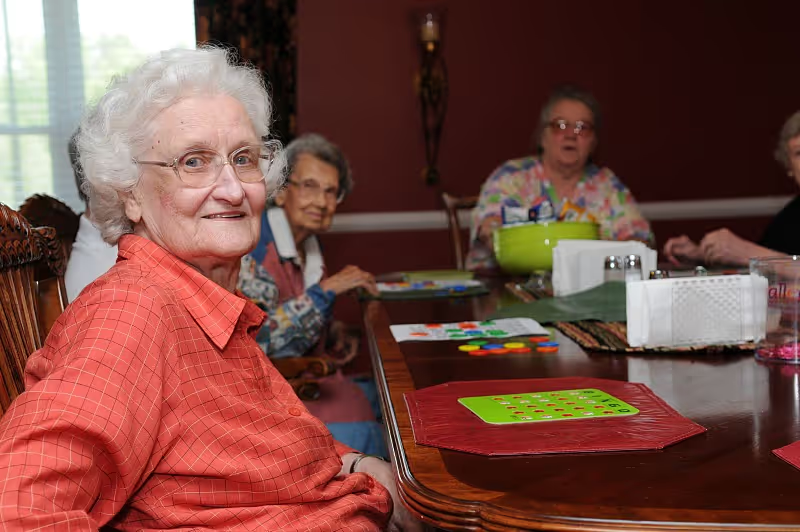
Activities and amenities receive broadly positive comments. The facility’s activities program is described as robust and varied (bingo, outings, senior Olympics, movies, bowling, etc.), and on-site features such as a Country/General Store and social events are highlighted as contributors to a positive social atmosphere and resident engagement.
Notable patterns across the reviews are the clear strength of the therapy program and many individual staff members, contrasted with recurring operational weaknesses: inconsistent food service, staffing shortages affecting responsiveness, medication and physician follow-up gaps, administrative/billing errors, and localized sanitation or pest-control problems. The divergence in experiences suggests variability by unit, shift, or case mix rather than uniform performance. Prospective residents and families would benefit from observing current staffing levels, asking about medication-administration protocols and physician coverage, reviewing billing practices, and touring unit‑level cleanliness and dining services to assess consistency across the facility.