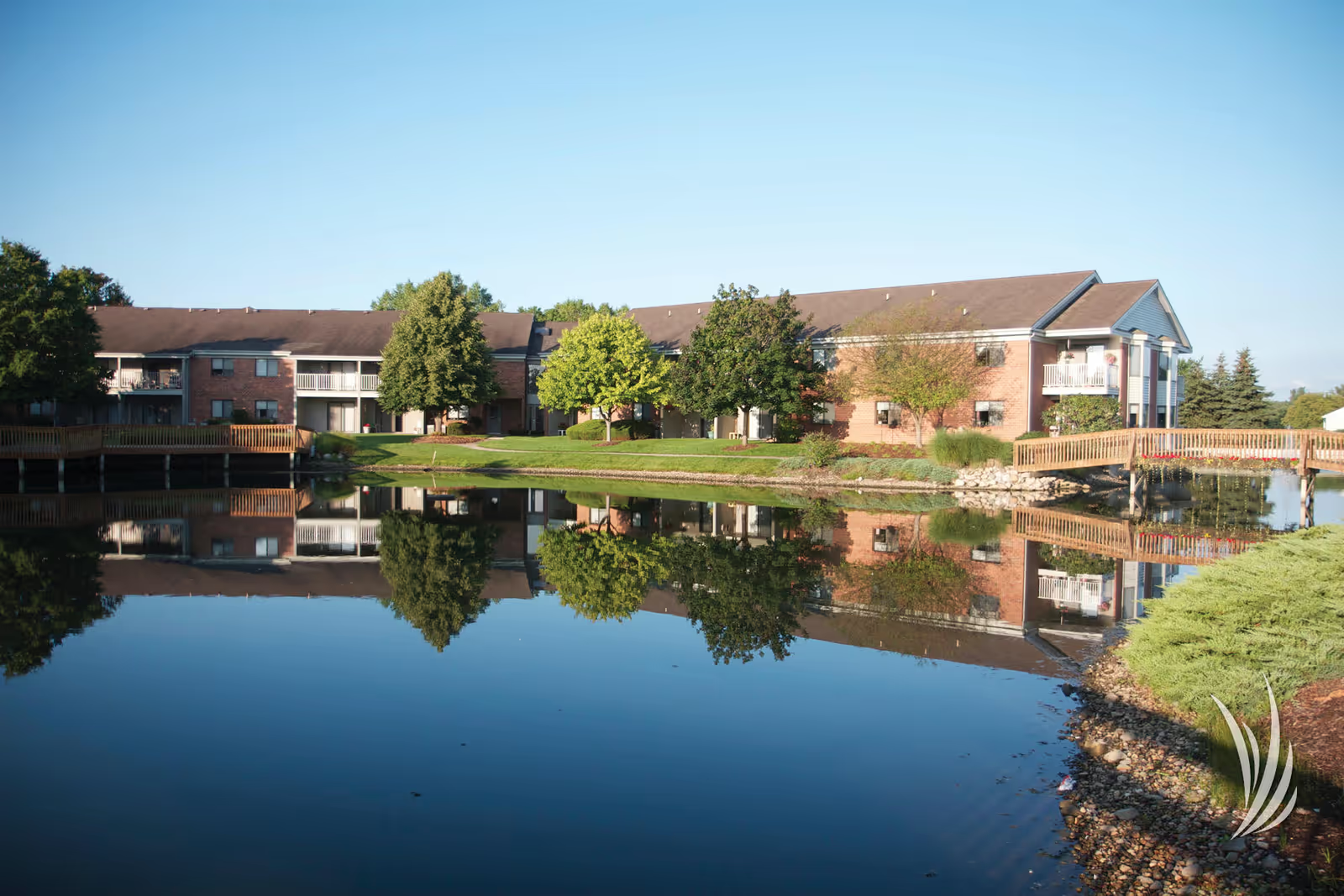
Golden Orchards elicits a split but identifiable set of impressions. Many families describe a warm, home‑like environment with compassionate, attentive staff and an executive director who is visible and proactive. The facility is frequently characterized as clean and modern, sited on attractive, park‑like grounds with a courtyard, pond, and outdoor spaces that support resident outings and socialization. Reviewers commonly praise the memory‑care approach (including Montessori principles), frequent activities, field trips, onsite therapy and salon services, and the facility’s orientation toward inclusion of residents in community events and family dinners.
Care quality and staffing present a mixed picture. Positive comments highlight 24‑hour supervision, engaged caregivers, and individualized attention that helps residents settle and remain active. Conversely, other families raised operational concerns about staffing consistency, limited RN coverage, and uneven clinical oversight. Those concerns extend to responsiveness during acute events and the facility’s ability to sustain safe transfer/fall‑prevention practices. Several accounts describe lapses in safety systems and follow‑up, indicating variability in how clinical and safety protocols are implemented from one shift or unit to another.
Dining and nutrition also divide opinion. Multiple reviewers compliment the menu variety, special dietary accommodations (including vegetarian options), and family‑style meals. At the same time, there are recurring comments about inconsistent food quality, meals not being served hot, and a desire for broader regional menu options. Housekeeping and environmental maintenance are generally described as strengths in many reviews, but isolated comments about cleaning frequency and housekeeping thoroughness suggest variability in execution.
Activities and social programming are clear strengths: reviewers report a robust schedule of onsite activities, live entertainment, outings to local attractions, and programming that supports social engagement and cognitive stimulation. Some reviews note that activity‑staff training and staffing levels can be uneven, which may affect program consistency in certain periods.
Management and communication show a distinct polarization. Numerous families commend the director for hands‑on involvement, personalized problem‑solving, and frequent updates. However, there are also accounts of difficulties reaching staff, delayed or insufficient communication about incidents, and disputes over access to information and billing/discharge practices. Security of personal items and handling of finances is a notable operational concern in a subset of reviews.
Overall pattern and guidance: reviewers’ experiences cluster at two ends of the spectrum — households that found a highly caring, well‑run, activity‑rich community, and households that experienced operational inconsistencies around staffing, clinical coverage, communication, meal service, and personal‑property controls. Prospective families should tour the facility, ask for written policies and staffing ratios (including RN coverage and fall‑prevention protocols), review recent state inspection reports, request sample menus and housekeeping schedules, clarify transportation and billing/discharge terms, and seek references from current families. Verifying how the facility handles incident notification, personal‑property safeguards, and staff training for memory‑care programming will help determine whether Golden Orchards’ strengths align with a specific resident’s needs and risk profile.