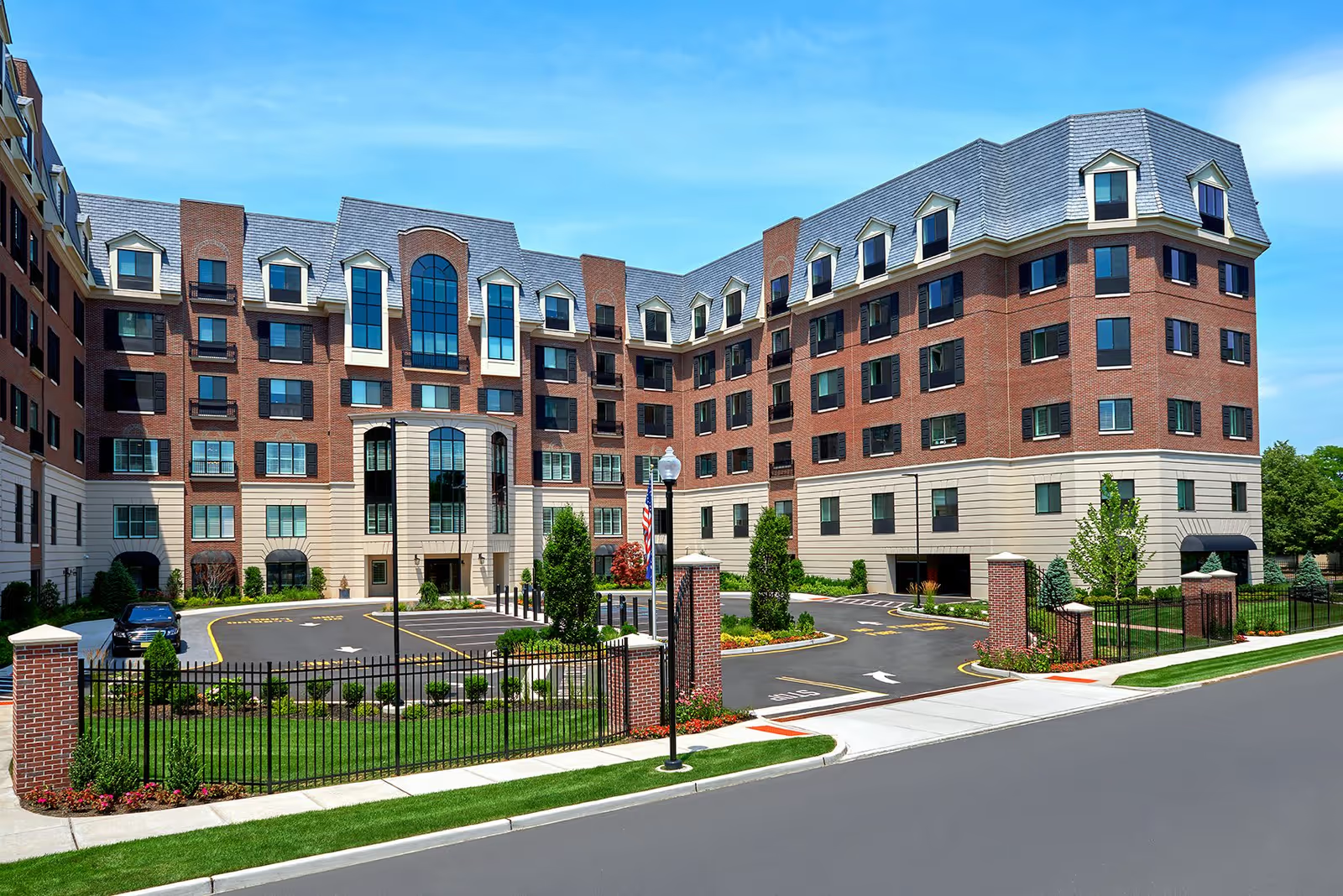
Parkview Home for Adults elicits sharply divided impressions. Positive feedback centers on the interpersonal environment: several comments emphasize courteous, helpful staff and a supportive, social atmosphere. A named case manager drew specific praise, indicating that some elements of case coordination and resident advocacy are functioning well. Some residents or families describe satisfaction with daily life and the availability of peer interaction.
However, multiple operational concerns recur across the feedback. Cleanliness and maintenance are frequent problem areas: reviewers indicate sanitation and pest-control concerns, pervasive odors in some areas, and visibly degraded room and common-area conditions. These indicate ongoing infrastructure and housekeeping shortfalls that would merit review by management and maintenance teams.
Clinical care and oversight raise additional concerns. Reviewers describe gaps in routine health assessments and instances where medication handling appears to be performed by non-clinical kitchen staff, suggesting weaknesses in medication-administration controls and clinical monitoring practices. For a population with higher dependency needs, these gaps point to potential risks related to assessment frequency, documentation, and staff role clarity.
Dining and food-service issues are another pattern: comments about consistently cold meals and variable meal quality suggest shortcomings in food delivery processes, kitchen staffing logistics, or temperature-control systems. This affects resident satisfaction and warrants operational corrective action if confirmed.
Management and governance also present red flags. There are reported problems consistent with inadequate financial oversight of staff interactions with resident funds; in one account this escalated to purchase of personal items by staff using resident checks. Given the seriousness of that claim, it should be subject to formal review and, if necessary, investigation by appropriate authorities or corporate compliance. Overall staff performance appears uneven: while some staff members are praised, others are perceived as insufficiently responsive to high-dependency residents, indicating inconsistent staffing levels, training, or supervision.
In summary, prospective residents and families should weigh the facility's strengths in interpersonal care and social engagement against notable operational weaknesses in cleanliness, facility maintenance, meal service, clinical monitoring, medication controls, and financial oversight. If considering placement, ask management for documentation of staffing ratios and training, medication-administration policies, pest-control and housekeeping schedules, food-service temperature controls, and any actions taken in response to financial-oversight concerns. Visiting the building during a meal service and reviewing recent inspection or compliance records will help clarify whether the facility's operational issues have been addressed.