The reviews present a mixed picture of care at Schaffer Extended Care Center. Several reviewers describe positive, effective rehabilitation services, with physical and occupational therapists and therapy teams identified as strengths. Some units and staff members — including night and third-floor aides, and specific employees praised for discharge coordination and security assistance — are cited as providing attentive, round-the-clock care. These positive accounts suggest that clinical and therapeutic capabilities exist within the facility and that individual staff can deliver meaningful support for recovery and discharge planning.
However, a recurrent theme is inconsistent staffing levels and slow responsiveness. Reviewers describe long call-bell response times and staffing shortages that appear to affect routine care and timeliness of assistance. Related concerns include gaps in transfer and safety procedures and instances that raise questions about how clinical incidents are managed and communicated to families. One review referenced a resident cardiac event and others described abrupt discharge communication; collectively these underscore potential weaknesses in clinical-incident response and family notification processes.
Staff conduct and professionalism are portrayed unevenly. While some families report respectful, helpful interactions and commend particular employees, other accounts describe brusque or inattentive bedside communication and front-desk or security-staff behavior that felt unprofessional. The presence of security staff at the entrance is a noted positive, but reviewers also raised practical issues with access control practices and entry-area conditions.
Dining and dietary management are additional areas of concern. Multiple reviewers reported limited menu variety, repetitive offerings, and errors in dietary handling, including allergy management mistakes. These comments point to inconsistency in meal-service processes and quality control in the kitchen.
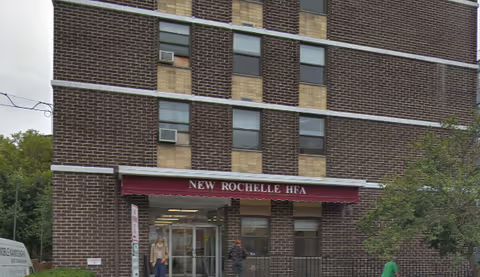
Facility environment and upkeep receive mixed feedback. Complaints include poor ventilation and uncomfortable entryway conditions, dim or uninviting interior spaces, outdated equipment, worn bedding, and general maintenance or cleanliness shortcomings. Together these suggest the physical environment may detract from resident comfort and requires targeted upkeep and modernization.
A particularly serious note in the feedback is an allegation concerning missing resident belongings; such claims, combined with the operational issues observed, indicate a need for stronger property controls and transparent incident investigation procedures. Management and oversight are indirectly questioned by the pattern of operational weaknesses — staffing, dining, facility maintenance, and inconsistent communication — suggesting opportunities for leadership to prioritize staffing stability, clinical-safety protocols, and environmental improvements.
For prospective residents and families, the pattern is clear: there are areas of demonstrable clinical strength, especially in therapy, and examples of committed individual staff, but those positives coexist with operational challenges that can affect day-to-day experience. When evaluating the facility, consider asking for current staffing ratios by unit and shift, examples of clinical-incident communication policies, dietary procedures for allergies and preferences, records of recent maintenance or capital improvements, and the facility’s procedures for handling and documenting resident property concerns.