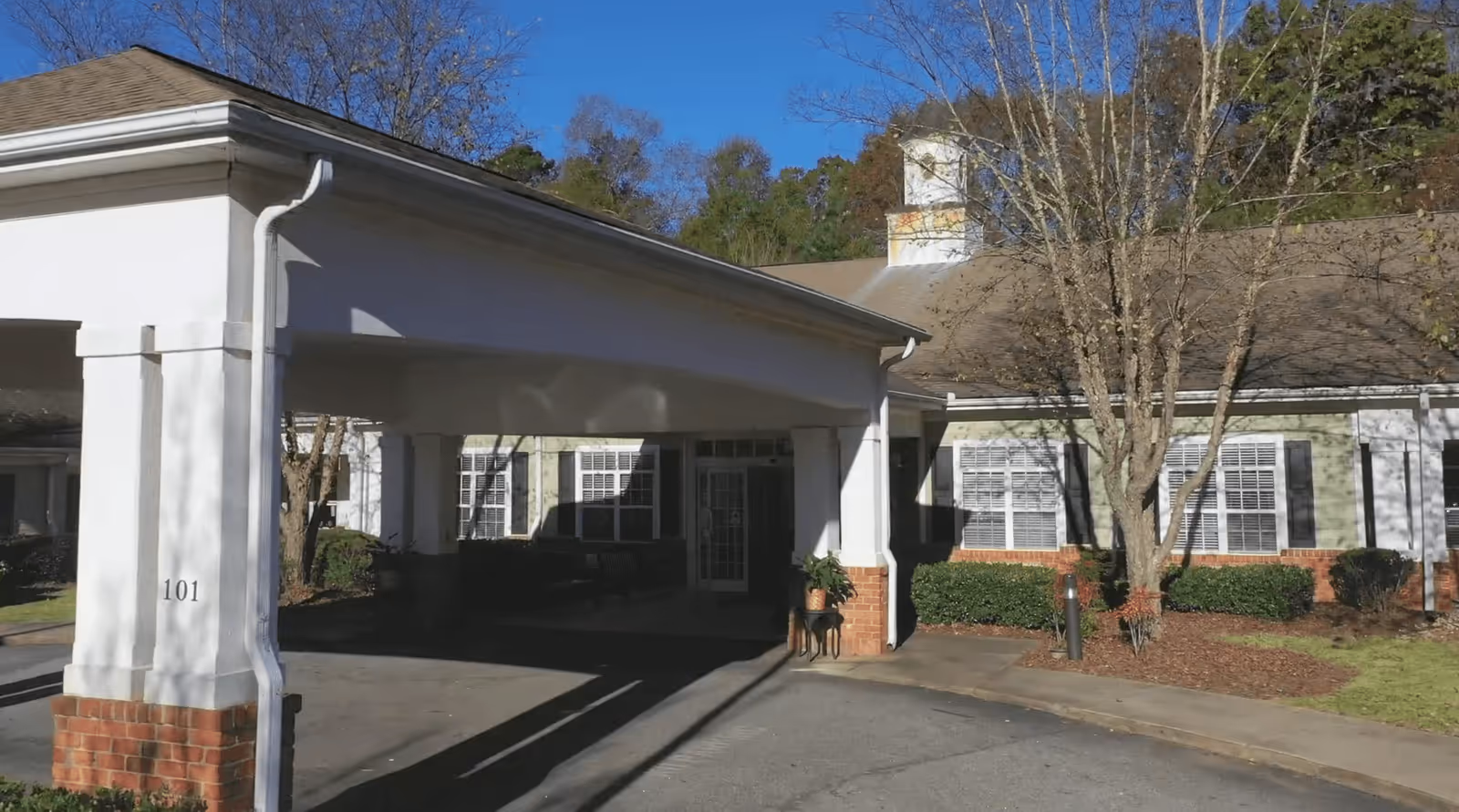
The reviews provided describe multiple operational and care-quality concerns. There are limited or no positive indicators present in the summaries; instead, themes center on responsiveness, clinical oversight, facility maintenance, and management practices. Prospective families should interpret these patterns as signals to seek detailed documentation and regulatory history before proceeding.
Care quality: The summaries indicate gaps in clinical monitoring and in the management of medical devices and therapies (for example, oxygen-delivery equipment). Reviewers describe delays in attending to residents and difficulty obtaining timely clinical attention; there is also mention of concerns following a resident's death. These items point to weaknesses in routine clinical oversight, emergency response, and documentation of care transitions.
Staff and communication: Reviewers describe poor responsiveness to phone inquiries and family communications, along with examples of staff conduct perceived as inappropriate in tone. Taken as a pattern, this suggests challenges with staff training, supervision, and consistent communication protocols. In addition, comments imply inconsistent staffing levels or unreliable coverage that compromises timely resident support.
Facilities and sanitation: The summaries raise sanitation and odor concerns within resident rooms and shared spaces, along with general dissatisfaction with the environment. There is also indication of lapses in supply and equipment management. These observations suggest gaps in housekeeping, environmental maintenance, and inventory controls that affect resident comfort and safety.
Dining and activities: The provided summaries contain little substantive information about dining quality, menu variety, meal service consistency, or activity programming. Absence of commentary on these topics in the summaries means no firm conclusions can be drawn; families should request sample menus, activity calendars, and resident engagement metrics when evaluating the community.
Management and notable patterns: Several items in the summaries reflect broader management and operational shortcomings — notably poor contingency planning for sudden facility closure or transfers, weak family-communication systems, and at least one serious claim concerning financial conduct by ownership. These patterns suggest limited organizational oversight, inadequate emergency or transfer protocols, and potential accountability gaps.
Overall, the reviews portray a facility with multiple areas requiring verification and improvement: clinical oversight and device management, staff training and responsiveness, environmental maintenance, and transparent leadership practices. Before making placement decisions, families should request detailed staffing ratios, incident and transfer logs, infection-control and housekeeping protocols, emergency/closure plans, and documentation addressing any allegations or adverse events.