The reviews indicate a facility with clear strengths in frontline caregiving and administrative access, alongside significant operational inconsistencies that prospective families should weigh. Positive accounts emphasize attentive, professional nursing and aide staff, a welcoming admissions experience, and a generally well-kept, lively building. Several family members described a ‘‘family-like’’ culture among staff, named individuals who provided helpful orientation, and noted measurable clinical improvements such as weight gain and improved appearance for residents. Reviewers also referenced visible physician involvement and adherence to infection-control practices during COVID, and an open-door administrative approach that facilitated communication for some families.
At the same time, recurring operational concerns appear across the reviews. Communication and responsiveness are uneven: families describe difficulty reaching staff by phone and delays in receiving updates. Staffing levels and shift coverage are frequently cited as inconsistent, which reviewers connect to delayed personal care (for example, missed or irregular bathing) and to interruptions in routine clinical practices. There are also reports that suggest gaps in wound-prevention and clinical oversight, which some families linked to adverse resident outcomes. Meal service and food-handling consistency emerge as another area of variability, with instances of missed meals or perceived dismissiveness around food service.
Several reviews raise questions about staff conduct and tone. While many describe courteous, helpful interactions, others describe insensitive or unprofessional communication and attitudes in specific encounters; this produces a mixed picture of customer service quality that appears to vary by shift or individual. More serious concerns relate to resident transitions and security: reviewers referenced eviction-related disputes and at least one allegation involving resident property. External interventions (law-enforcement, legal representation, and social‑security involvement) were mentioned in a small number of accounts, which points to breakdowns in transition processes and dispute resolution rather than routine operations.
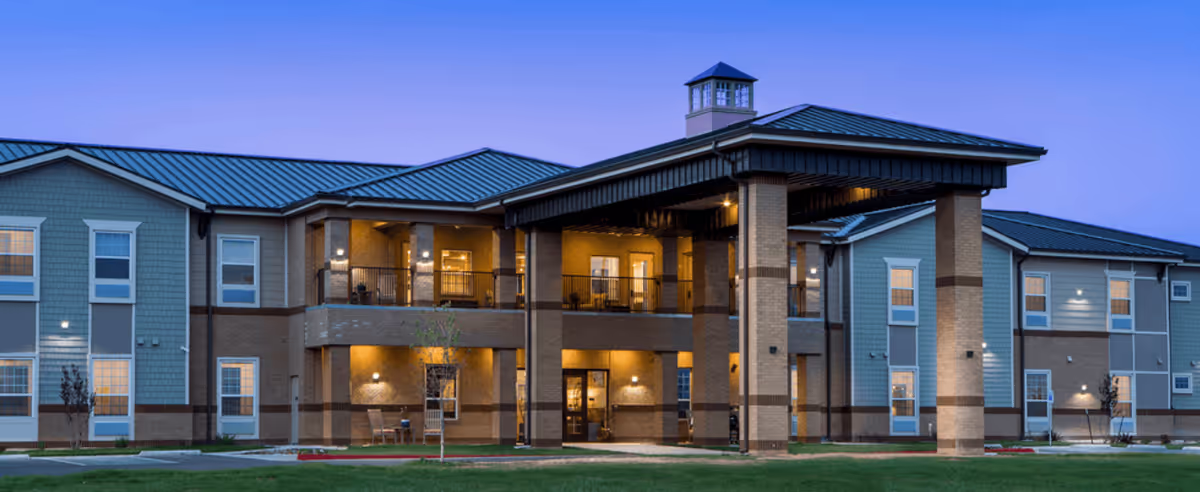
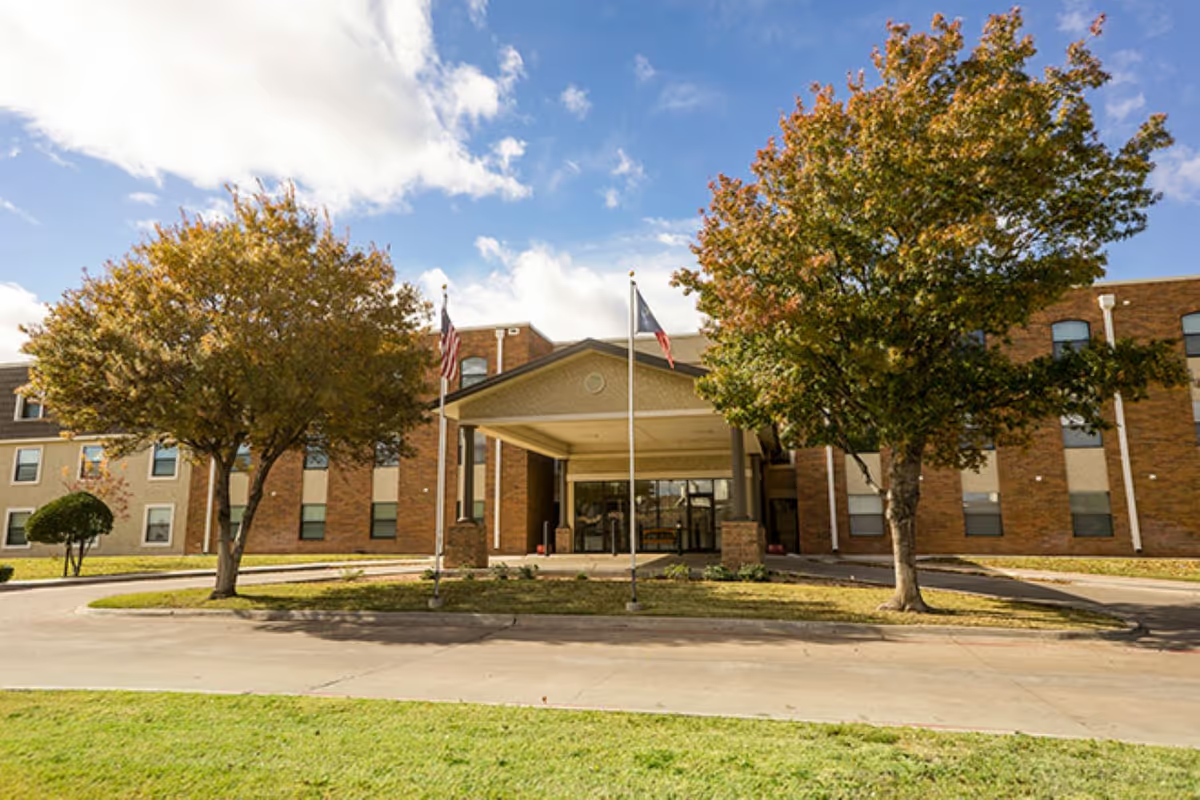
Facility environment and programming are described both positively and negatively. The common areas and general upkeep are often praised, contributing to an active atmosphere for some residents. Conversely, a subset of families characterized portions of the environment as restrictive or institutional, indicating variability between units or shifts in how freedoms and daily routines are managed. Information about activities is limited in these summaries; the overall impression is of a facility that can provide engaging, well-supervised care but that may have uneven programming availability depending on staffing.
In summary, Apex Secure Care appears to deliver strong interpersonal caregiving and has administrative accessibility and clinical involvement that reassure many families. However, potential residents and their families should investigate operational consistency: ask about typical staffing ratios by shift, protocols for bathing and wound-care, meal-service schedules and contingency plans, asset‑security and eviction/transition policies, and how the facility communicates with families during clinical incidents. A focused tour that checks staffing presence across shifts and a direct discussion of clinical oversight and family-notification procedures would help clarify whether the facility’s strengths are reliably applied to an individual resident’s needs.