Riverway Assisted Living and Memory Care elicits a polarized set of impressions. Many families praise the community for its compassionate caregivers, memory-care expertise, and an overall home-like environment. Positive indicators include a newer, well-maintained building with in-room conveniences, a central dining area that promotes social interaction, pet-friendly programming, and a variety of organized activities (arts & crafts, music, outings, trivia). Admissions and care-leadership staff are frequently described as supportive and engaged, and several accounts highlight effective hospice integration and fall-safety monitoring.
At the same time, a consistent pattern of operational weaknesses emerges across reviews. Staffing instability and high turnover are recurrent themes and appear to drive several downstream problems: inconsistent delivery of personal-care tasks, intermittent housekeeping and laundry follow-through, and variability in program and meal continuity—particularly on weekends. These staffing dynamics are also linked to described delays in medication administration and slower-than-expected clinical responses, which reviewers experienced as gaps in medical oversight and coordination with external providers.
Dining and service delivery receive mixed evaluations. Many families find meals nutritious and appealing, but others describe inconsistent food quality, small portions, and occasional service interruptions when kitchen coverage is limited. Fee transparency is another concern: families referenced add-on charges (for example, room-delivery fees) and expressed difficulty obtaining clear, itemized billing. Administrative processes show variability as well; instances of lost paperwork, difficulty obtaining statements, and poor communication about access or care-plan changes point to front-office and records-management weaknesses.
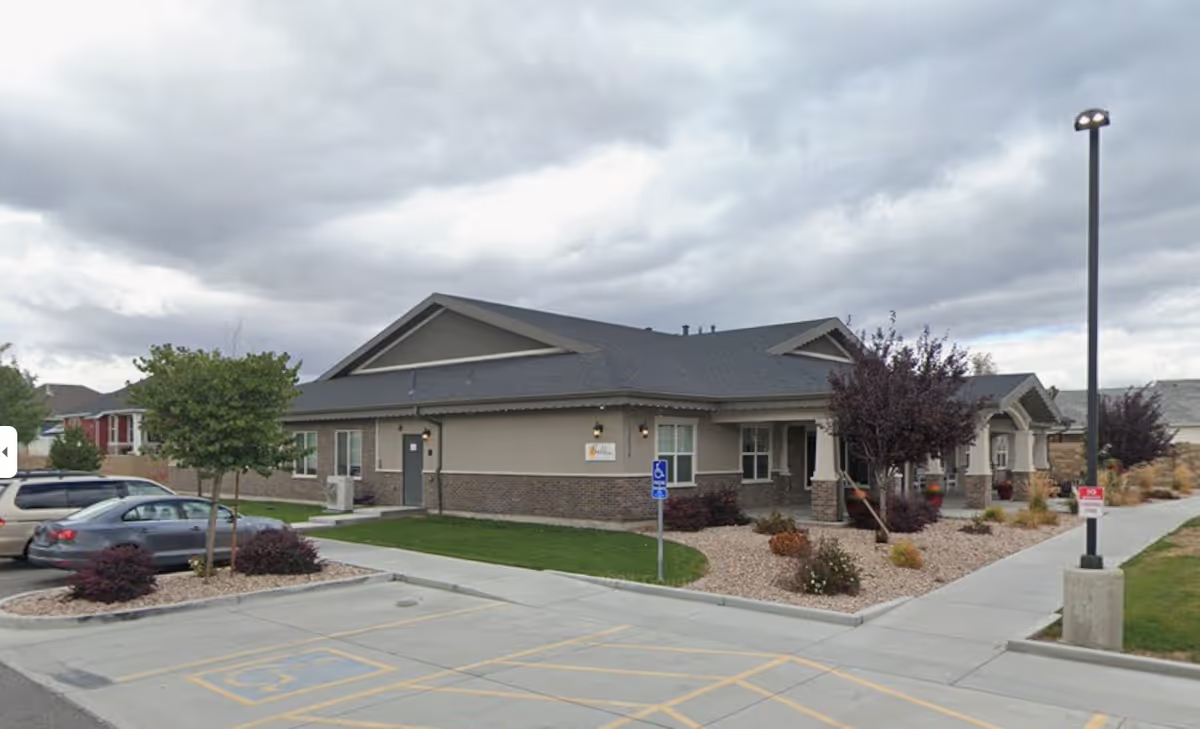
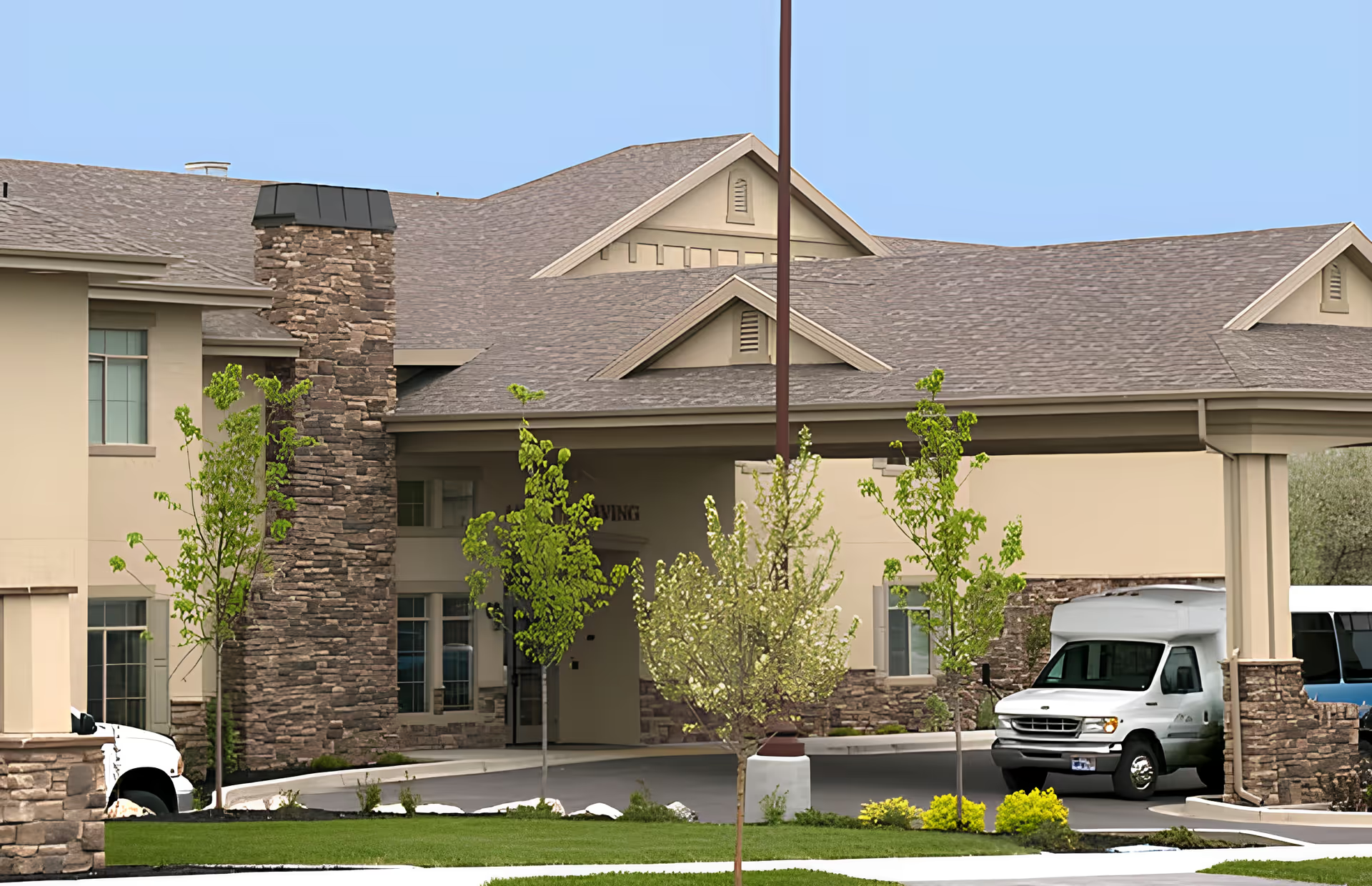
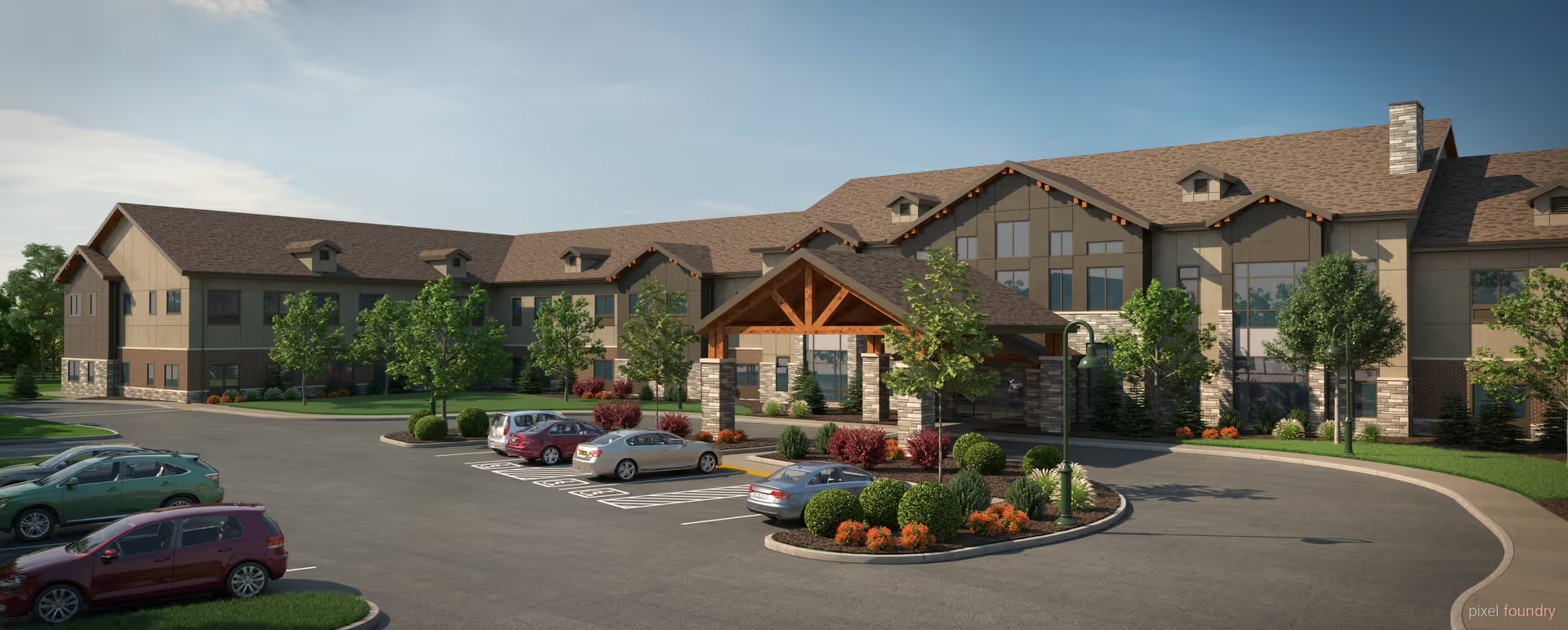
Facilities-wise, the community is frequently characterized as clean, bright, and appropriately scaled for socialization. There are positive notes about common spaces, memory-care courtyards, and private-room amenities. Conversely, reviewers noted limited outdoor walking areas, constrained parking, and a lack of some amenities like covered parking or extensive gardens, which may matter for families prioritizing outdoor access.
Taken together, the dominant patterns are strong interpersonal strengths (compassionate staff, warm leadership, engaging activities) paired with operational inconsistencies (staffing stability, clinical and housekeeping reliability, administrative transparency). Prospective residents and families should weigh the community’s clear relational and environmental positives against the operational risks by asking targeted questions prior to move-in: current staffing ratios and turnover rates, weekend and on-call clinical coverage, medication-administration protocols, housekeeping and laundry schedules, billing/itemization practices, and security/records procedures. Visiting during different days and times can help assess continuity of care and service consistency.