Overall impression: Reviewers consistently describe Norse Home as a warm, community-oriented senior living option with strong staff continuity and a welcoming physical environment. Strengths emphasized across accounts include long-tenured, attentive staff; a bright, open décor; and abundant communal spaces that foster socialization. The facility’s location in Seattle — with direct transit access and the zoo across the street — plus expansive Puget Sound and Olympic Mountain views are repeatedly noted as distinguishing amenities.
Care and staff: Care quality is generally portrayed favorably, with multiple mentions of caring, friendly employees who go beyond routine duties. Several accounts highlight staff longevity and a positive community culture, which supports resident individuality and continuity of care. At the same time, reviewers describe operational gaps in clinical-family communication: delays in notification about significant events and instances of unreturned messages to families. These suggest the facility may need clearer processes for escalation and family updates, particularly involving nursing management responsiveness.
Dining and activities: Dining is treated as a strength for many residents — an on-site cafeteria, a large communal dining area, and meals that several reviewers found satisfactory. The activity program is active, with exercise classes, walks, social hours, and organized outings (including zoo visits and local trips). However, some residents would like a higher frequency or broader variety of off-site outings, indicating room to expand the programming calendar for those seeking more engagement outside the campus.
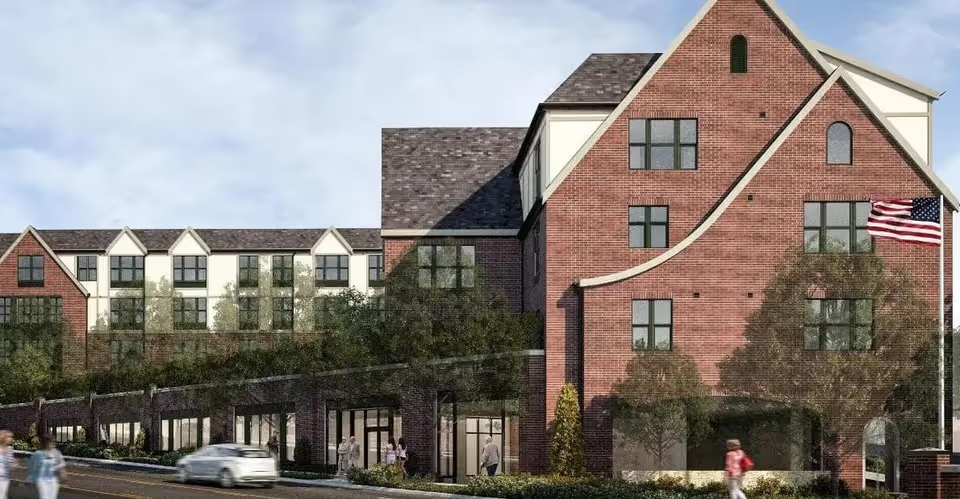
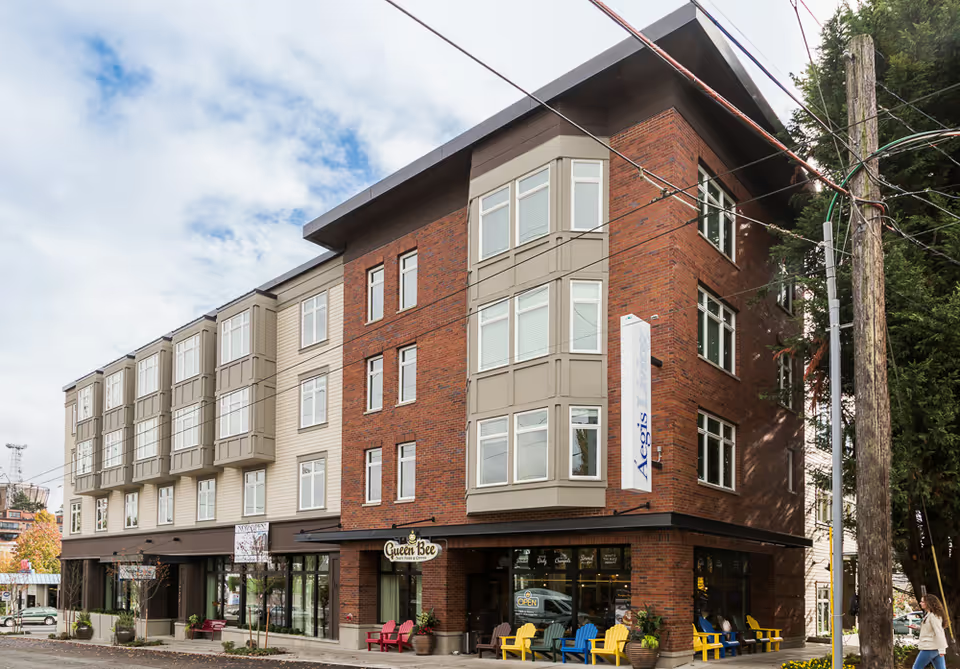
Facilities and accommodations: Common areas, homey lounges on each floor, a library, beauty shop, exercise room, and a landscaped courtyard with a waterfall contribute to a comfortable communal environment. Physical layout separates independent living on upper floors from care on lower floors, which suits residents who value independence with access to support. Notable limitations are the generally small unit sizes — many described as studio or dormitory-style — and the absence of in-unit kitchenettes, which may not meet preferences for larger private living spaces. Ongoing remodeling was mentioned; while upgrades are taking place, room quality and finishes may be inconsistent across the building.
Management and patterns: Management receives mixed signals in the reviews. Several respondents praised supportive administration and long-standing staff relationships; others identified specific responsiveness problems within nursing management and family communications. There are hints of reputation or operational changes over time, including references to remodeling and management transitions. Prospective residents and families should weigh the strong interpersonal culture and location advantages against the practical constraints of unit size, in-room amenities, and the need to confirm current communication protocols and remodeling timelines.
Recommendation guidance: Norse Home appears well suited to independent seniors who prioritize community, location, scenic views, and steady caregiving staff. Families for whom prompt clinical communication, larger private suites, or in-unit kitchens are priorities should inquire specifically about unit sizes, recent renovations, and the facility’s current processes for clinical-family notifications and nursing management responsiveness before deciding.